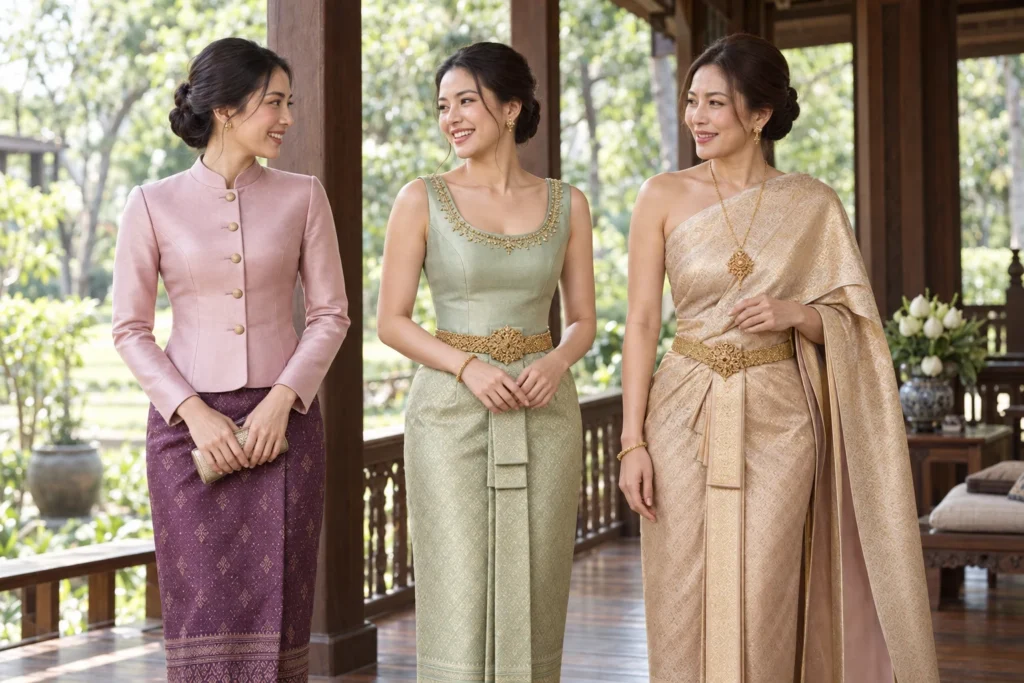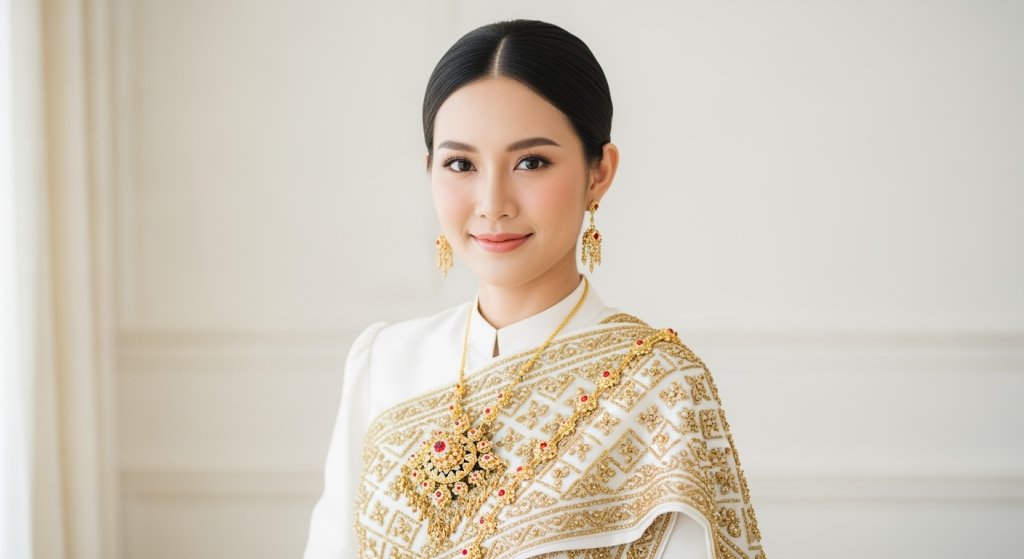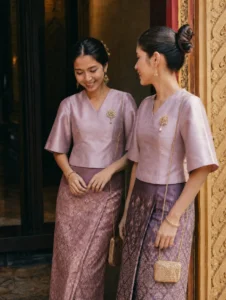
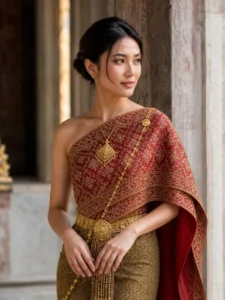

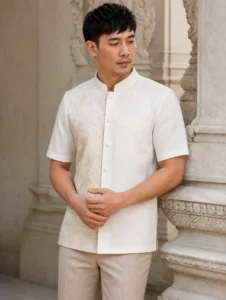
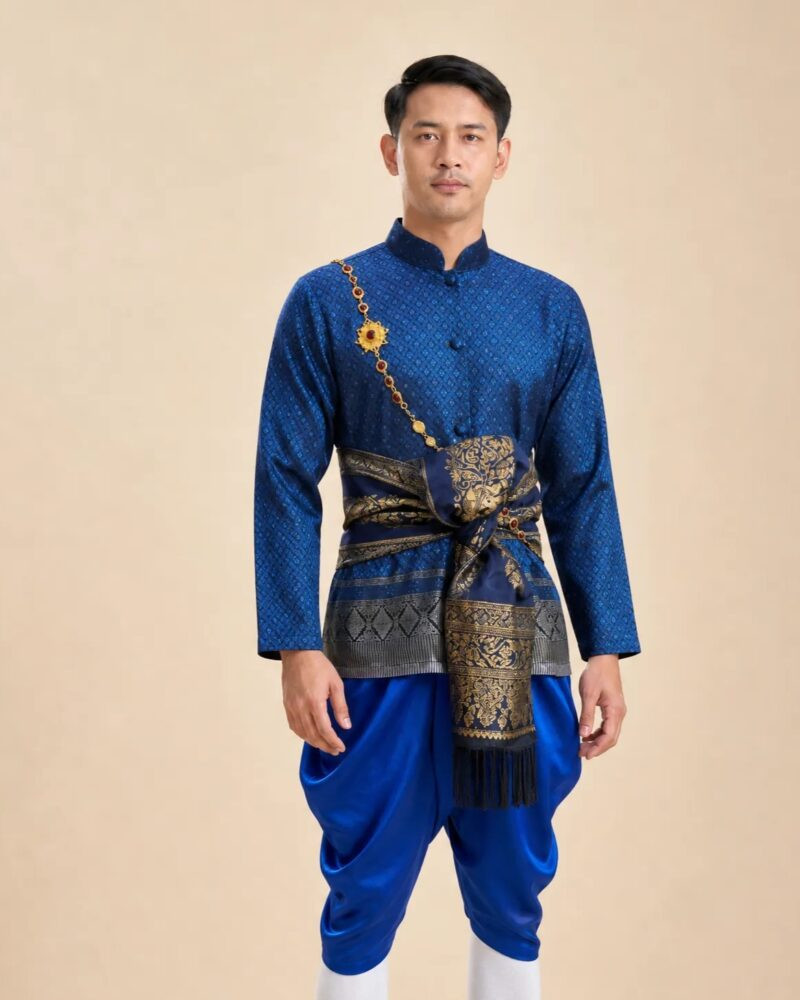
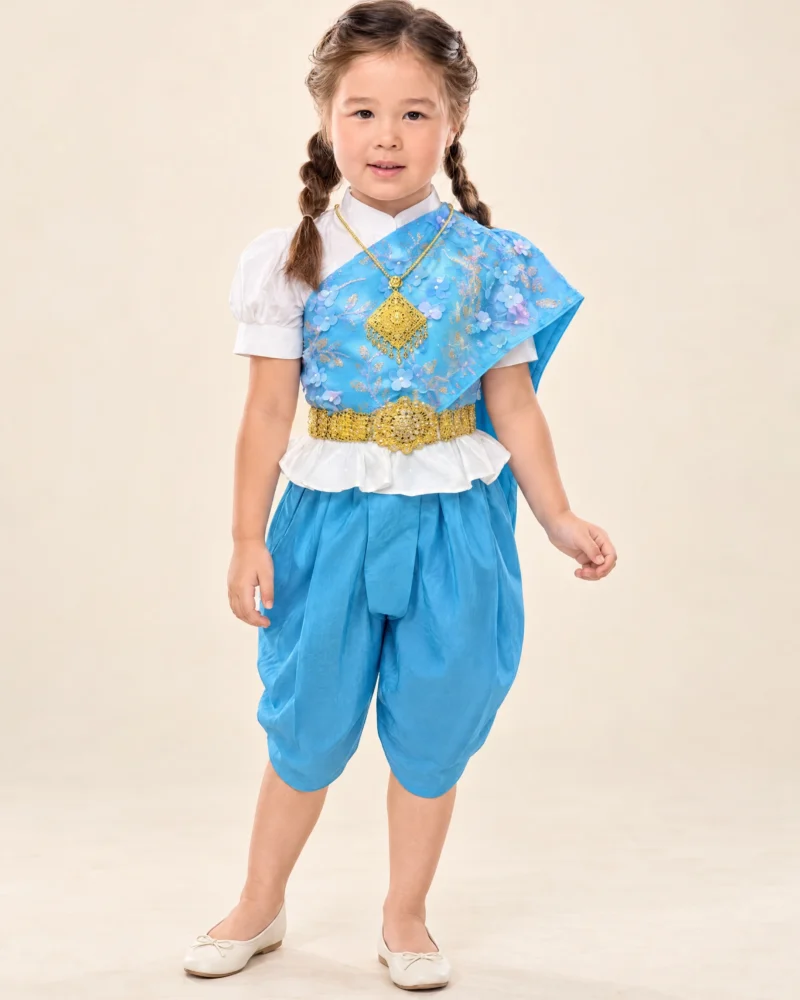
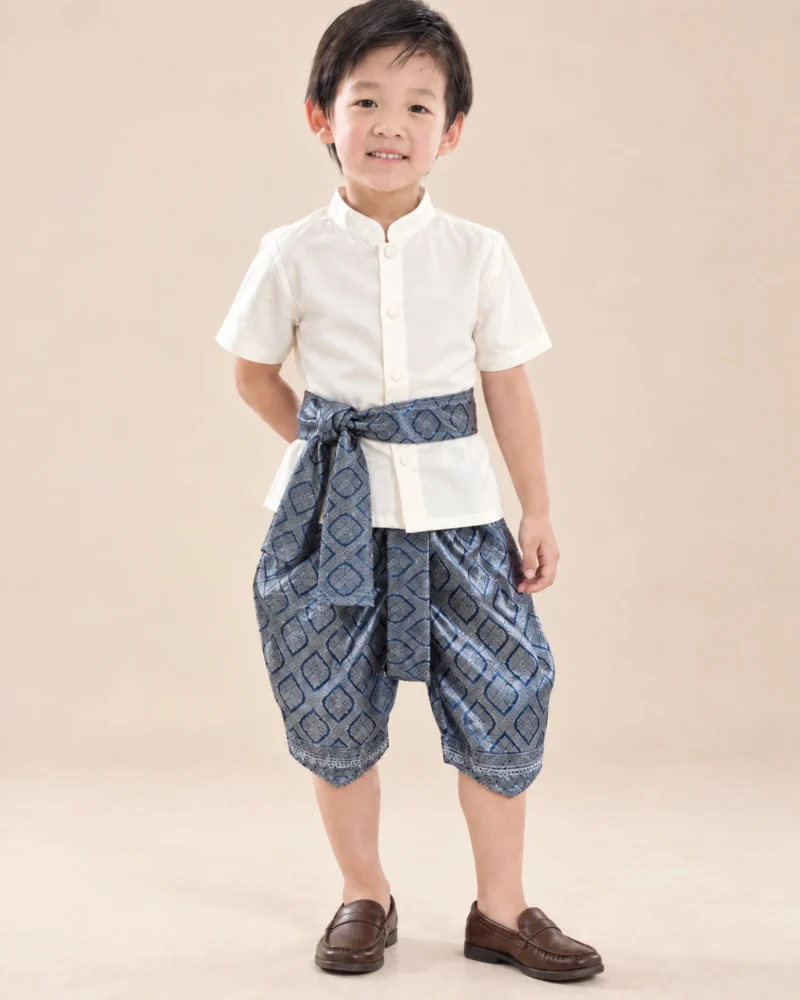

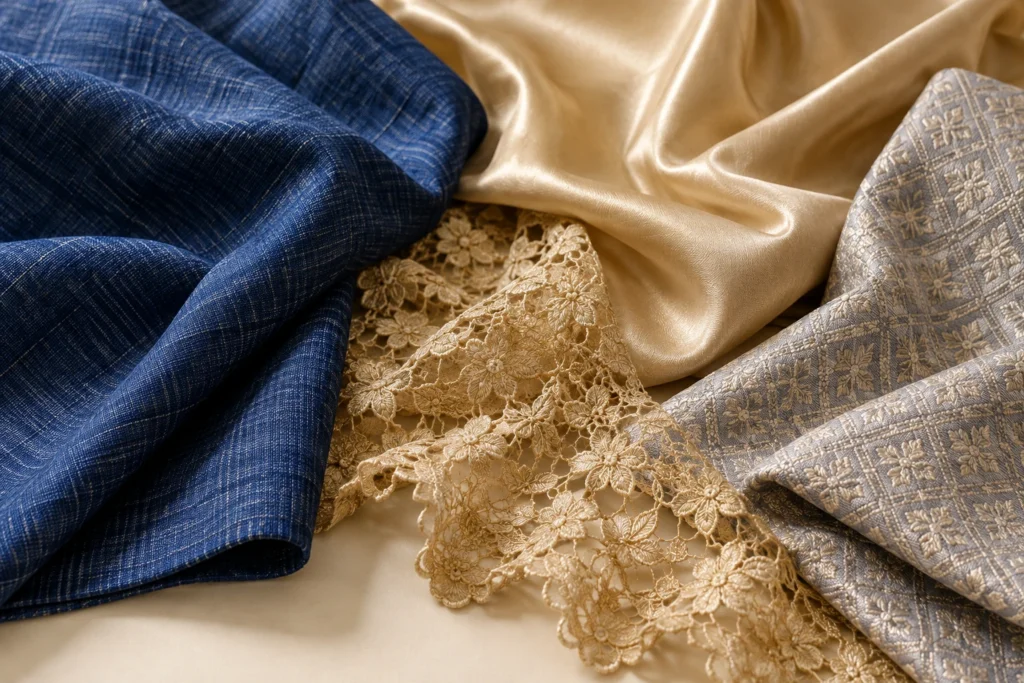
Opening image: illustrative fabric textures. Appearance alone does not identify the fiber.
Two Thai outfits can look almost the same in a photo and still feel very different once you’ve worn them through a ceremony, a reception, and an evening of pictures. The fabric affects how a piece shimmers, how it drapes, and how well it keeps its shape. And “fabric” is really several things at once.
This guide explains silk, cotton, blends, and silk-style materials, then separates them from words such as lace, brocade, and satin. We’ll use four outfits from our shop to show how to read a listing, and look at the fabric choices that matter for warm days, formal ceremonies, and photographs.
Four questions behind every fabric
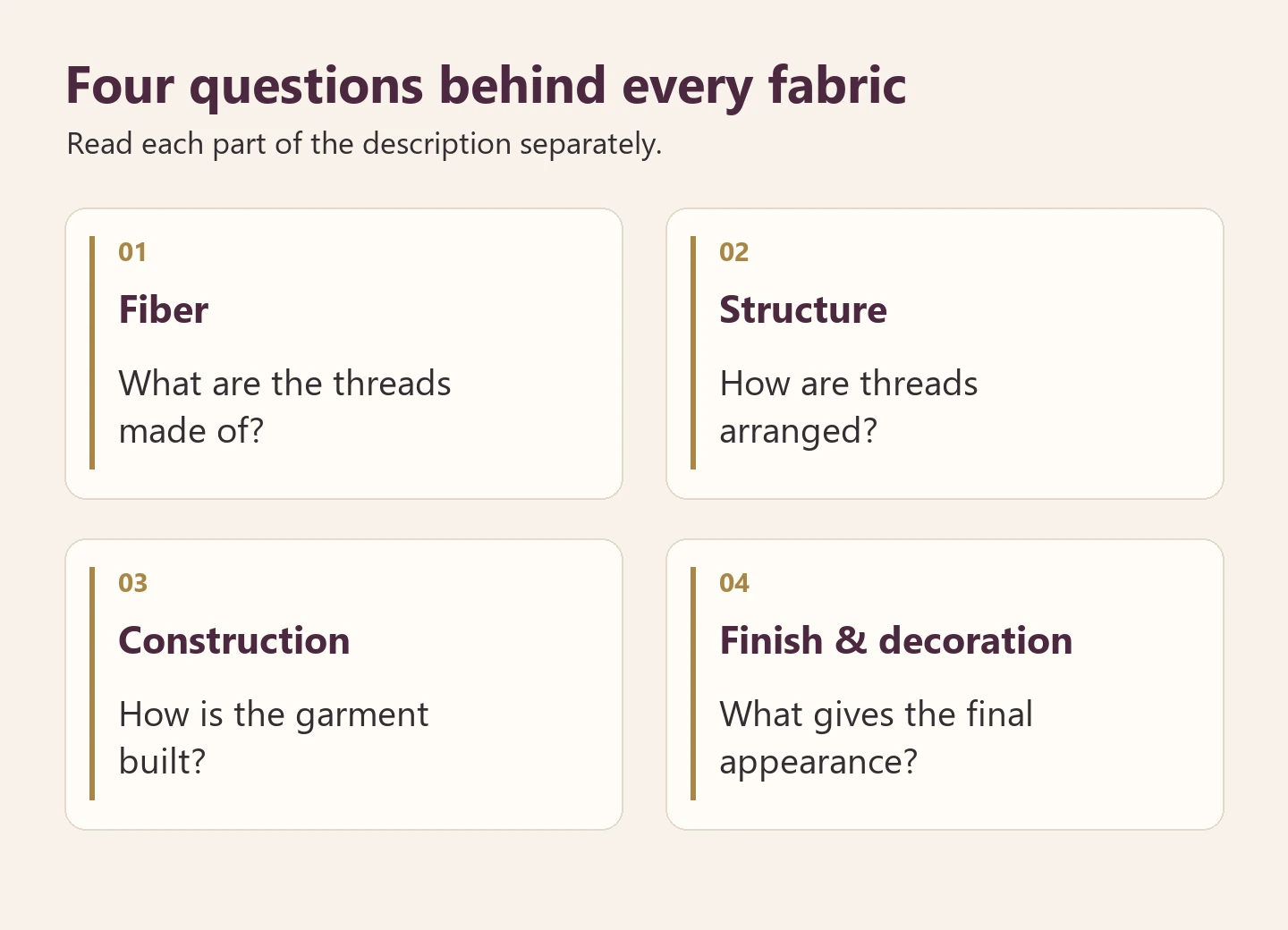
A useful fabric description answers four separate questions. Start here, then compare each piece in an outfit individually.
| Question | Examples | Why it matters |
|---|---|---|
| Fiber: what are the threads made of? | Silk, cotton, polyester, or a stated blend | Influences moisture absorption, feel, and response to heat and washing |
| Weave or structure: how are the threads arranged? | Plain weave, satin, brocade, lace | Affects the surface, openness, pattern, and drape |
| Construction: how is the garment built? | Lining, interfacing, layered Sabai, closures | Affects coverage, shape, movement, and how much cloth you wear |
| Finish and embellishment: what gives it its final appearance? | Pleating, embroidery, sequins, metallic decoration | Adds texture, shimmer, structure, and sometimes weight or special care needs |
For example, “interfaced cotton Pha Sin” gives you a fiber, a skirt type, and a construction detail. “Pleated satin-style Sabai” describes the sash’s appearance and pleating, but leaves its fiber composition open.
Silk: the fiber and the Thai textile tradition
Silk is a natural protein fiber produced by silkworms. It can be woven into smooth satin, patterned brocade, or a simple plain weave. That is why genuine silk does not have one fixed texture or level of shine.
Thailand has a rich tradition of handwoven silk, with regional techniques and patterns. For a real Thai silk example, UNESCO describes Surin’s matmee, or ikat, silks, whose intricate patterns are made with richly colored yarns. In other Thai silks, hand-prepared yarns and weaving give the surface its individual character. These traditions are part of silk’s appeal; a textured surface or changing sheen alone cannot identify the fiber.
Thailand’s Peacock certification scheme distinguishes several categories of Thai silk. Gold, silver, and blue marks have different production criteria, while the green mark covers Thai silk blends. Check the actual certification and category rather than treating every Peacock mark as a promise of 100% silk. The Thailand Foundation’s silk guide explains the four categories.
Are the outfits in this guide silk?
The four shop examples below are not presented here as verified pure-silk sets. Buppha and Duangjai have cotton skirts; Kanika’s skirt is described as synthetic silk-look; Duanphen’s skirt is described as woven silk-look. Duangjai’s blouse is currently listed as “satin-silk,” but its fiber percentages are not stated. That wording does not establish a verified silk composition.
Some older product addresses also contain “thai-silk.” An address is not a composition label. If you are choosing specifically for genuine silk, ask us to confirm the exact piece’s composition before ordering.
Cotton: absorbency with room for structure
Cotton is a plant fiber that absorbs moisture. Lightweight cotton can be a comfortable choice for warm-weather daytime wear, especially when the fabric and fit allow air to move. A cotton label alone does not make a garment light: dense weaving, lining, and interfacing can give it a firmer, warmer feel.
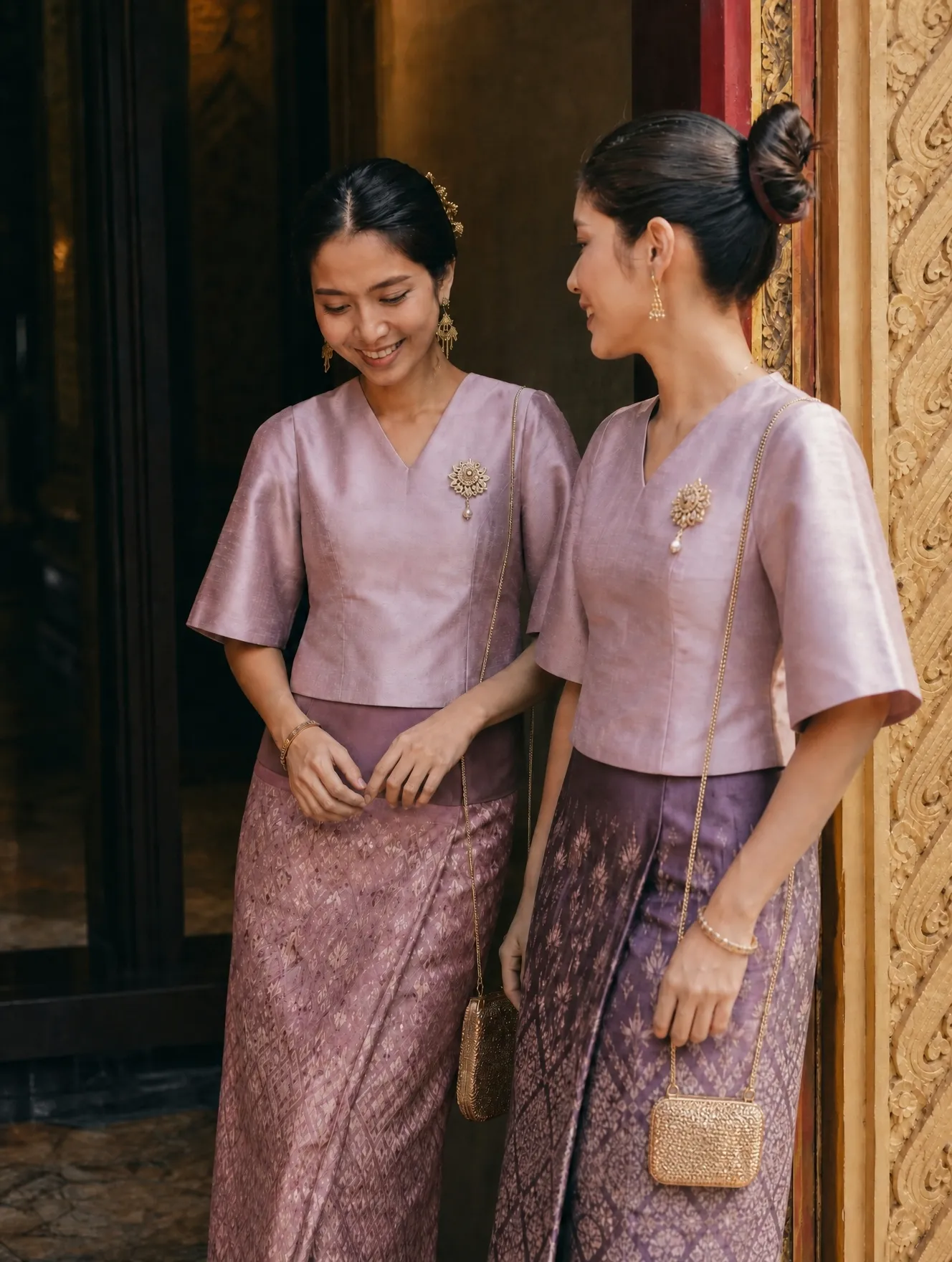
Buppha pairs a gold lace blouse with a Kalasin Praewa cotton Pha Sin. The skirt’s woven diamond pattern and borders provide detail, while interfacing helps it hold its high-waisted front-wrap shape. The blouse is textured French-style lace with an opaque lining; its fiber is not specified by the word “lace.”
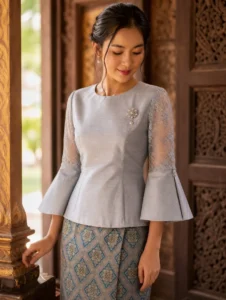
Duangjai has an indigo woven-cotton Pha Sin reinforced with interfacing to maintain its long, formal silhouette. Its blouse is a separate material choice. In both outfits, the confirmed cotton description applies to the skirt, rather than automatically to the whole set.
Blends: the proportions are part of the description
A blend combines two or more fibers. Silk and cotton, for example, can be combined in one fabric; cotton and polyester are another common pairing. The balance changes with the proportions, as well as the weave and finish.
As an illustrative label, “70% cotton, 30% silk” describes a cotton-majority fabric containing silk. “30% cotton, 70% silk” describes a different balance. These are examples of how to read percentages, not compositions claimed for our shop’s outfits. None of the four product records used for this guide gives a verified blend percentage.
A blouse and skirt made from different fibers are a mixed-material outfit, not necessarily a blended fabric. Check whether a composition applies to the main cloth, a lining, or another individual layer.
Silk-style materials and polyester
Silk-look and silk-style describe an appearance: the smoothness, sheen, or drape associated with silk. Polyester is one synthetic fiber used to create such fabrics. It absorbs much less moisture than cotton, although fabric design and finishes can change how it moves moisture and feels to wear. “Synthetic” covers more than polyester, so we do not assign that specific fiber to an outfit unless its source confirms it.
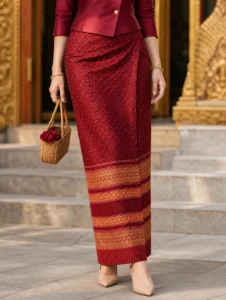
Kanika gives a clear example of the language. Its Pha Thung is synthetic silk-look material. A gold lace outer Sabai sits over finely pleated satin-style fabric, combining openwork detail, crisp folds, and the skirt’s subtle pattern. The outer layer is 3 yards (about 2.74 meters) long, and the inner layer is about 3 meters (3.28 yards). “Lace” and “satin-style” describe these layers without specifying their fibers.
Lace, brocade, satin, and embroidery
These terms help you picture the cloth, but they answer different questions from “silk or cotton?”
- Lace is openwork made by techniques such as looping, twisting, or stitching threads. It can use different fibers. “French-style” describes a style, rather than proving French manufacture.
- Brocade has decorative patterns woven into the cloth, often using supplementary threads. Those threads may be metallic; brocade itself is not a fiber.
- Satin is a weave with thread floats that create a smooth, lustrous face. It can be made from silk or other fibers. “Satin-style” describes an appearance without necessarily confirming that weave.
- Embroidery adds stitched decoration to a fabric. Dense embroidery, metallic threads, or sequins can change its weight and care needs.
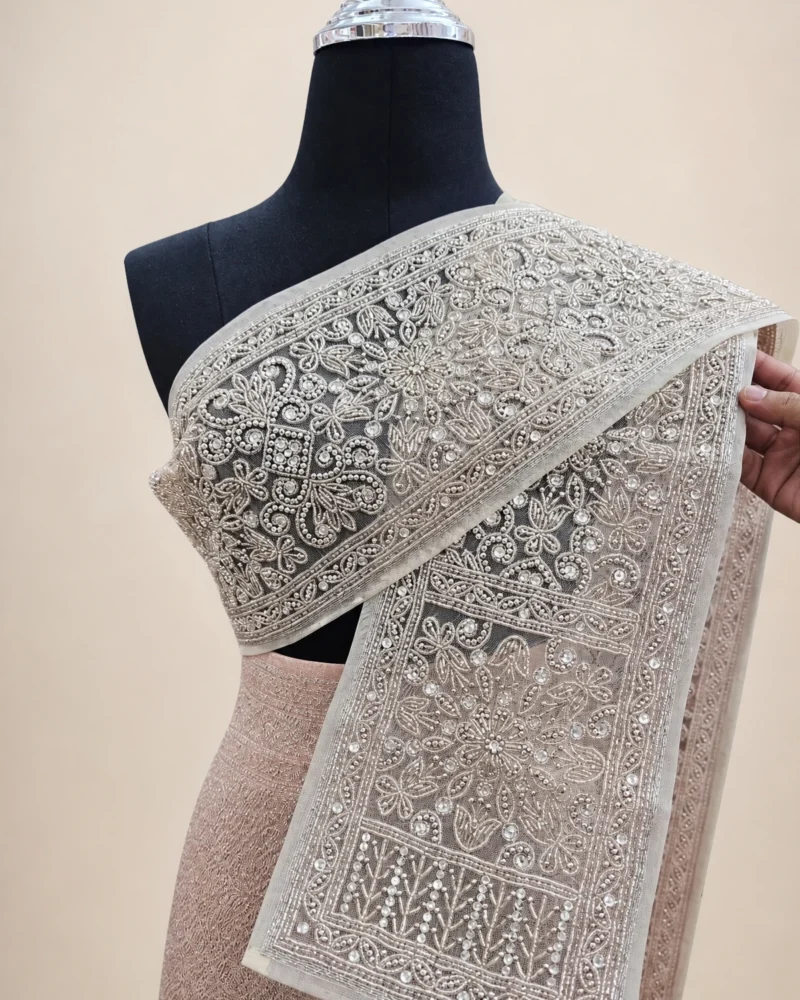
Duanphen brings these ideas together. Its two-layer Sabai is about 3 meters (3.28 yards) long: sheer silver lace with metallic floral embroidery lies over a pleated satin trail. The silver-grey Pha Thung is woven silk-look brocade, with metallic geometric patterning, a pleated front panel, and a soft lining. Each term tells you something useful about the piece without turning “silk-look” into a silk-content claim.
Choosing fabric for your occasion
Warm outdoor ceremonies and long daytime events
Start with lightweight cloth, room for airflow, and the fewest layers compatible with the occasion. Cotton’s absorbency can make it a useful starting point, but it can also hold moisture once wet. Polyester absorbs less into the fiber; some fabrics are engineered to move moisture, while dense, layered formal fabrics can feel close in humid weather. Compare the complete outfit rather than ranking every cotton garment above every synthetic one.
For Buppha and Duangjai, take the skirt’s interfacing into account alongside its cotton content. For a Sabai outfit, consider the overlapping sash layers and skirt lining. These details matter during hours outdoors as well as when moving between an air-conditioned room and the heat.
Weddings, engagements, and evening receptions
For a formal shimmer, compare satin surfaces, woven brocade, and metallic embroidery. Kanika combines gold lace, pleating, and a champagne-gold skirt; Duanphen combines silver embroidery and brocade with a colored or silver-grey trail. In a cool indoor venue, those layered textures may be a welcome part of the look. For an outdoor ceremony, balance the effect with cloth weight, lining, and time in the heat.
Temple visits and merit-making
A matte or softly lustrous woven fabric can give a composed daytime appearance, while a structured skirt keeps a formal line. Fabric choice works alongside coverage: follow the venue’s dress requirements for shoulders, sleeves, and skirt length. Buppha and Duangjai offer sleeved blouse-and-skirt options, but no fiber by itself establishes suitability for every ceremony.
Photographs
Satin surfaces and metallic decoration catch highlights, while patterned cotton and brocade show detail through their weave. Choose the effect you enjoy, then check comfort and care for the rest of the day. A beautiful photograph is only one part of wearing the outfit.
A quick check before choosing
Open Fabric & Fit and read the blouse, skirt, and Sabai layers separately. Look for an actual fiber name or percentage, then note the weave, lining, interfacing, and decoration. Where a combined term such as “satin-silk” leaves composition unclear, get that detail confirmed rather than translating it into a percentage yourself.
Follow the garment’s own Care instructions: embellishment and pleats can need different treatment from the base cloth. Duanphen, for example, calls for separate gentle cold hand washing, supported lace, and flat drying in the shade; its Sabai should never be hung wet. Avoid carrying washing or ironing advice from one outfit to another.
For fit, use the measurements for your chosen pieces and our how-to-measure guide.
Once you separate fiber, structure, construction, and finish, a fabric description becomes much easier to use. Choose the texture and movement you love, then match the whole garment to the venue, the weather, and the length of your day.
Sources and further reading
- Coats: Know About Textile Fibres — fiber types and their properties.
- NC State: Comfort Performance — why fabric, garment design, and conditions all matter to comfort.
- V&A: Hanbok, traditional Korean dress — examples distinguishing fibers from woven structures.
- The Met: Fragment of brocaded silk with imitation slashing — a collection record separating silk and metal threads from the weave.
- SFO Museum: Lace, A Sumptuous History — lace techniques and materials.