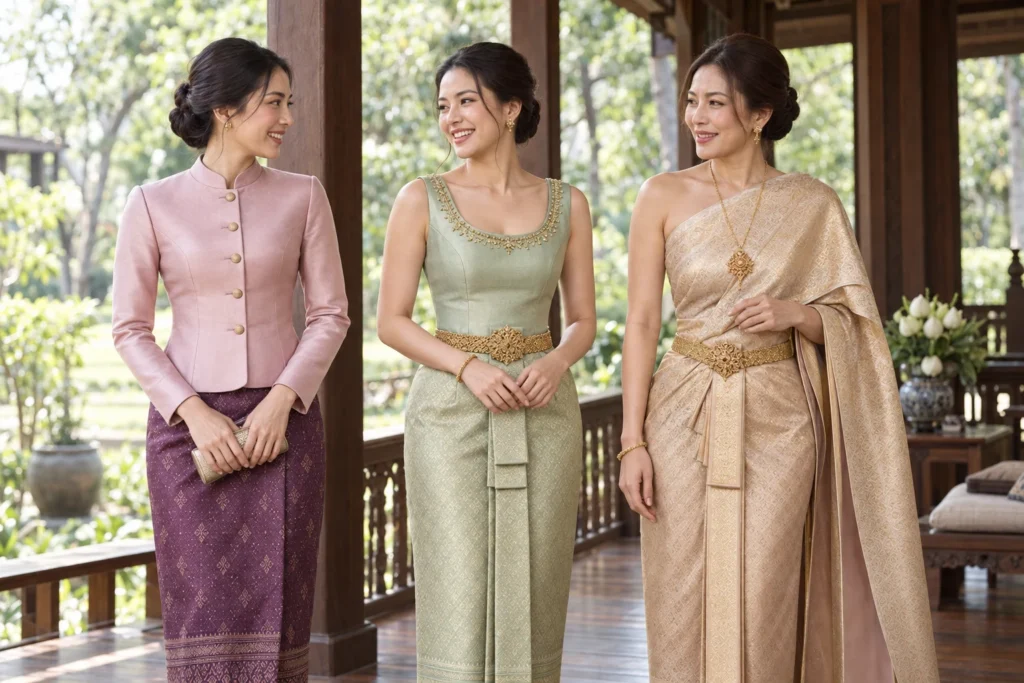


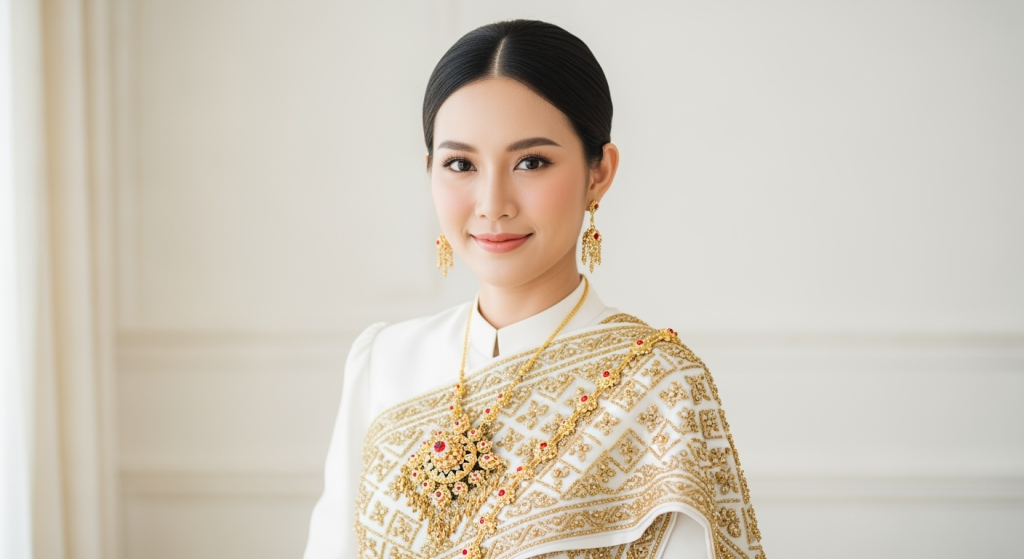
What to wear, what it’s called, and how to explain it to everyone who asks you.
If you grew up Thai in the States or the UK, you’ve been to Thai weddings your whole life. Planning your own is a different thing. Your mother has firm views. Your grandmother has firmer ones. Half your guest list has never taken their shoes off at a ceremony, and every one of them is going to text you asking what to wear. And the shop that would have solved all of this in an afternoon is eight thousand miles away.
This guide covers what the wedding party wears and why, what to send your guests, and how to get it all sourced and fitted in time.
The short version — copy and paste this to your guests
Wear a dress at or below the knee, or a suit or smart shirt and trousers. Thai dress is welcome but not expected. Avoid an all-black outfit, and avoid white or anything close to it. If any part of the day is at a temple, cover your shoulders and knees and wear shoes you can slip off one-handed. There will be floor seating and some kneeling, so dress for that. The morning is modest and traditional; the evening reception is much like any other formal party.
The Four Bridal Styles
There is no single correct wedding outfit. Brides choose from the eight formal styles known as chut thai phra ratcha niyom, “Thai dress of royal endorsement.” When Queen Sirikit accompanied King Bhumibol on state visits to Europe and the United States in 1960, she found there was no modern Thai national dress suitable for formal occasions. She commissioned historical research into court dress and, over the decade that followed, eight designs were developed and promoted. Four of them account for the overwhelming majority of weddings.
Chakri
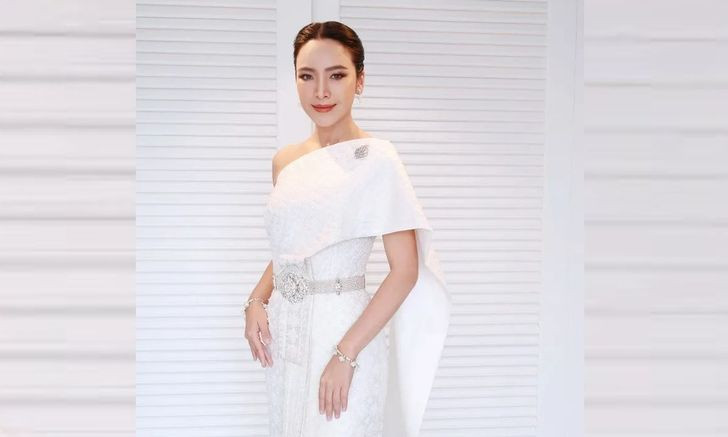
Photo: @maprang_vira, via Sanook.
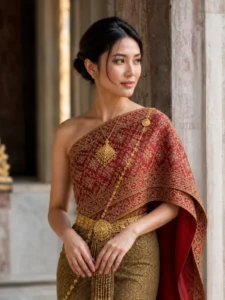
The one most people picture. A sabai is wrapped in the traditional style, draped over one shoulder and leaving the other bare, worn with a full-length skirt with two pleated folds at the front called na-nang. The cloth is usually yok, a brocade technique that builds thickness into the weave itself, often with gold or silver thread. It is the most popular bridal and evening choice — and the one that needs a shawl added before you go into a temple.
Siwalai
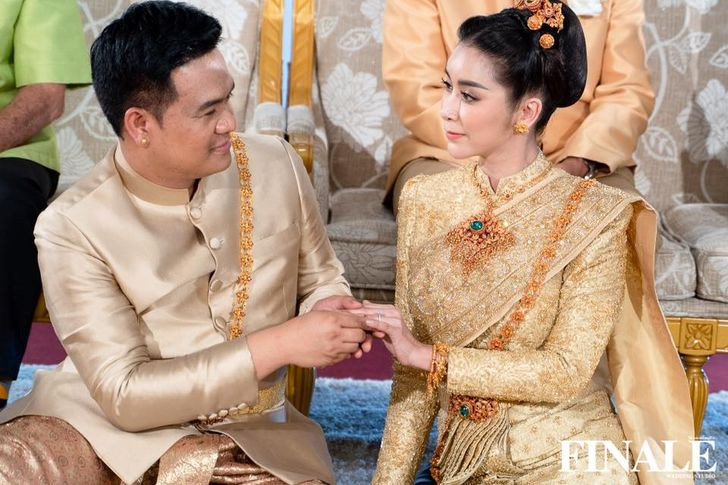
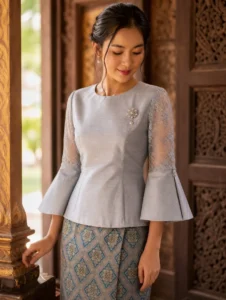
Photo: Finale Wedding Studio, via Sanook.
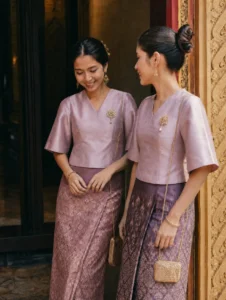
Chakri’s covered relative: a round, slightly standing collar, long sleeves, and a sash worn over the shoulder in place of the wrapped sabai, with the skirt sewn to the blouse and a belt at the waist. It reads as fully ceremonial while keeping the shoulders covered, which makes it the natural choice for a morning merit-making with monks. The name is thought to come from the English word “civilised.”
Boromphiman
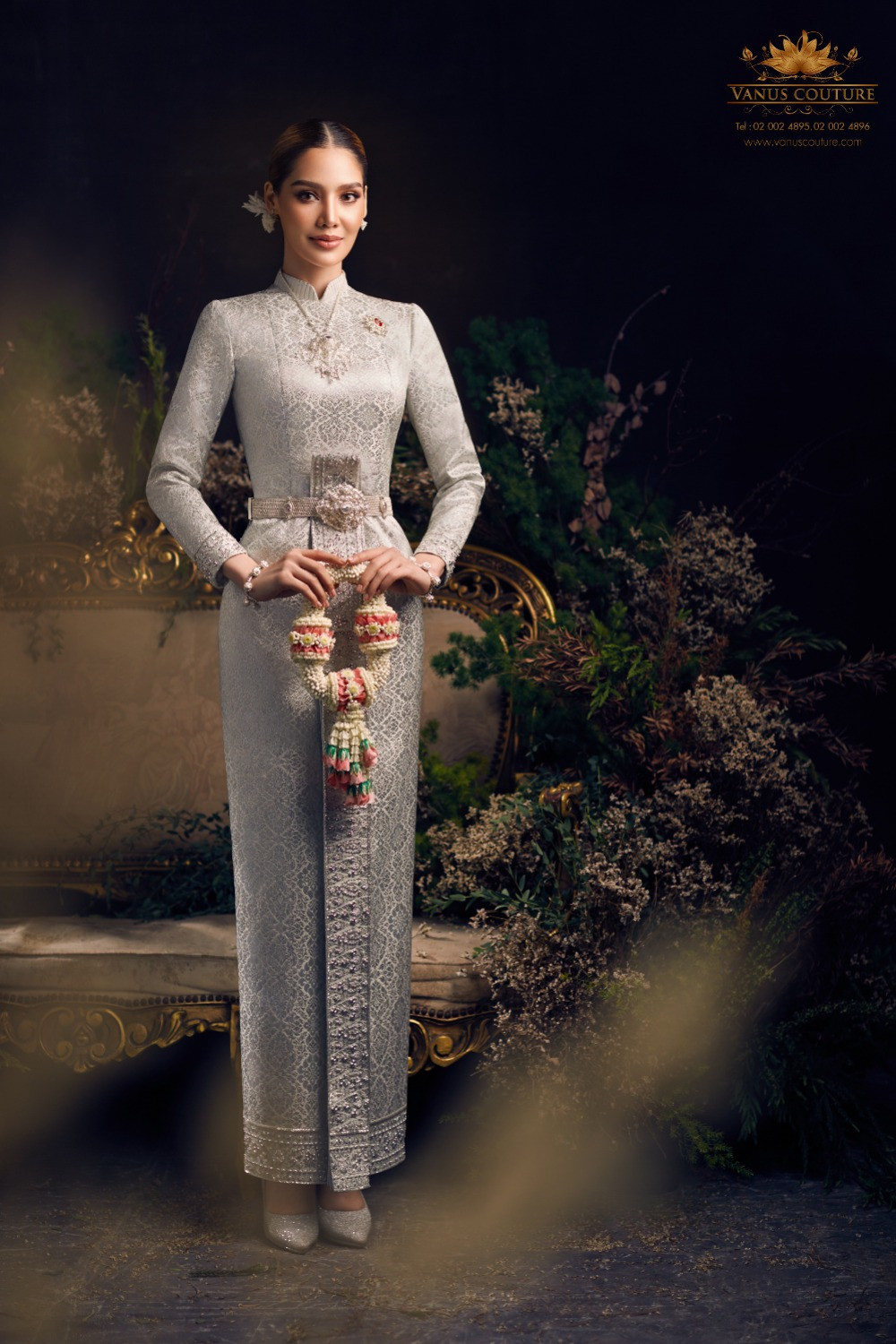
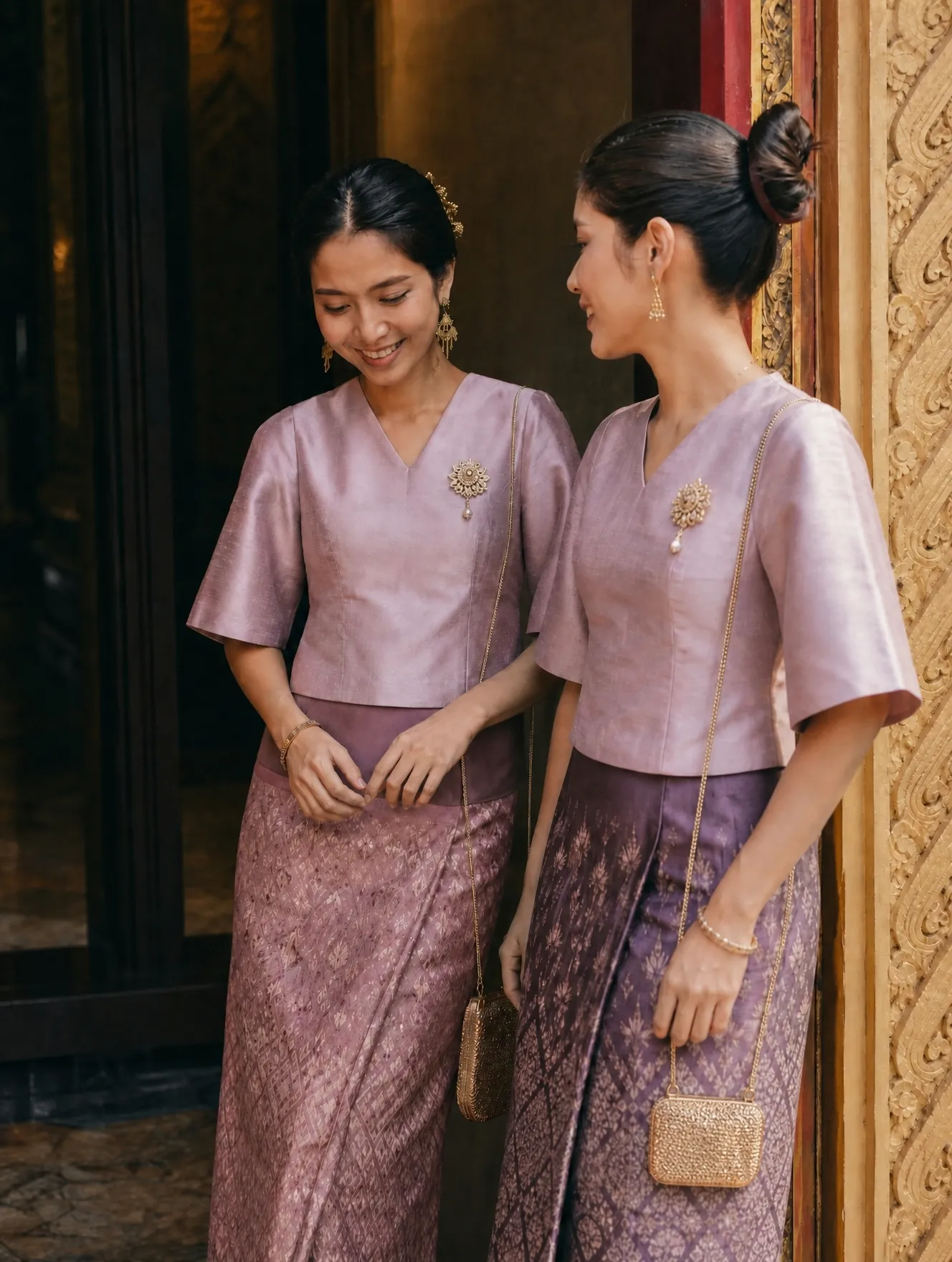
Photo and design: Vanus Couture.
The same collar and long sleeves as Siwalai, with no sabai at all. The blouse and ankle-length skirt are sewn together as a single piece over the na-nang pleats, belted at the waist, in gold-brocaded silk. It is worn at full and half ceremonial occasions, and the unbroken vertical line particularly suits a taller, slimmer frame. Of the four, it is the most restrained and the most formal.
Chakkraphat
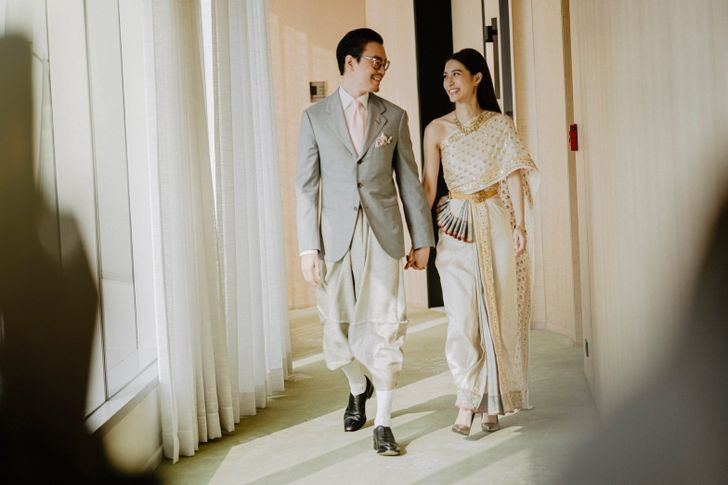
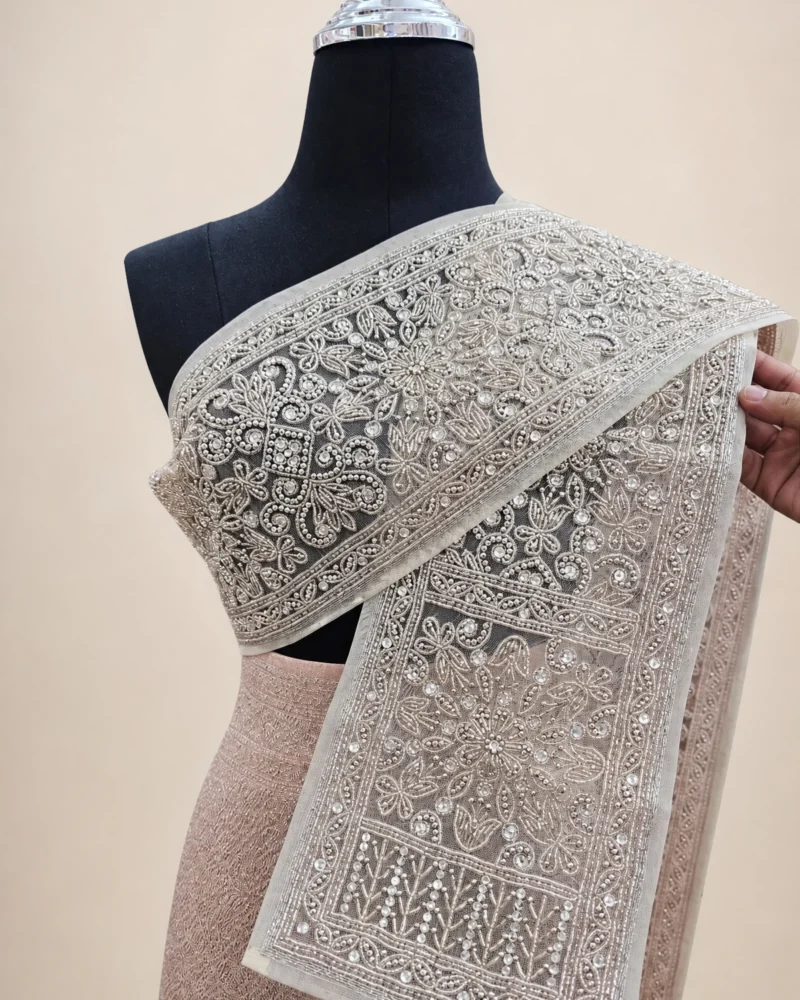
Photo via Sanook; original photo credits are listed in the source gallery.
Chakri taken to its ceremonial limit. The wrapped sabai is doubled — a pleated layer beneath an opaque outer sabai embroidered with metallic thread, beadwork or gemstones — over a yok silk or gold-thread skirt cut na-nang. It carries the complete jewellery set, and it is reserved for the most important ceremonies. It is also heavy, and it is an evening dress.
And the fifth option: chut thai prayuk
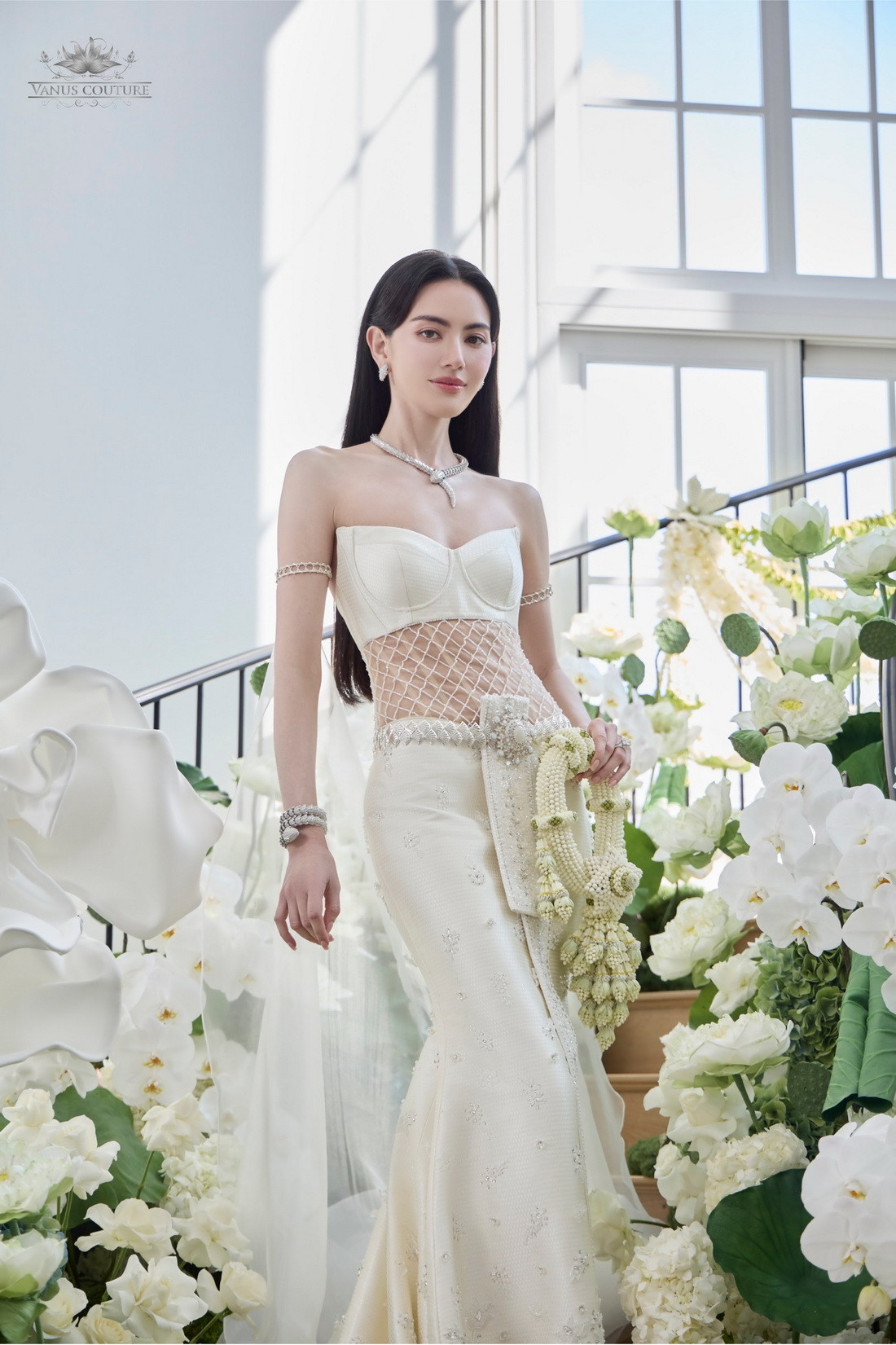
Photo and design: Vanus Couture, via Sanook.
Thai applied dress sits outside the eight. It takes Thai silk and Thai detailing and works them into a Western silhouette — a fishtail skirt, a structured bodice, a train. Bridal houses in Bangkok build much of their business on it, and it is a genuine and widely accepted choice rather than a compromise. If you want Thai cloth but a gown you can move in all evening, this is usually the answer.
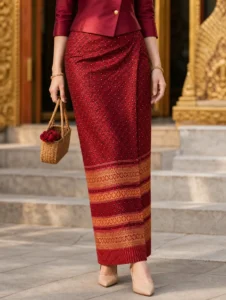
Of the remaining four royal styles, Chitralada is daytime dress, worn with a long-sleeved blouse fastened with five ornamental buttons and a wraparound skirt with a brocade band at the hem. Amarin is brocaded evening attire with elbow-length sleeves and no belt, beautiful but built around the cloth rather than the cut. Ruean Ton is the most casual of the eight. And Dusit is sleeveless with a wide neckline — lovely at a reception, unwearable at a temple.
Many couples wear Thai dress in the morning and change into a suit and Western gown for the evening, so a white gown often does appear — just later in the day than a first-time guest expects.
What the Day Actually Asks of Your Clothes
This is the part nobody tells you, and it matters more than any style rule.
You sit on the floor. You kneel. You get up and down repeatedly, in front of monks and a photographer, and you take your shoes off and put them back on every time you move between spaces. A knee-length pencil skirt is close to the worst possible garment for that day. An A-line cut, a longer hem, or wide tailored trousers all work far better, and backless or slip-on shoes beat anything that laces or buckles.
For the bride it is sharper still. The water-pouring means kneeling at a low table with your hands together for as long as the guest queue takes, so the hem has to allow kneeling, a narrow skirt needs a back slit, and a wrapped sabai must be pinned rather than trusted. Full ceremonial sleeves make handling a tea tray genuinely awkward, which matters if there is a Thai-Chinese tea ceremony. And changing out of Thai dress into a Western gown is not a five-minute job when a sabai has to be unwrapped and re-draped. Rehearse it, and give one person the job — particularly if the venue’s changing room turns out to be a side corridor.
The Order of the Day
Most weddings open with the khan mak procession, the groom’s party arriving with the ceremonial trays, drums and dancing. Guests are handed the gold and silver gates — ribbons or chains held across the path — and are expected to bargain, tease, and refuse to let the groom through without an envelope. Warn your friends in advance. They may find themselves standing outside holding a ribbon, and they will enjoy it a great deal more if they saw it coming.
Then come the Buddhist blessing, the sai monkhon thread ceremony joining the couple, and the rot nam sang water-pouring, where guests queue to pour blessed water over the couple’s hands. The evening reception, if there is one, follows at a hotel or hall and calls for ordinary cocktail or formal attire.
For a temple, wear opaque clothing covering shoulders and knees, and shoes you can remove at the door. Outside Thailand the local wat is often a converted house or church hall — floor seating, tight space, and a substantial pile of shoes by the entrance. Bring a bag for yours.
Jewellery
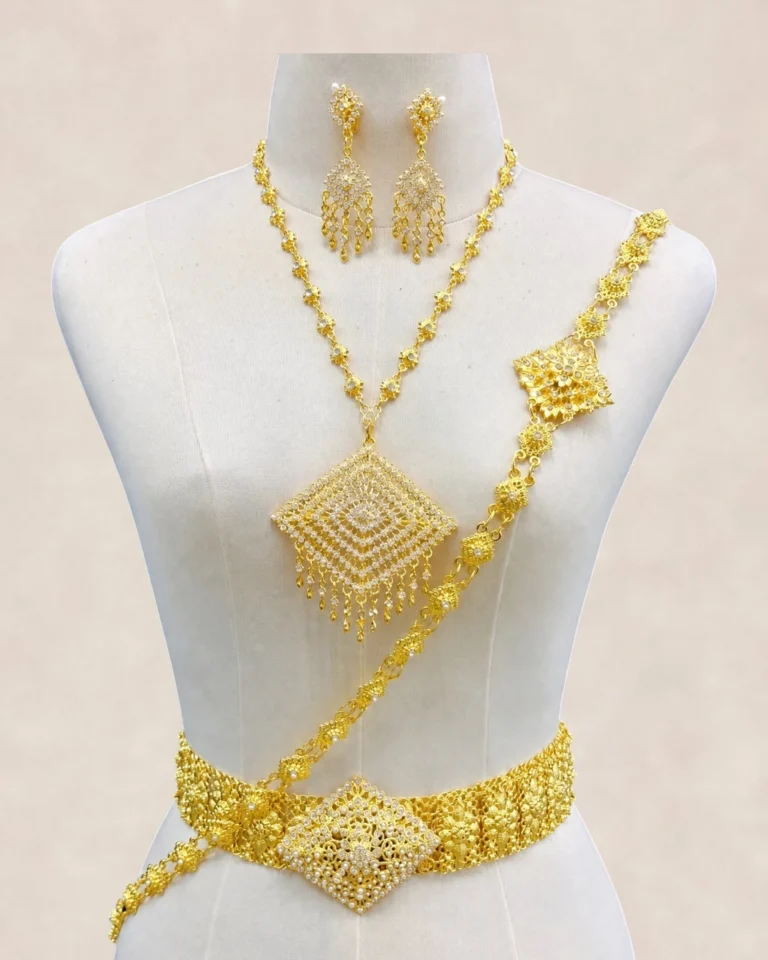
Thai formal dress is designed to be worn with jewellery, in three tones: silver, gold, and nak, the antique rose-gold alloy. The rule is tone-on-tone with the dress where you can, and a deliberate pairing where you can’t — silver against pale blue, gold against red.
A full antique set has an order, starting at the hand and working up the arm. The luk mai plai mue goes on first, at the very end of the wrist, which is what its name means. Then pawalam, then bangles — hua bua, hua kradum, phirot, nopphakao, dok phikun — all worn on both wrists, then armlets. Above that come the sangwan, a chain worn draped across the shoulder that traditionally signalled rank and pairs with the diagonal sabai styles, the necklace and the thap suang chest ornament, earrings, and the pan neng belt buckle with its belt. Hairpins last.
Which pieces suit depends on the dress. A Chakri or Chakkraphat carries the sabai and the sangwan together as they were designed to be worn. A covered Boromphiman takes a necklace, earrings, a bracelet and a hair ornament, and stops there.
One thing worth knowing if you’ve only ever hired in Thailand: rental houses there supply a matching jewellery set with the dress, and the coordination is done for you. Buying here, it isn’t. Plan the metal tone at the same time as the cloth rather than three weeks out. Many brides wear gold given by family, which tends to matter more than anything bought for the day — and if that gold is sitting in a bank box in Bangkok, send it with a relative rather than by post.
What guests should leave alone
Keep it restrained: earrings, a bracelet, one necklace. The ceremonial pieces — the sangwan above all, along with layered gold and hair ornaments — belong to the bride and the wedding party, and borrowing them is the most common way a well-chosen chut thai starts to look like a costume. Buddha images and amulets are religious objects rather than decoration, and wearing them as fashion jewellery is widely considered disrespectful, particularly at a temple.
Cloth, Heritage, and Weather That Isn’t Thai Weather
Thai wedding dress usually carries a regional story. Lamphun brocade from the north and Praewa from Kalasin — the only Thai silk formally recognised as the queen of Thai silks — are the two most prized bridal cloths, both protected as geographical indications, and Isan families take particular pride in hand-woven mudmee ikat from Chonnabot. If your family has a tradition, ask a grandparent before you ask a shop. That detail is usually what stops the day feeling generic, and it is the question they will most enjoy being asked.
On how cloth behaves: satin drapes beautifully and breathes terribly, which makes it a poor choice for a hot outdoor ceremony, while charmeuse gives a similar sheen at less weight. Chiffon and organza breathe well but snag on jewellery and processions.
The complication is that these clothes were designed for Bangkok and you may be marrying in Manchester in October, or in Texas in August with the ceremony indoors and the photographs outside. Plan for the actual weather rather than the imagined one: a lined bodice and a wrap that sits correctly with a sabai rather than fighting it for cold climates, and short scheduled photograph windows for hot ones.
Colour
Follow the invitation if it names a theme. Otherwise gold is the most traditional celebratory colour; deep blue, emerald and burgundy are safe and elegant for family; and soft pastels suit daytime ceremonies. Red is auspicious in many Thai-Chinese families and generally welcome, though the bride may wear red herself, so wine or burgundy is the tactful version.
Two colours need care. A head-to-toe white, ivory or very pale cream outfit photographs as bridal — champagne and blush are fine as long as the shade reads as a colour rather than as off-white. And an all-black outfit is wrong at a morning, temple or family ceremony, where black is associated with mourning. Navy and charcoal are the safe substitutes, black trousers and shoes are unremarkable, and the evening reception is more relaxed.
How formal to go, by role
| Your role | Suggested approach |
|---|---|
| Mothers, aunts, close family | The most formal end — a structured chut thai or equivalent formalwear in deep blue, burgundy or emerald. |
| Extended family and close friends | An elegant chut thai, or a refined dress in jewel tones or rich pastels with modest embellishment. |
| General guests | Something graceful that suits the colour scheme and lets you kneel, sit on the floor and stand up again without difficulty. |
For Men
A well-fitted suit, or a smart shirt and tailored trousers, works at almost any Thai wedding — match the formality to the invitation and the time of day. At a temple, long trousers, covered shoulders, and shoes that slip off.
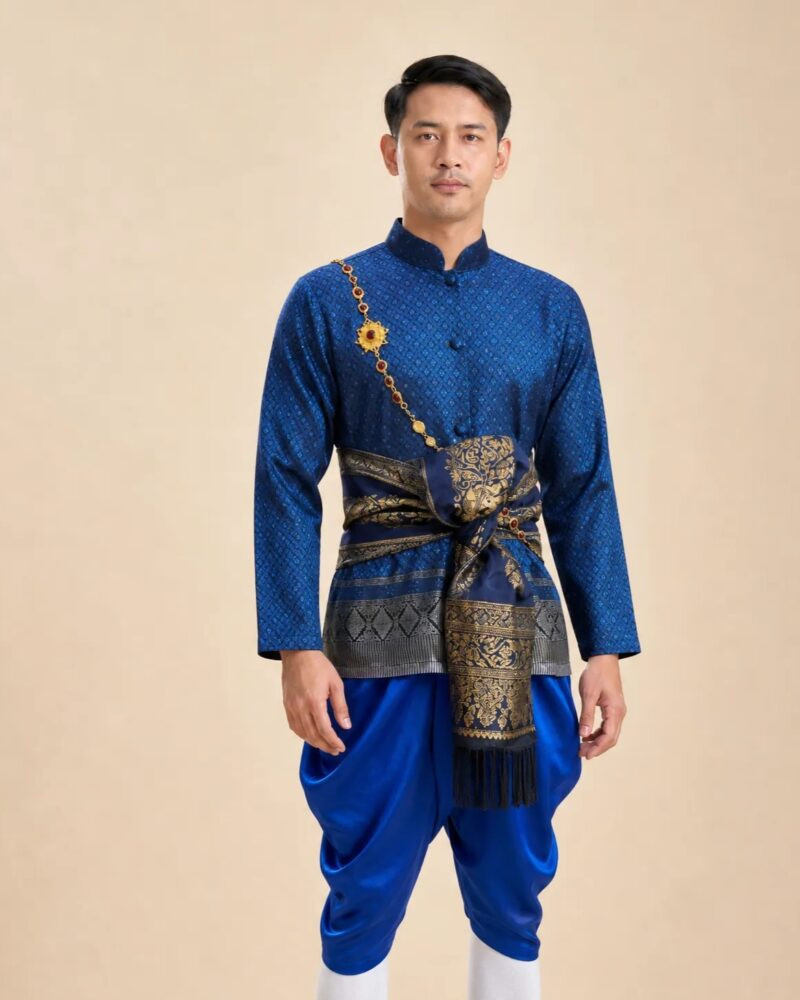
Thai dress for men is usually worn by the groom, sometimes by groomsmen or the fathers. The suea phraratchathan is the mandarin-collar formal shirt created for King Bhumibol in 1979 as a men’s national costume: a standing collar of three and a half to four centimetres, five flat covered buttons, worn with trousers as you would a suit jacket. It comes in three grades — short-sleeved, long-sleeved, and long-sleeved with a waist sash knotted at the left, the last being the full formal version. It has become a common choice for grooms, and it is much the easier of the two to wear well.
The older ratchapataen, the raj pattern jacket worn in Thailand since the late nineteenth century, is the more traditional look: a structured high-collared five-button jacket worn with a chong kraben, knee-high socks and closed shoes. Hybrids are common and perfectly accepted — a Western jacket over a chong kraben, or a ratchapataen over trousers.
Children
For flower girls, ring bearers and young guests, choose simplified traditional styles in comfortable, easy-care fabrics that coordinate with the wedding party. Freedom to move matters more than anything else — and for kids growing up here, being dressed properly for a family occasion is often the thing they remember about it.
Sourcing and Fitting
A custom bridal ensemble needs six to eight months when the cloth already exists. If silk is being woven for you, add roughly three months — a fully bespoke gown realistically wants nine to twelve. Ready-to-wear, bridal or guest, needs two to four months once you have allowed for shipping, exchanges and any alterations. A simple guest outfit needs less.
Order by measurements, not dress size. Thai garments are cut differently from anything on the high street, have very little stretch, and their sizing varies between pieces, with some ceremonial items made free-size. Bust, waist and hip are the three that matter, and it is worth having someone else take them. Our how to measure guide shows how.
Before you take it to a local tailor
This is the one that catches people out. Most alterations shops here have never handled a pha sin, and won’t know how to re-pleat a na-nang front or shorten a skirt without cutting straight through the border pattern, which is where the value of the cloth sits. Where you can, choose wrap and adjustable constructions over fitted ones, get the measurements right the first time, and ask us before anyone puts scissors to it.
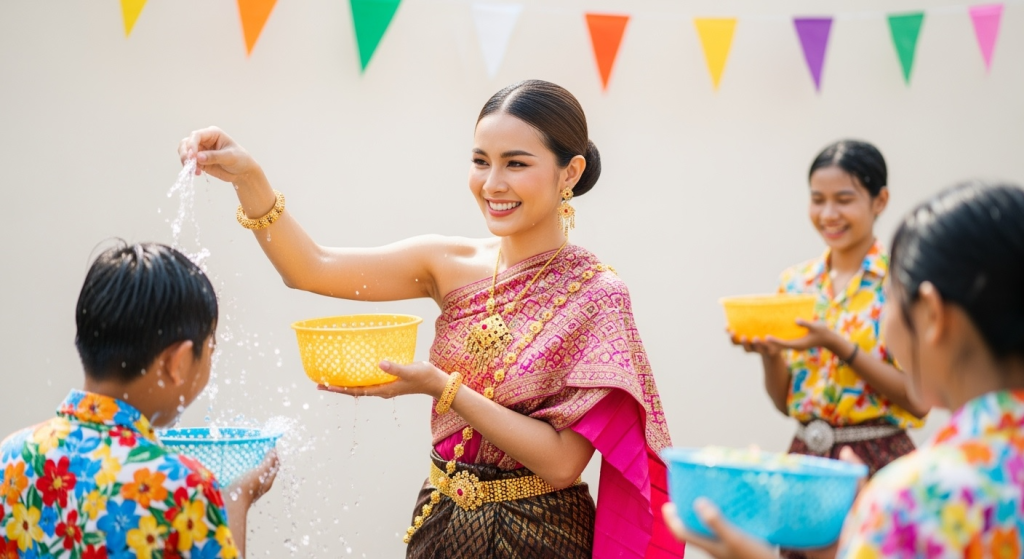
Borrowing within the family is still the best option when it exists, though here that usually means timing it around someone’s trip back. Where it doesn’t, buy versatile. A good skirt and blouse recombine with different wraps and jewellery, and they will carry you through Songkran, Loy Krathong, merit days at the temple, consulate events and your children’s Thai school performances long after the wedding.
When Your Guests Ask
You will end up being the cultural translator at your own wedding. Send the short version at the top of this page with the invitations and most of it takes care of itself.
For friends and in-laws who want to wear chut thai, it is genuinely welcomed when it’s worn with care rather than as a costume. Point them at authentic, well-fitted pieces and away from novelty versions, and warn them that construction varies a great deal: a pha sin may be a tube, a wrap, zipped or pre-pleated, and a sabai may be sewn in or draped and pinned. Nobody should be working it out for the first time on the morning.
And family customs vary more than any guide can capture. When you’re unsure, ask an older relative rather than the internet. The question is always better received than the mistake, and it is usually the conversation they were hoping you’d start.
Find your wedding attire
Thai outfit sets for brides, family and guests — made in Thailand, shipped to your door.
Common questions
Is Thai dress expected of guests?
No. It is genuinely welcome, but a modest formal dress, tailored separates or a suit are all perfectly correct.
Why can’t I wear black?
Black reads as mourning in a morning, temple or family setting. Navy and charcoal do the same job without the association, and the evening reception is more relaxed.
What’s the difference between Chakri and Boromphiman?
Chakri wraps a sabai over one shoulder and leaves the other bare. Boromphiman has long sleeves, a standing collar and no sabai, with blouse and skirt sewn as one piece. Boromphiman is the more formal and the more covered of the two.
Can guests wear champagne or blush?
Yes, provided the shade reads as a colour in photographs rather than as off-white.
Do Thai brides wear white?
Usually gold, ivory, champagne or red for the morning ceremony, with many changing into a Western white gown for the evening.
How early should I order?
Nine to twelve months if silk is being woven for you, six to eight for other custom work, two to four for ready-to-wear including shipping and alterations.
What shoes should I wear?
Something you can slip off one-handed, repeatedly, possibly while carrying something.
What is chut thai phra ratcha niyom?
“Thai dress of royal endorsement” — the eight formal styles developed under Queen Sirikit’s patronage during the 1960s from research into historic court dress. Four are commonly worn by brides: Chakri, Siwalai, Boromphiman and Chakkraphat.
Sources: Fine Arts Department, Ministry of Culture, ชุดไทยพระราชนิยม 8 แบบ. Royal Thai Consulate-General, Shanghai, “Chut Thai: Every Thai Traditional Dress Explained.” Queen Sirikit Museum of Textiles, “Fashioning Tradition: Queen Sirikit Creates a National Dress for Thailand.” Royal Thai Embassy, Tehran, “Wear Thai Dresses to These Special Occasions.”