

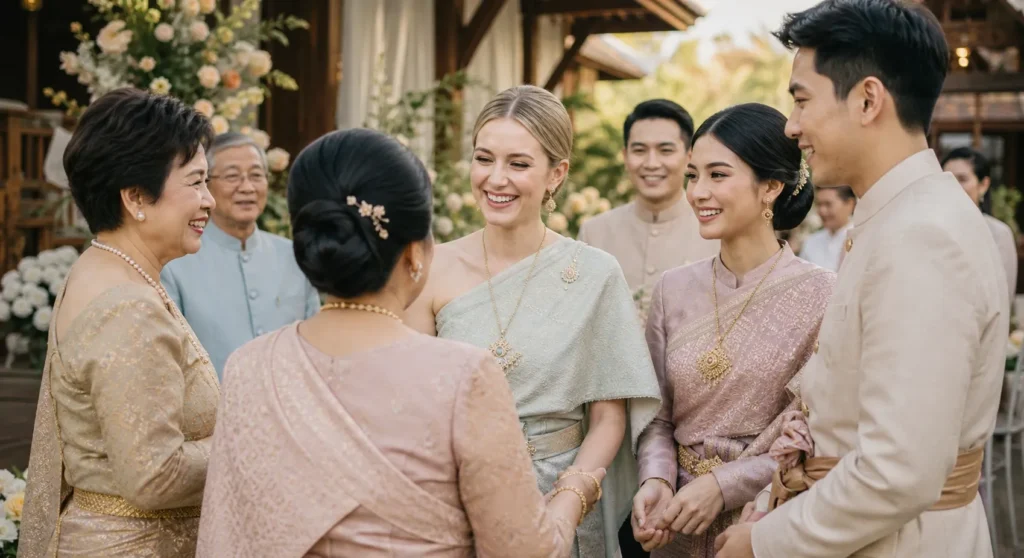
So you’ve been invited to a Thai wedding, a temple visit, or a family ceremony — maybe through your partner, maybe a close friend — and you’re not Thai yourself. If a small wave of “please don’t let me get this wrong” just went through you, that’s completely normal, and it’s also a good sign: it means you care about doing right by the people who invited you.
Here’s the reassuring part, up front: the rules are simpler than the worry makes them feel, the bar is “thoughtful effort,” not “flawless expert,” and this guide will walk you through exactly what to wear, what you’ll actually see happen on the day, and the handful of small customs worth knowing.
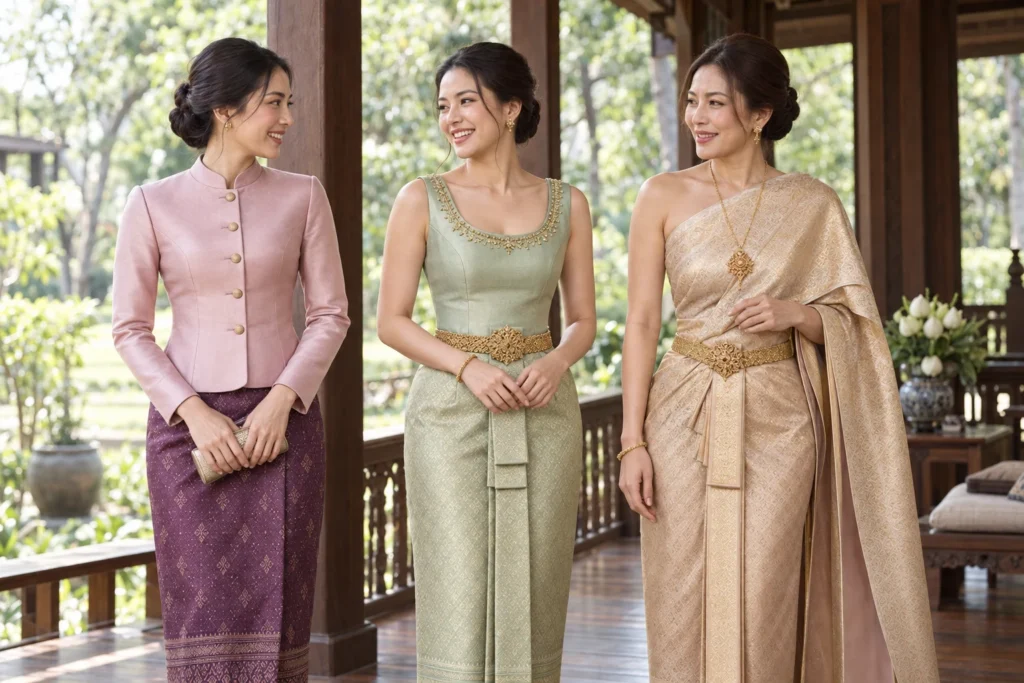
Dress modestly and neatly — shoulders and knees covered — especially if the day includes a temple or Buddhist ceremony, and wear shoes that slip off easily. For a wedding, follow the invitation first: many couples set a colour theme. If none is given, soft, celebratory pastels (blush, sage, powder blue, champagne) are the safest and most popular choice, with deeper jewel tones a lovely alternative for evening receptions. The one colour to avoid is solid black, which is linked to mourning. Wearing traditional Thai dress is genuinely appreciated when done respectfully. When unsure about anything, ask the person who invited you — they’ll be glad you did.
The reassurance you actually came for
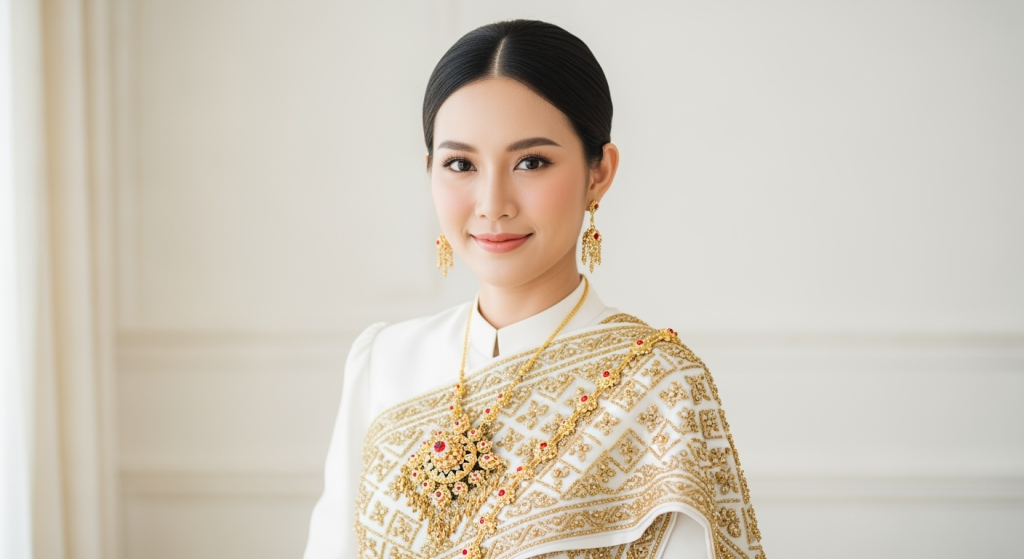
The most common worry non-Thai guests have isn’t “what colour” — it’s “is it weird, or even disrespectful, for me to wear Thai dress at all?” The honest answer: not at all. Wearing Thai traditional dress respectfully and in keeping with the occasion is generally appreciated — it reads as a genuine effort to honour the day, and hosts tend to take it as a compliment. You are not “borrowing” something you have no right to; you are joining a celebration the way your hosts hoped you would. What’s genuinely frowned upon is the careless stuff — turning up underdressed, in revealing clothes, or in attention-grabbing colours that pull focus from the couple. Get the basics right and you’ll fit in beautifully.
The two rules that cover 90% of it
Rule one: dress modestly
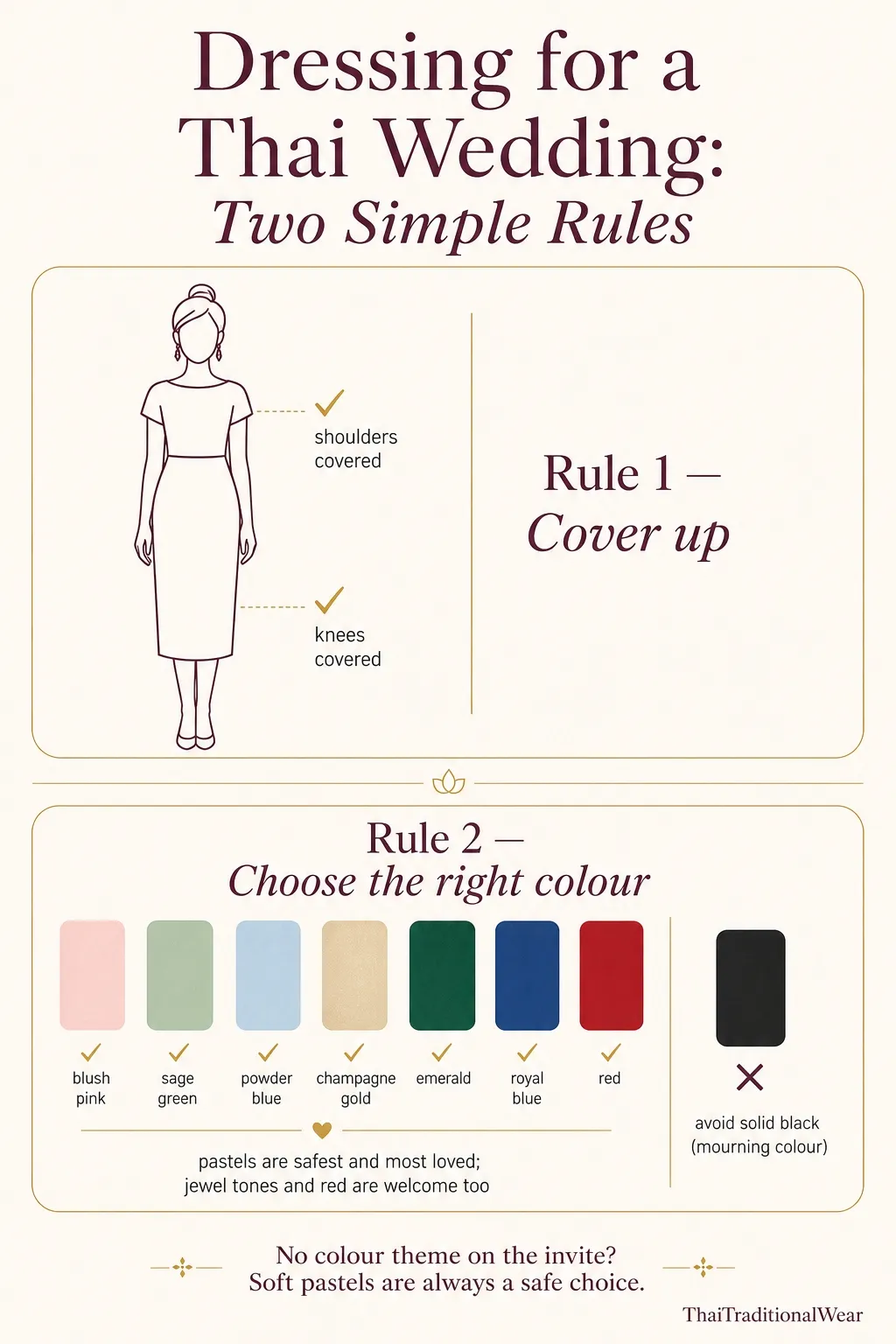
Cover your shoulders and your knees. That’s the whole rule, and it matters everywhere — but it’s most important at a temple. A piece with sleeves and a hem that reaches the knee or below keeps you both comfortable and appropriate all day. If your outfit is on the lighter side, carry a wrap or shawl; it lets you add coverage the moment you step into a sacred space.
Rule two: get the colour right
For a wedding, the safest and most popular choices are soft, celebratory pastels — blush pink, peach, sage green, powder blue, and soft champagne-gold. These light, cheerful tones suit the joyful, merit-making spirit of a Thai wedding. If you prefer something deeper, rich jewel tones like emerald or royal blue work beautifully too, especially for an evening reception. A few colour notes worth keeping in mind:
| Colour | The guidance |
|---|---|
| Solid black | The one to avoid. Black is linked to mourning and funerals in Thai culture, so it’s traditionally considered unlucky for the newlyweds. |
| Red | Welcome and auspicious — especially at Thai-Chinese weddings, where red and gold are the celebratory colours and the couple may even choose red as the theme. Just let the couple be the boldest red in the room. |
| White / ivory | Not a strict rule in Thailand the way it is in the West, but pale ivory can photograph as bridal at a formal ceremony. If you love a pale look, check the couple’s theme first. |
The simplest rule of thumb: follow any colour theme on the invitation; if there isn’t one, soft pastels are always a safe, well-loved choice. Our guide to Thai colour meanings explains the why behind all of this.
What actually happens at a Thai wedding
One reason guests feel nervous is simply not knowing what’s coming. A traditional Thai wedding has a recognisable flow, and once you know the beats, the day stops feeling like a test. You won’t be expected to perform any of it as a guest — but you’ll know what you’re watching, and that alone settles the nerves.
Not every Thai wedding includes every ritual, and the order can vary by region, family tradition, and religion. Many modern weddings pair a traditional morning ceremony with a separate evening reception. Treat the flow below as a friendly map, not a fixed script.
| What you’ll see | What it is |
|---|---|
| The Khan Maak procession | The groom arrives with a lively, music-and-dancing procession bearing gifts, often “stopped” at playful gates by the bride’s friends until he charms (or pays) his way through. Joyful and fun — feel free to cheer along. |
| The monk blessing & merit-making | If monks are present, they chant blessings for the couple and the family makes merit through offerings. This part is calm and reverent — quieten down, switch your phone to silent, and follow the room’s lead. |
| Sai Monkhon (the white thread) | The couple kneels and a linked white thread is placed over both their heads, symbolically joining them while keeping them as two individuals. A quiet, meaningful moment. |
| Rod Nam Sang (the water blessing) | The couple kneels with hands pressed together, and guests — elders first — take turns pouring scented water from a conch shell over their hands while offering good wishes. Guests are often invited to take part; just follow the person ahead of you. |
| The celebration / reception | The relaxed part — food, drinks, speeches, and dancing, much like any wedding reception. |
The Rod Nam Sang is the moment a guest is most likely to be actively included. There’s nothing to memorise: approach when it’s your turn, gently pour the water from the shell over the couple’s hands, offer a short word of congratulation or simply a warm smile, and step aside. Doing it with genuine warmth is all that’s asked.
What to wear, by who you are on the day
Here’s the same guidance pinned to the real situations non-Thai guests find themselves in.
| You are… | A good choice |
|---|---|
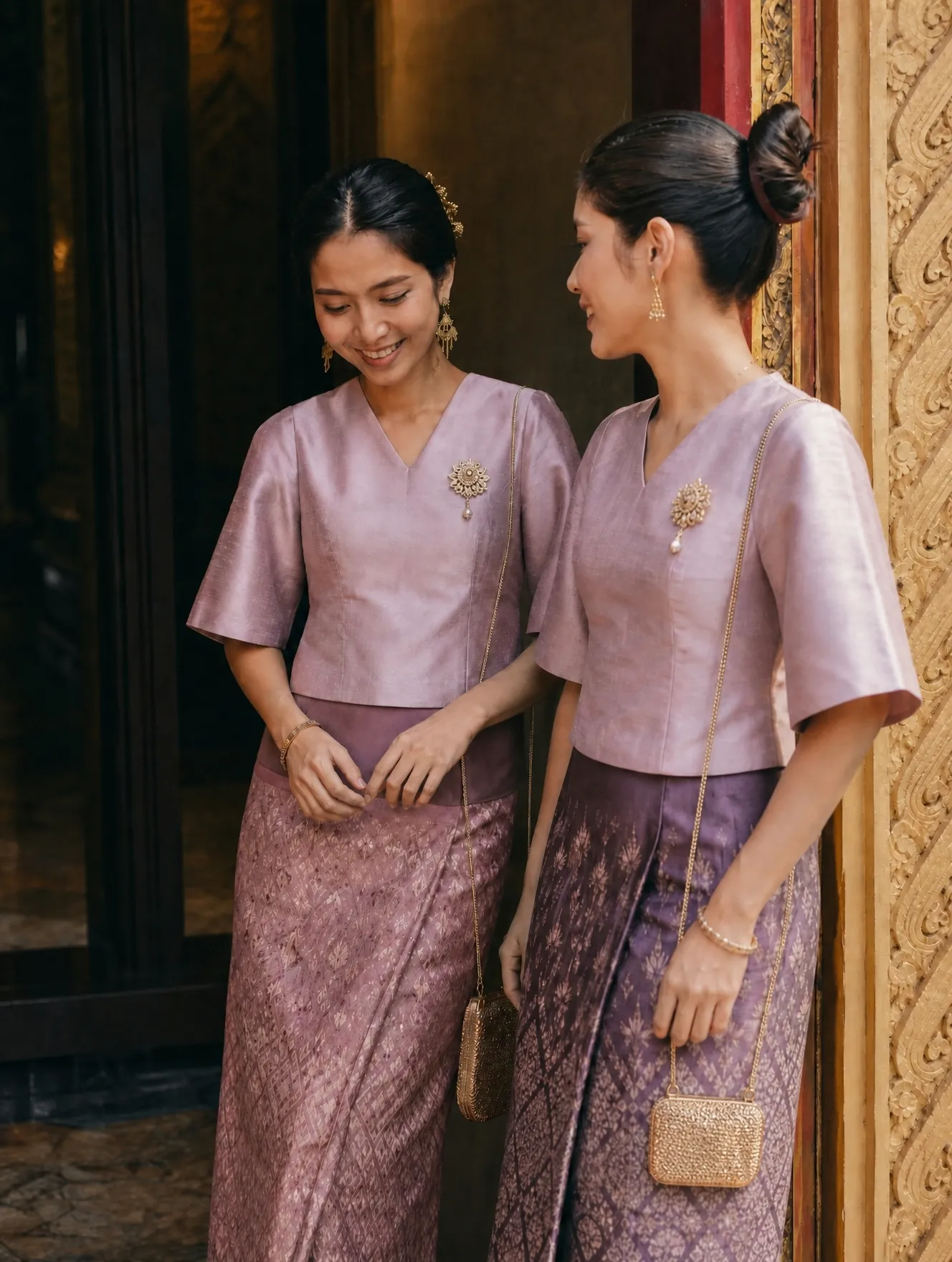
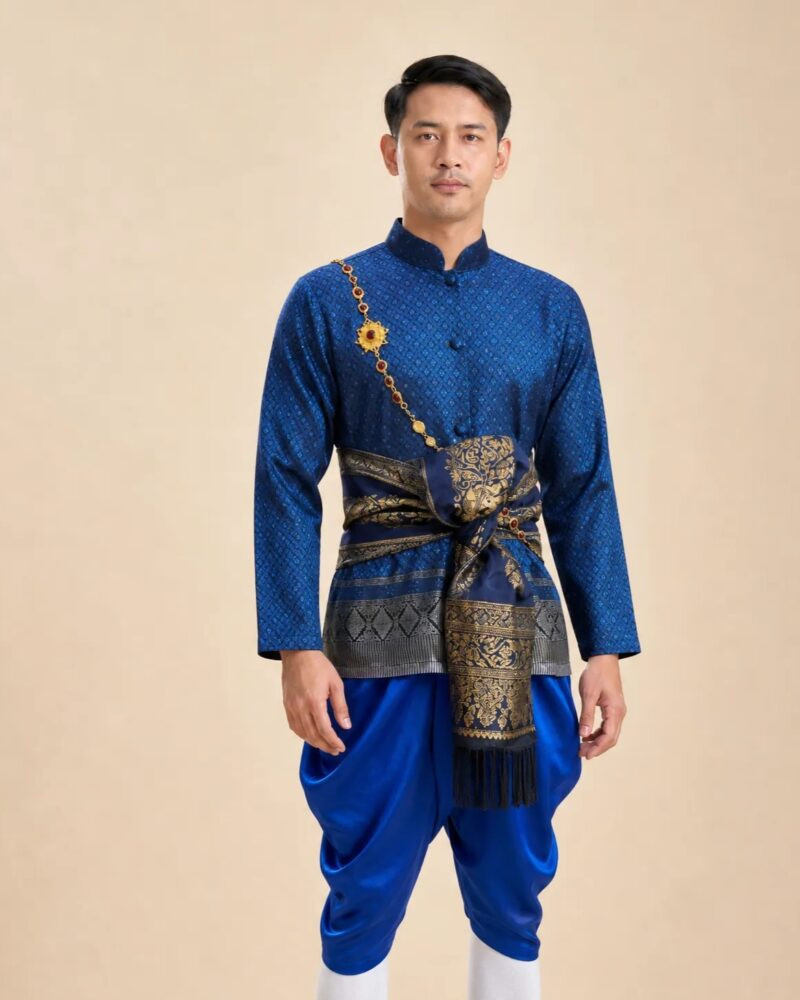
| The partner meeting the family, or in the wedding party | A full traditional outfit shows real commitment to the occasion. For women, a Chut Thai set — a fitted blouse with a wrapped Pha Sin skirt — in a soft pastel or jewel tone; for men, a Thai shirt or full set. |
| A close friend of the couple | An elegant traditional set in a pastel or jewel tone, or smart modest formal wear in a wedding-friendly colour. |
| A general guest who’d rather not wear traditional dress | Modest formal wear — covered shoulders and knees, a respectful colour, nothing flashy. Perfectly acceptable. |
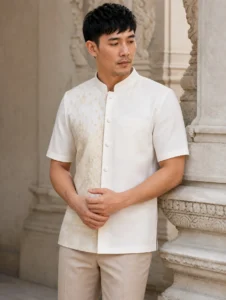
| A man, of any of the above | A traditional Thai shirt, a full set, or a smart suit with a Thai silk-blend accessory. See our men’s guide. |
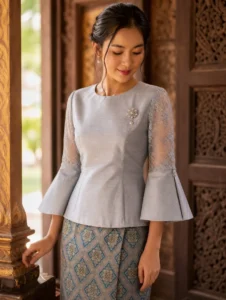
Chut Thai simply means “Thai outfit” — it’s an umbrella term covering several formal styles, not one single look. A couple are worth knowing by name: covered-shoulder styles such as Ruean Ton (relaxed and modest) and Chit Lada (long-sleeved, daytime-formal) are versatile and temple-friendly, while a one-shoulder style like Chakri is lovely for an evening reception but isn’t suited to a temple because it leaves a shoulder bare.
For a full breakdown by role, colour and season, our wedding guest outfit guide goes deeper.
Visiting a temple — the stricter setting
A temple (wat) is a sacred space, so modesty matters most here. The points below are the ones that hold almost everywhere; some major or highly visited temples enforce stricter rules still.
Cover your shoulders, and wear a skirt or trousers that cover the knees — some temples are stricter, so a wrap or shawl is handy to have. Choose modest, non-revealing clothing over anything flashy. Wear shoes that slip off easily, as you’ll remove them before entering temple buildings. Inside, keep your voice low and your phone on silent. When sitting on the floor, the traditional posture is Phap Phiap — both legs tucked to one side with the feet pointing backward — so the soles never point towards the Buddha image or a monk, as feet are considered the lowest part of the body. Women should avoid physical contact with monks; if you’re offering something, follow the temple’s lead or place it where directed rather than handing it over directly. Above all, watch the people around you and follow what they do.
A few small customs that earn quiet respect
None of these are expected of a guest, but knowing them helps you move through the day with ease. The wai — a slight bow with your palms pressed together at chest height — is the traditional greeting and thank-you. It’s also gently hierarchical: return a wai when an host, elder, or peer offers you one, but you don’t need to return one to children or to service staff — a warm smile and a nod is the gracious response there. In Thai culture the head is the most respected part of the body and the feet the least, which is why you avoid touching people’s heads and never point your feet at someone, at a monk, or at a sacred image. Step over thresholds rather than on them at temples and older homes. And the universal rule that covers everything you’re unsure of: watch what those around you do, and follow their lead. Thai hosts are warm and forgiving with guests who are clearly trying.
Where to find the right outfit
If you’d like one Thai outfit that works across temple-linked and family occasions, choose a modest, covered-shoulder style with a below-knee or ankle-length skirt — a Ruean Ton or Chit Lada-inspired set is far more versatile than a one-shoulder style for mixed wedding-and-temple use. Our sets run from XS to 5XL with a full measurement chart on every product page, and because buying an unfamiliar garment online for the first time can be daunting, you can email hello@thaitraditionalwear.com before you order and we’ll help you with size, style, and colour.
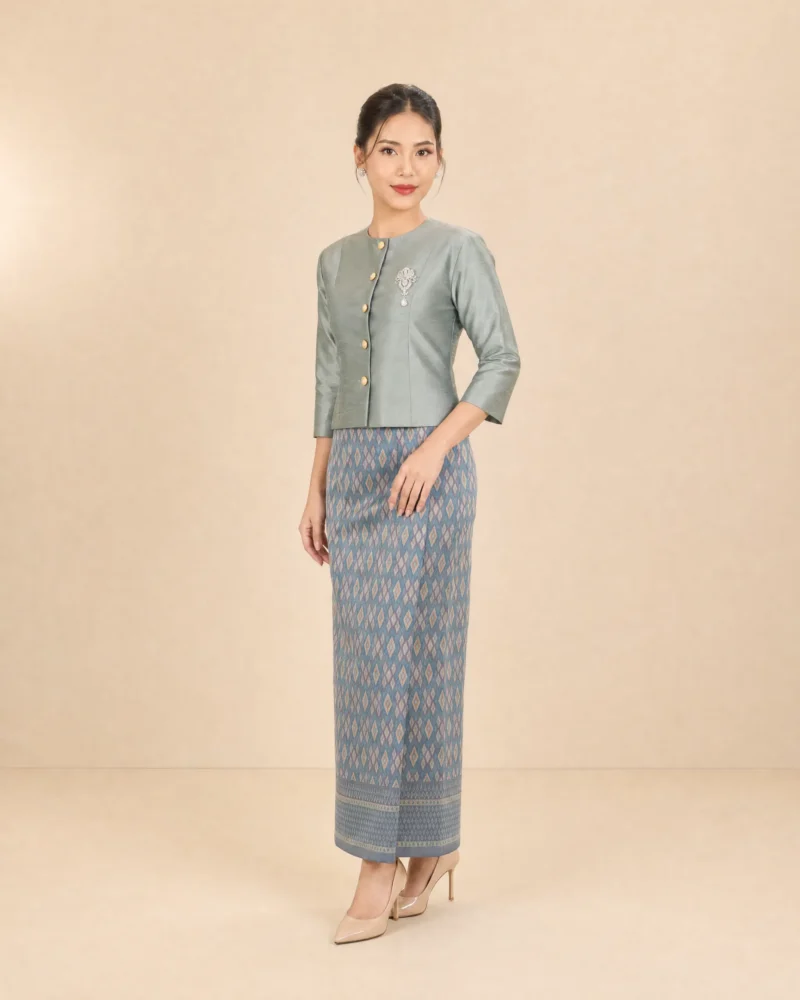
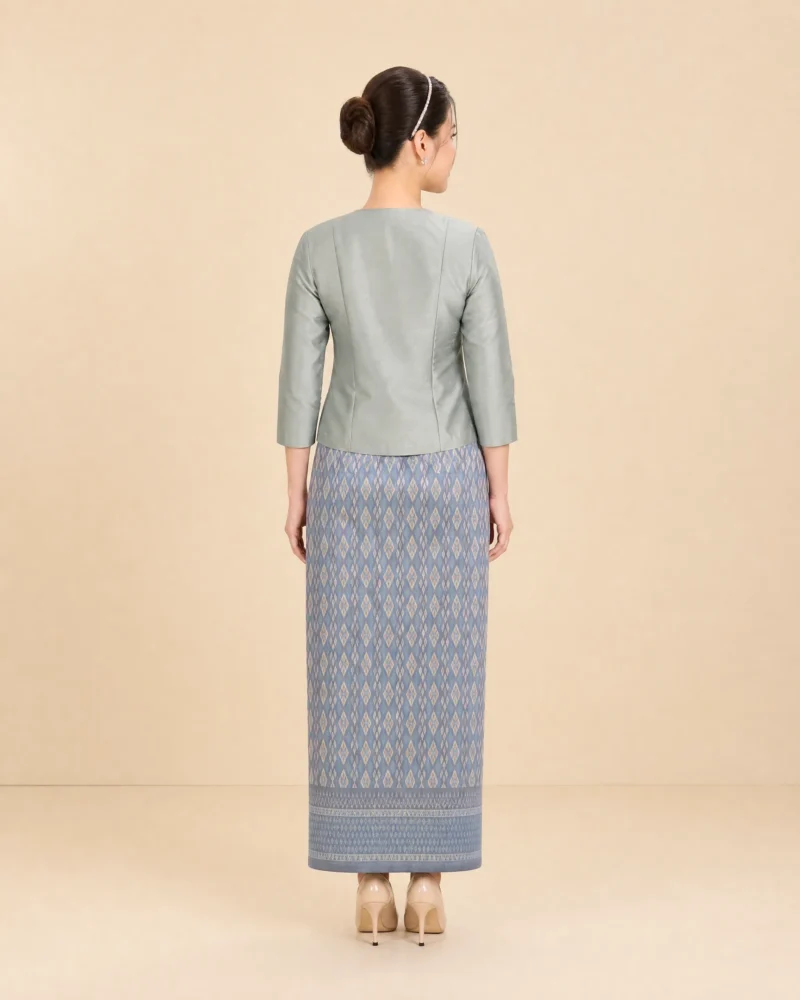
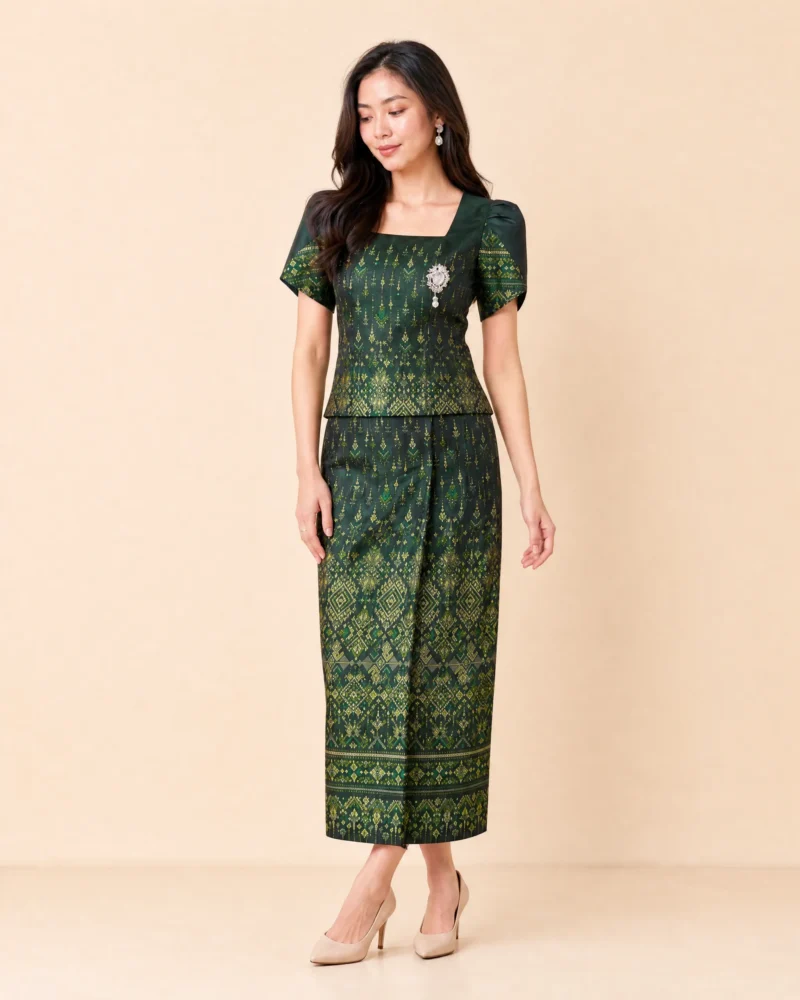
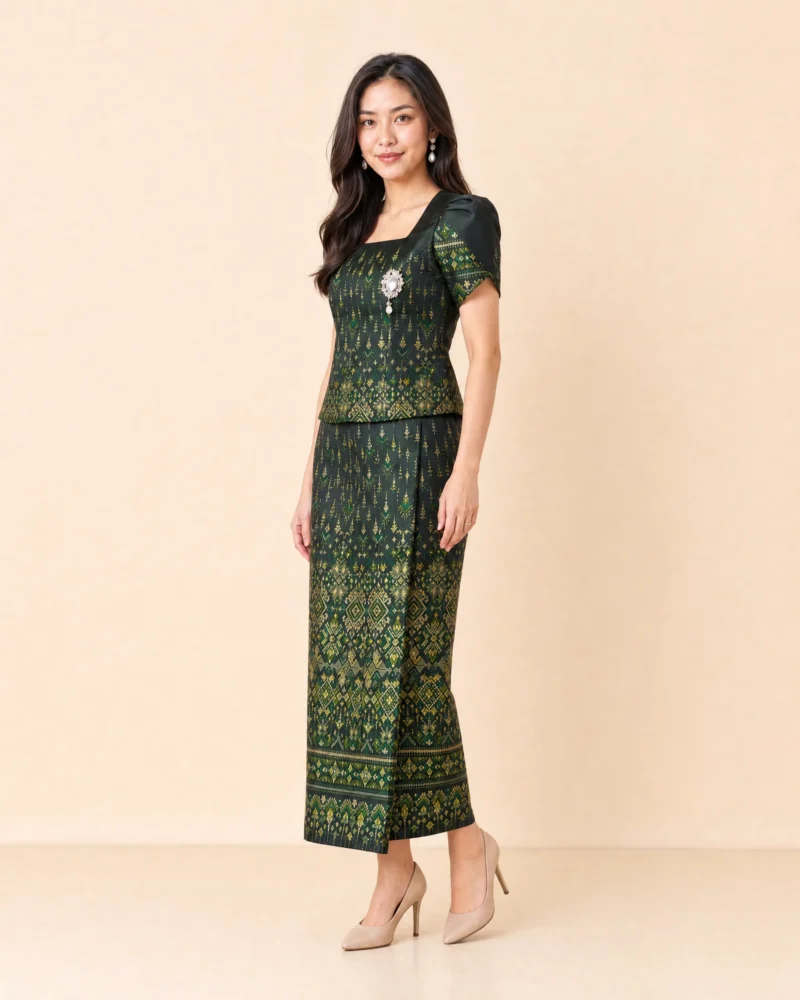
The Achara Set (Sage & Blue Grey) & The Mali Set (Emerald)
Both are modest, covered-shoulder silk-blend sets that work across a wedding and a temple visit — the Achara in quiet sage and blue-grey, the Mali in a richer emerald. Made in Thailand, sizes M–4XL.
The Achara Diamond Brocade Set (Sage & Blue Grey)
From US$185.00The Mali Prae Wa Silk Set (Emerald)
From US$185.00
Browse everything in the Thai outfit sets collection, and use our How to Measure guide to get the fit right first time.
Frequently asked questions
Is it okay for a non-Thai person to wear Thai traditional dress?
Yes — it’s generally appreciated when done respectfully and in keeping with the occasion. Dressing traditionally and thoughtfully for a Thai wedding or ceremony reads as respect and effort, and hosts tend to take it as a compliment. The thing to avoid isn’t traditional dress; it’s anything careless, revealing, or attention-grabbing.
What should I wear to a Thai wedding if I’m not Thai?
Follow the invitation first — many couples set a colour theme. If none is given, soft pastels (blush, sage, powder blue, champagne) are the safest and most popular choice, with deeper jewel tones a good alternative for evening receptions. Cover your shoulders and knees, and avoid solid black.
Can I wear red to a Thai wedding?
Yes. Red is auspicious and especially welcome at Thai-Chinese weddings, where red and gold are the celebratory colours. The only caution is not to be a bolder red than the couple. If you’re unsure, check whether the couple has set a colour theme.
What happens at the water-pouring ceremony, and will I have to take part?
In the Rod Nam Sang, the couple kneels and guests pour scented water from a conch shell over their hands while offering good wishes, elders going first. Guests are often invited to take part — there’s nothing to memorise. When it’s your turn, pour gently, offer a warm word or smile, and step aside.
What’s the dress code for a Thai temple?
Modest is essential: cover your shoulders and wear a skirt or trousers that cover the knees, with shoes you can slip off at the entrance. Keep colours modest rather than flashy, sit with your feet tucked away from the Buddha image and monks, and keep quiet and unhurried. Some temples enforce stricter rules, so a wrap is handy to have.
Do I need to know the wai or other customs?
It helps but isn’t expected of a guest. Return a wai when a host, elder, or peer offers you one (a smile and nod is fine for children or staff), avoid touching people’s heads or pointing your feet at people or sacred images, and otherwise follow your host’s lead. A clear, genuine effort is always received warmly.
Dress with confidence
Modest, elegant Thai outfit sets for weddings and ceremonies, sizes XS–5XL — made in Thailand and shipped worldwide, free, tracked, and duty-covered on US orders.
Shop Thai outfit sets