

Men’s Thai Traditional Wear: A Styling & Etiquette Guide
What to wear, how it fits together, and how to look sharp and respectful at any Thai cultural event.
Browse Thai shirts and coordinated outfits.
Your partner’s cousin is having a traditional Thai wedding next month, and you’re expected to wear traditional Thai clothing — and suddenly you realise there’s far less written for men than for women. You’re not alone. Thai men’s attire carries just as much cultural meaning and craftsmanship; it’s simply less talked about. Whether you’re a non-Thai partner marrying into a Thai family, a second-generation Thai-American reconnecting with your heritage, or just need the right outfit for an event, this guide will help you choose with confidence.
For most occasions, a suea phraratchathan — a mandarin-collar silk shirt — worn with smart dark trousers is the versatile, comfortable choice and works for weddings, formal dinners, and cultural events. For the most formal or heritage-rich looks (grooms especially), the ratchapataen jacket worn with a chong kraben is the standout. Keep colours dignified, fit clean, and accessories minimal. For temples, cover shoulders and knees and wear shoes you can slip off.
The Basics
Thai traditional dress for men is generally built from a few core pieces rather than a fixed set of named “styles.” The upper garment is usually a suea phraratchathan (the royally bestowed mandarin-collar shirt). The lower garment is either trousers or a chong kraben — a length of cloth wrapped and tucked between the legs. For the most formal looks, these may be finished with a sabai (shoulder cloth) and knee-length white socks. What sets a good outfit apart is fit and proportion: well-fitted pieces look authentic and elegant, while ill-fitting ones can read as costume.
The Two Main Looks for Men
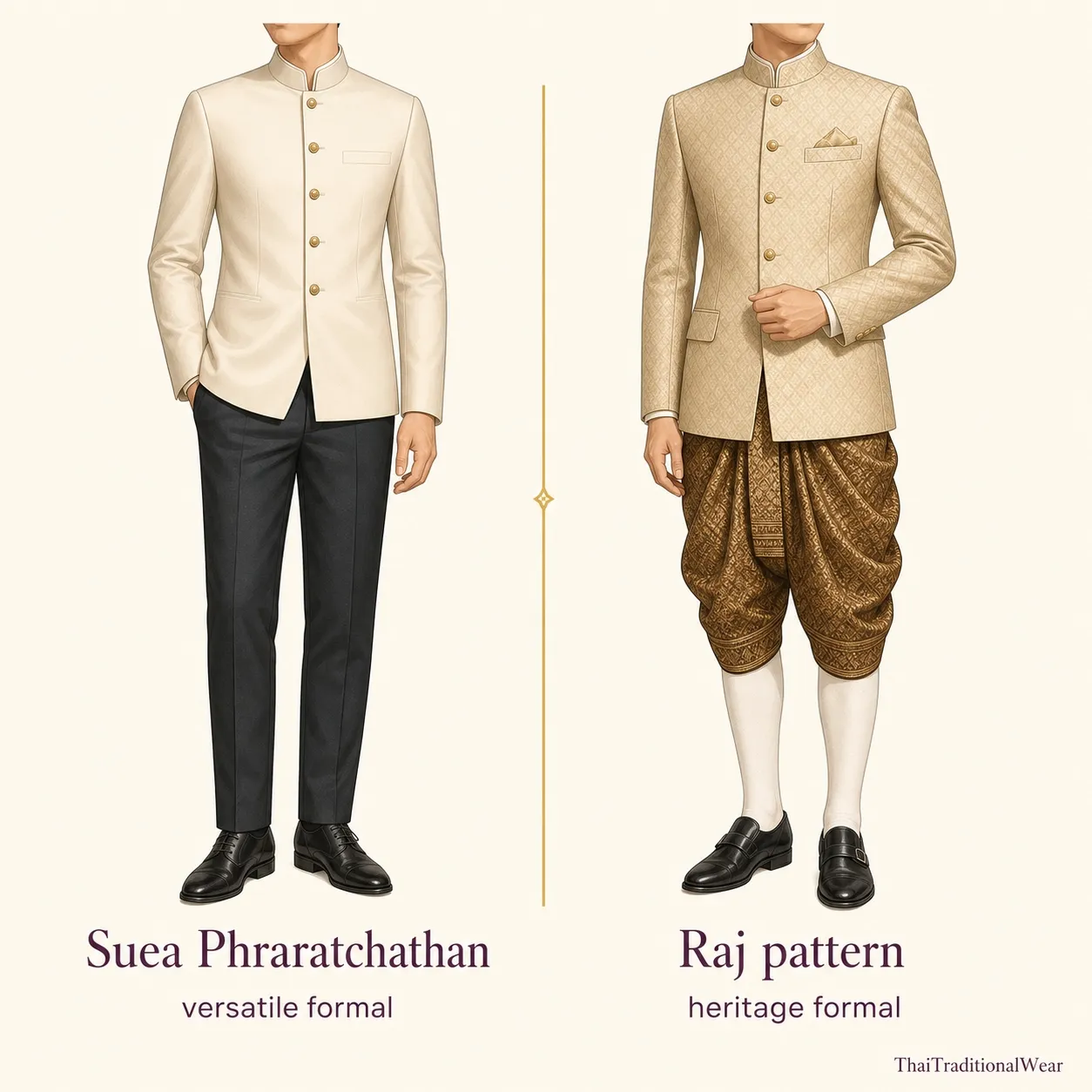
Suea Phraratchathan — the versatile everyday formal
Introduced in 1979, the suea phraratchathan is a tailored, long-sleeved silk shirt with a stand-up mandarin collar and five buttons, designed to be worn with smart Western-style trousers. It’s the most practical and popular option for modern occasions — weddings, formal dinners, embassy functions, and cultural celebrations — because it looks distinctly Thai while staying comfortable and easy to wear. A short-sleeved version exists for warmer, less formal settings.
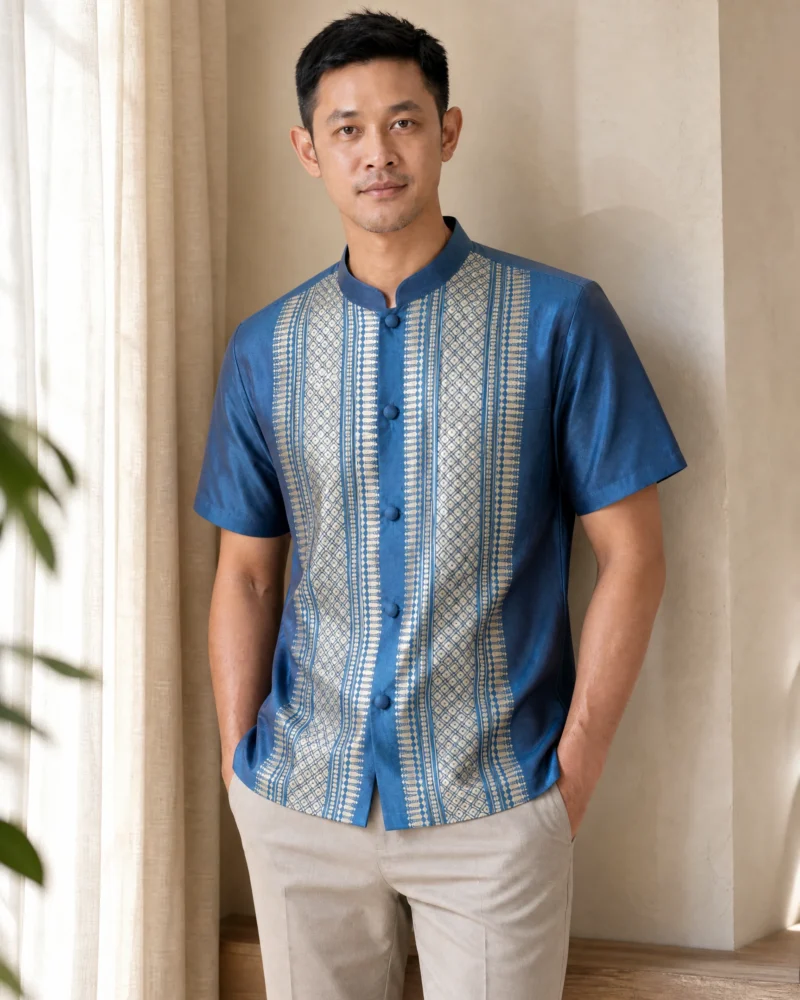
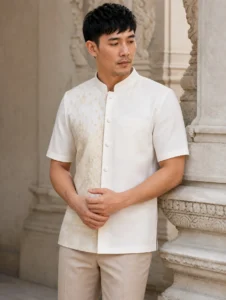
Rungroj Mandarin-Collar Shirt
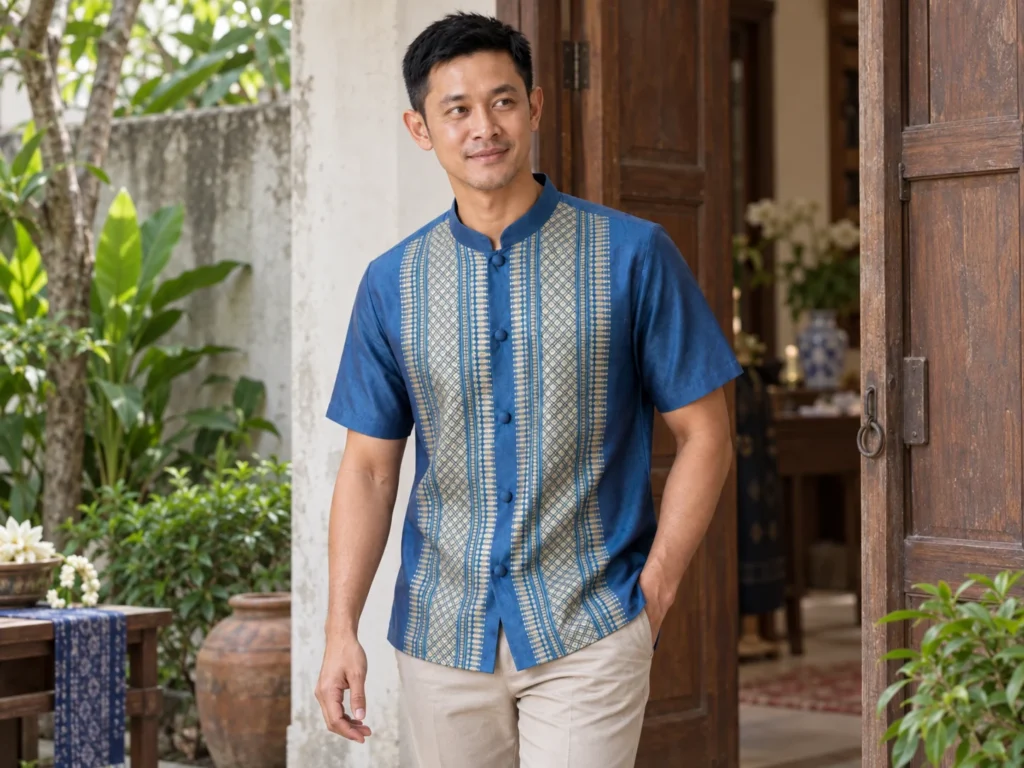
A short-sleeve option with a mandarin collar and Thai motifs. Includes the shirt only; pair with your own trousers.
View Rungroj colours and sizesRatchapataen (Raj pattern) — the heritage formal
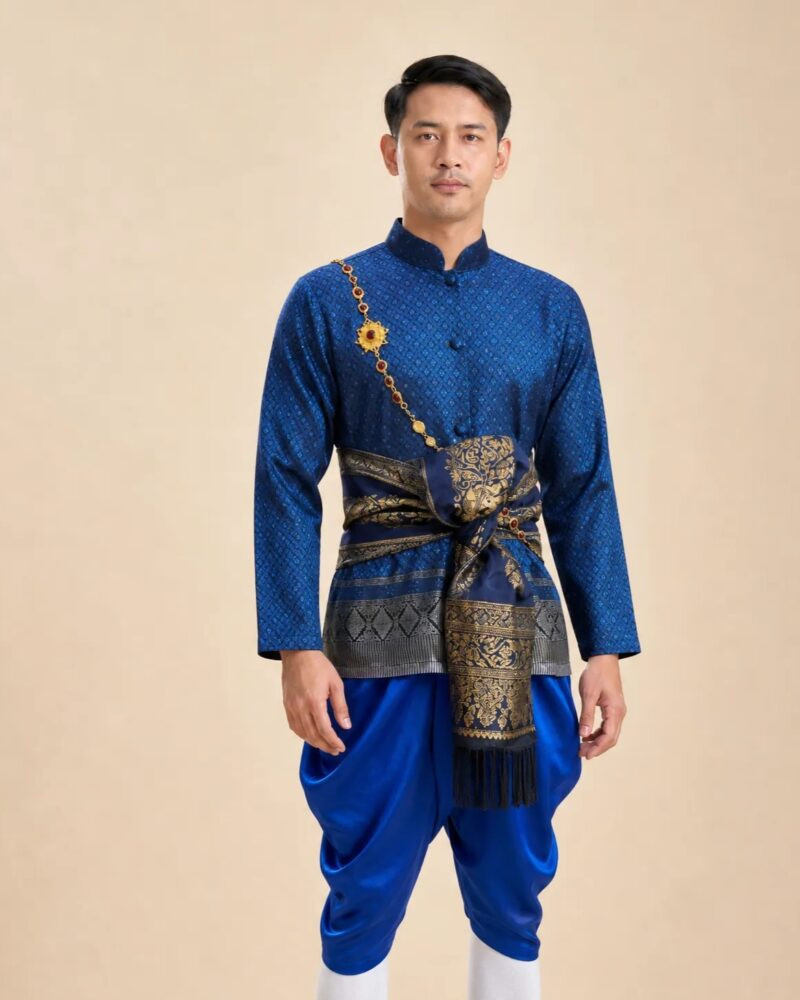
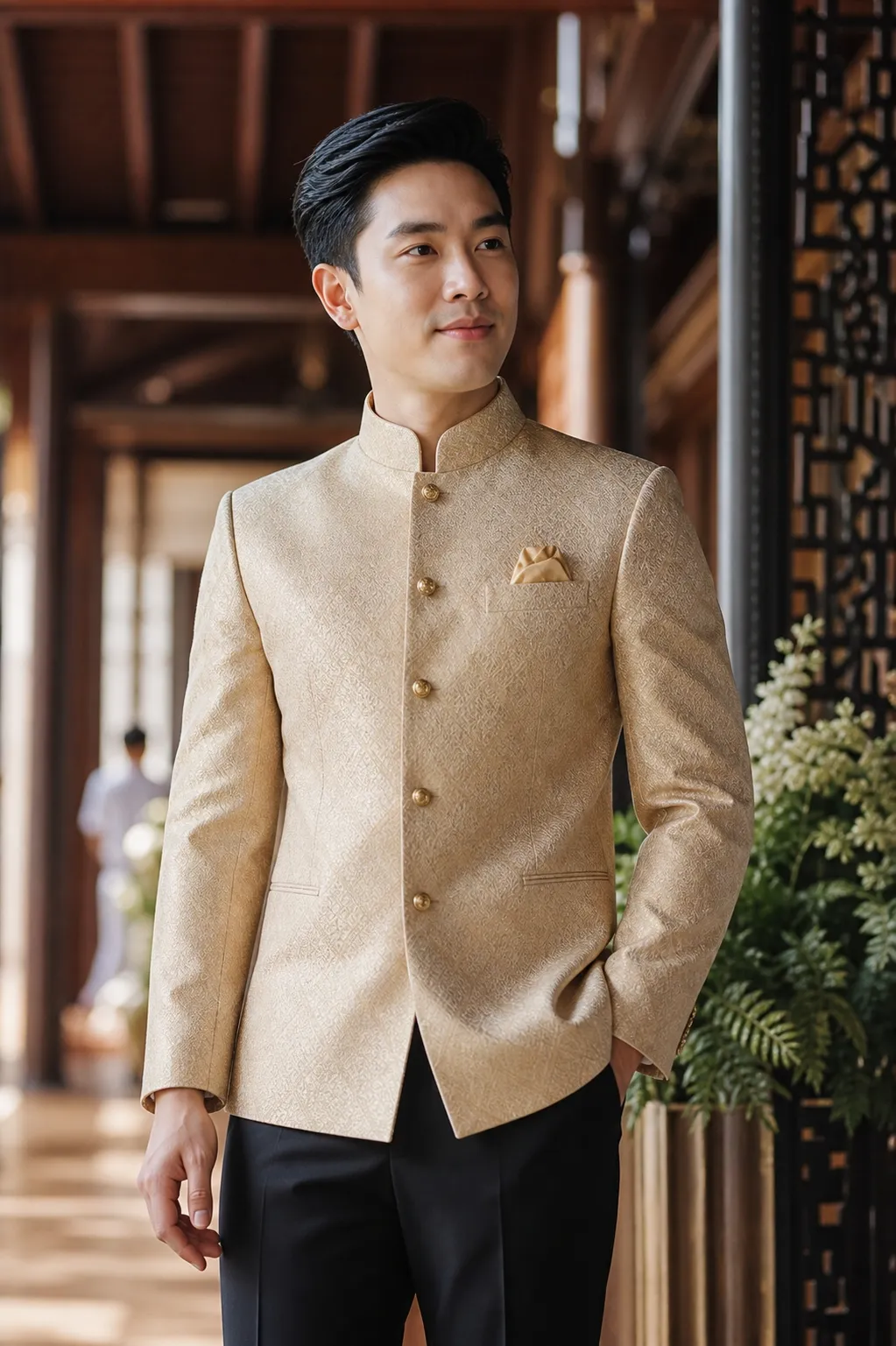
The older ratchapataen, introduced during the reign of King Rama V (King Chulalongkorn), is a structured, high-collared jacket traditionally worn with a silk chong kraben, knee-length white socks, and dress shoes. It is the more elaborate, ceremonial choice — often worn by grooms, groomsmen, and immediate family at traditional weddings and the most formal cultural events.
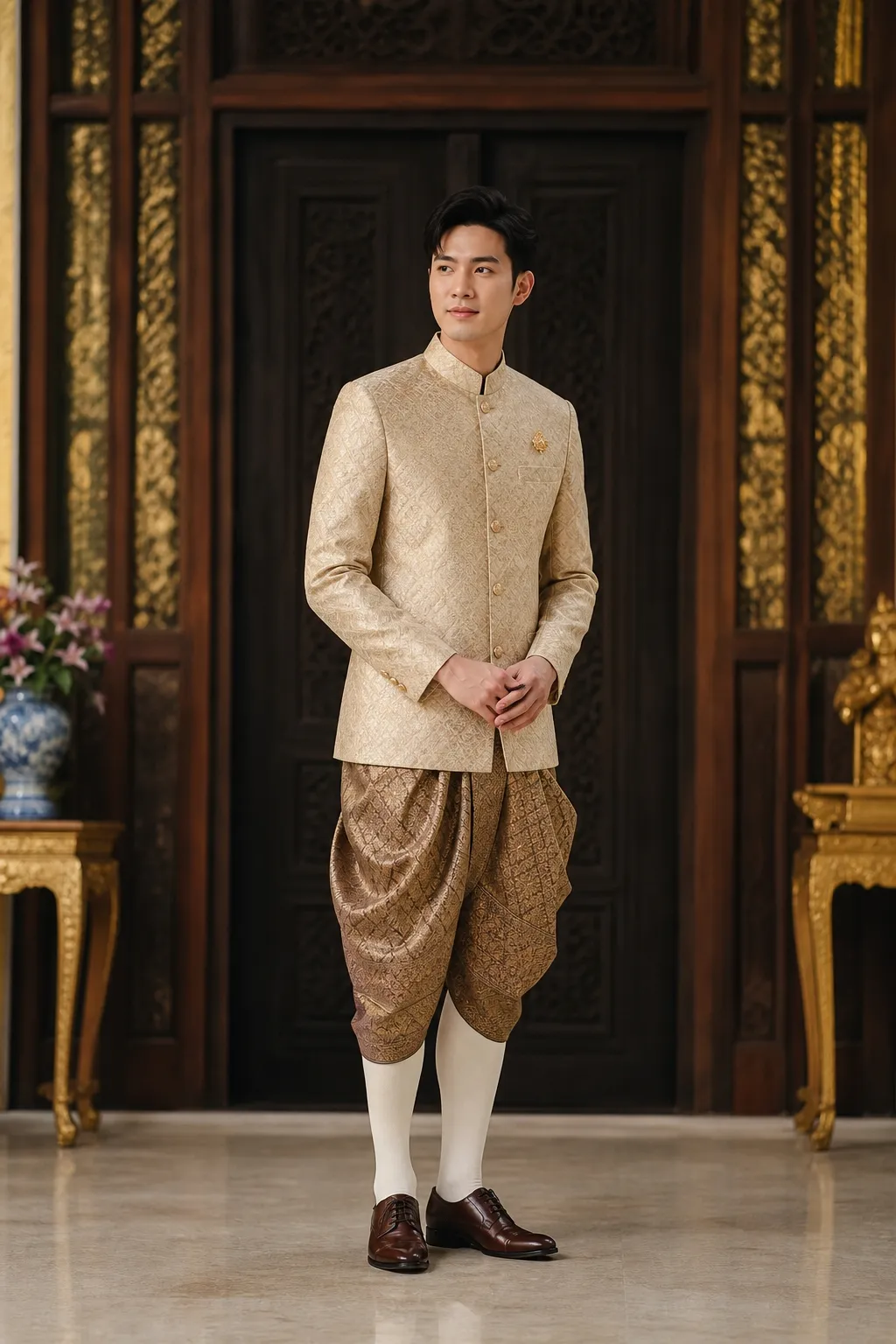
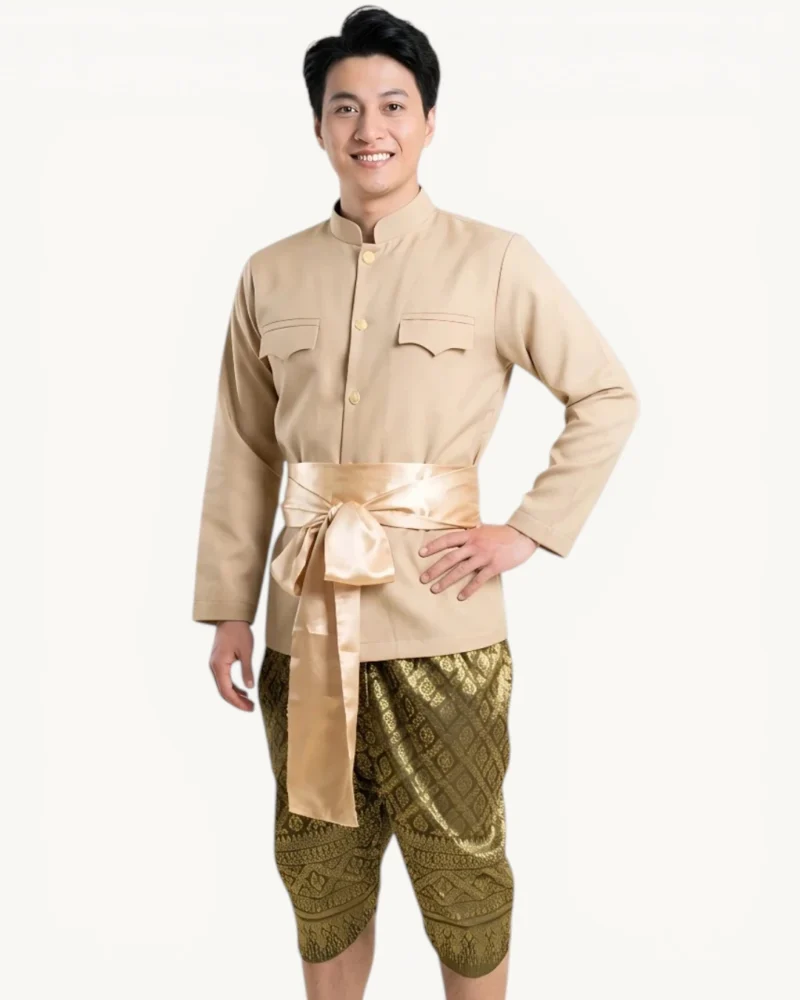
Sirichai Raj Pattern Set
A coordinated three-piece look: Raj Pattern shirt, Chong Kraben trousers and matching waist sash.
View Sirichai colours and sizesWhat to Wear, by Occasion
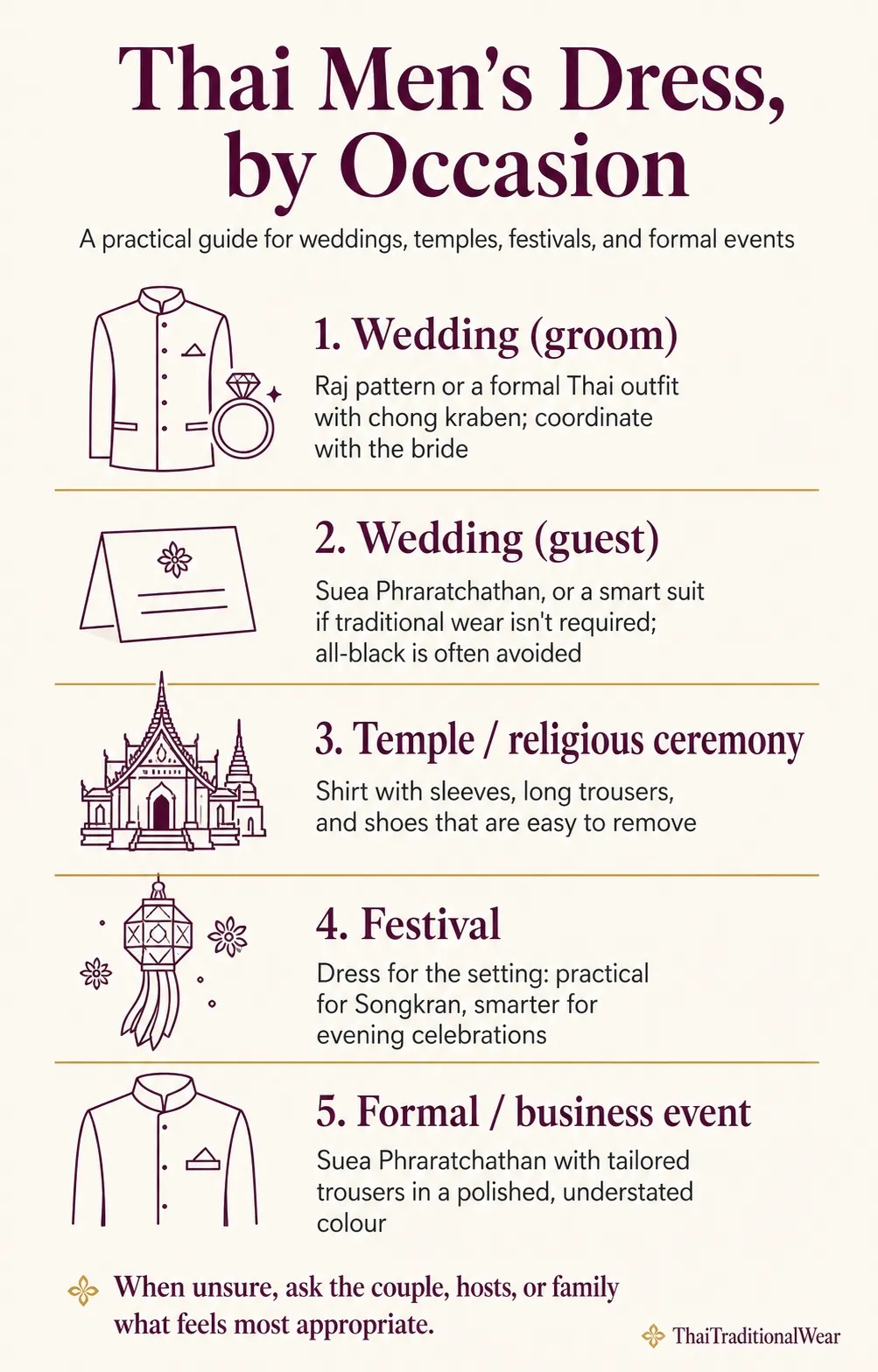
| Occasion | Suggested look |
|---|---|
| Traditional wedding — groom | Ratchapataen with chong kraben, or a richly coloured suea phraratchathan. Coordinate colours with the bride. |
| Traditional wedding — guest | Suea phraratchathan in a dignified colour, or a well-fitted suit with a Thai-silk tie. Don’t outshine the wedding party; avoid solid black. |
| Temple / religious ceremony | Modest, covered: long trousers, covered shoulders, quiet colours. Shoes that slip off easily. |
| Cultural festivals | Comfortable, practical fabrics. For Songkran, simple and water-friendly; for Loy Krathong, a smarter suea phraratchathan suits the evening. |
| Formal / business cultural events | Suea phraratchathan in a conservative colour, matched to the event’s formality. |
Sizing and Fit
Fit is what separates authentic from costume. Take a few key measurements: chest at the fullest point, shoulder width, sleeve length, neck for the collar, and waist and hip for the lower garment. A shirt should allow comfortable arm movement without being baggy, the collar should sit cleanly without gaps, and trousers or a chong kraben should drape without dragging.
One practical note: imported sizing often runs smaller than Western sizing, so check measurements rather than relying on a size label. If you’re between sizes, go slightly more fitted for photographed occasions and slightly roomier for comfort-focused, all-day events. Our How to Measure guide walks through it, or email hello@thaitraditionalwear.com.
Fabric and Quality
Thai silk and good silk-blends are the classic choice — lustrous, breathable, and elegant. Cotton and cotton-blends are more affordable and easier to wash, making them good for frequent or casual wear. For quality, look for clean, even seams, properly aligned patterns, secure buttons, and an even weave with no thin spots. For hot-weather events, lighter fabrics and a short-sleeved shirt keep you comfortable; for formal indoor occasions, silk photographs beautifully.
Styling and Colour
Thai men’s dress is elegant on its own, so keep accessories minimal — a simple watch or modest jewellery, clean leather shoes, and neat grooming. On colour, gold reads as prosperity, deep blue as dignity, and rich jewel tones suit celebrations. Keep temple and religious-ceremony colours conservative, and save brighter, bolder choices for festivals. Avoid solid black at weddings, as it’s associated with mourning.
Common Mistakes to Avoid
The most frequent slip is poor fit — well-fitted clothing looks authentic, ill-fitting clothing looks like a costume. Beyond that: over-accessorising (the outfit is elegant enough on its own), wearing casual footwear like sneakers with formal attire, ignoring temple coverage requirements, and choosing heavy silk for a hot outdoor event. When unsure about formality or a family’s expectations, simply ask the couple or your Thai relatives — the effort is always appreciated.
Caring for Your Thai Clothing
Always follow the garment’s care label first. In general: air pieces out fully before storing, address stains promptly, and store in a cool, dry place away from direct sunlight in a breathable garment bag. Silk benefits from gentle handling and, for valuable or embellished pieces, a cleaner experienced with delicate or Asian textiles. When ironing silk-blend, use a low setting on the reverse with a pressing cloth.
Find your Thai outfit
Premium silk-blend Thai traditional wear, made in Thailand and shipped worldwide.
Shop traditional Thai clothing for menCommon questions
What’s the most versatile Thai outfit for a man?
A suea phraratchathan — a mandarin-collar silk shirt worn with smart trousers. It works for weddings, formal dinners, and cultural events, and is comfortable to wear all day.
What should a non-Thai groom wear?
A ratchapataen jacket with a chong kraben for a full traditional look, or a richly coloured suea phraratchathan. Coordinate colours with the bride, and consider renting if you’ll only wear it once.
What do I wear to a temple?
Long trousers, covered shoulders, quiet colours, and shoes you can slip off easily before entering.
Can I wear black?
Best avoided at weddings, since black is associated with mourning in Thai culture. Dignified colours like deep blue or jewel tones are safer.