

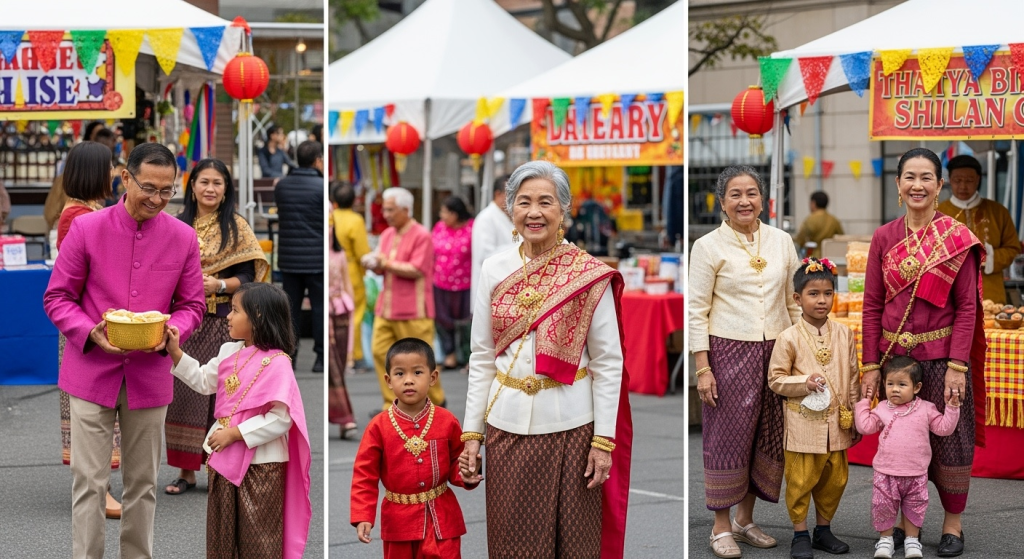
If you’ve grown up between two cultures — or married into a Thai family, or simply been welcomed into a Thai community in the US — the calendar of cultural events can feel like a language you half-speak. You know Songkran involves water and Loy Krathong involves little floating lights, but when the invitation lands, the real question is quieter and more specific: what do I wear, and will I get it right?
This guide covers many of the major events on the Thai-American calendar. But it does something first that most “what to wear” articles skip: it explains what each occasion actually is, because once you understand the meaning of the day, the right clothes become far easier to judge.
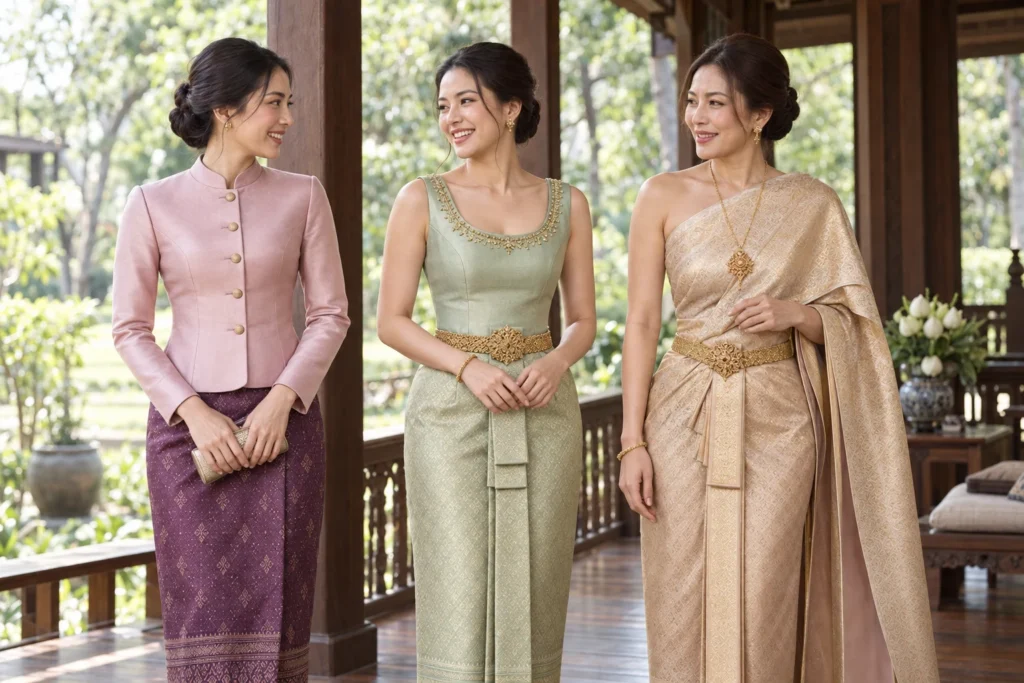
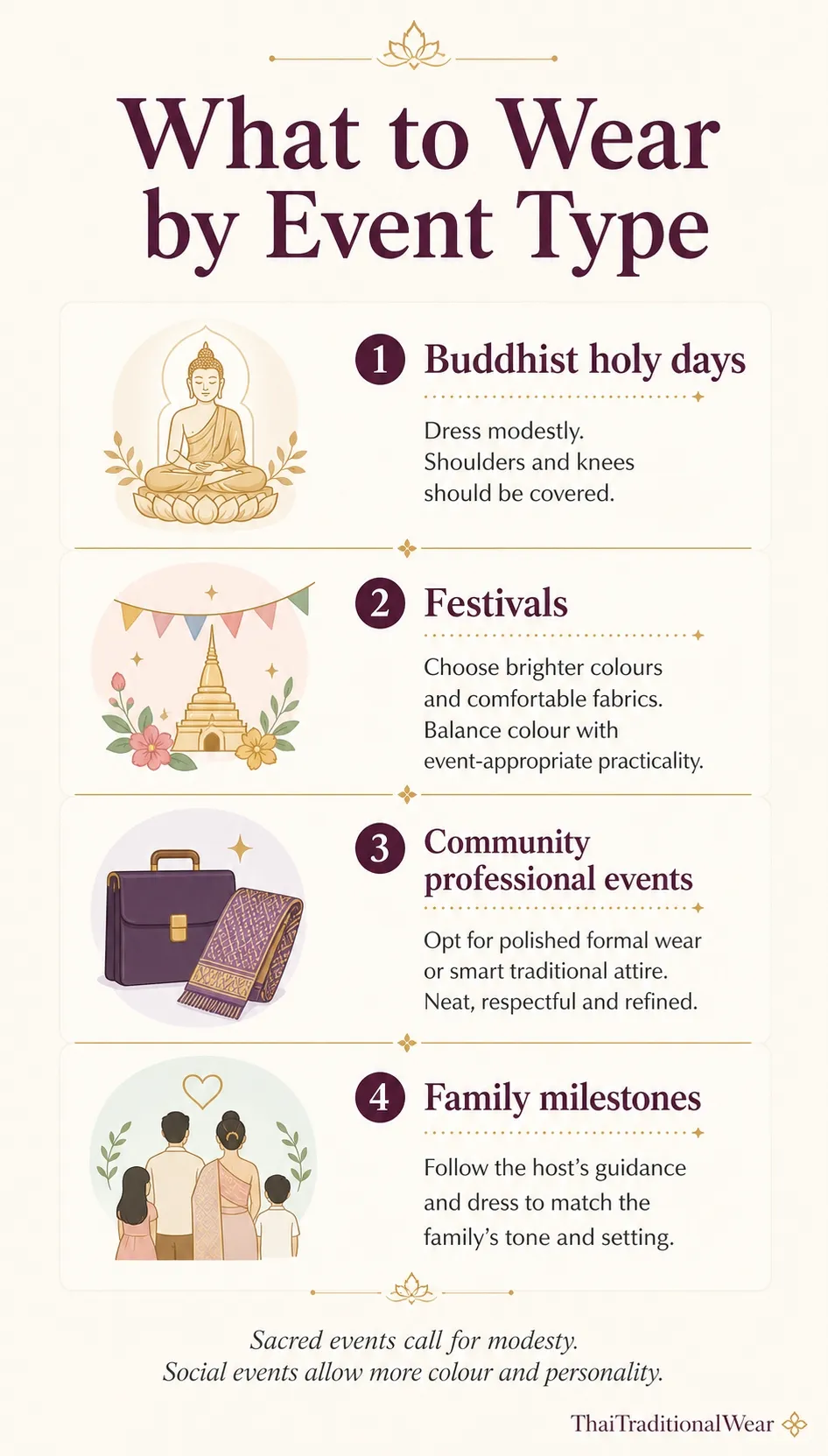
Match your clothes to the kind of event. Festive celebrations like Songkran and Loy Krathong often welcome brighter, more dressed-up looks, while temple observances call for modest, respectful dress with shoulders and knees covered — pure white or soft pastels are traditional there. Community dinners, university events, and association gatherings usually sit somewhere in between. When in doubt, follow the host’s dress code if there is one, dress a little more polished than casual, and watch the room when you arrive.
The Thai-American year, at a glance
Thai communities in the US often adapt the traditional calendar to fit American life — festivals shift to the nearest weekend, water celebrations move into parks and community centres, and river-based rituals find creative substitutes. But the shape of the year holds. Here’s the whole calendar in one view before we take each event in turn.
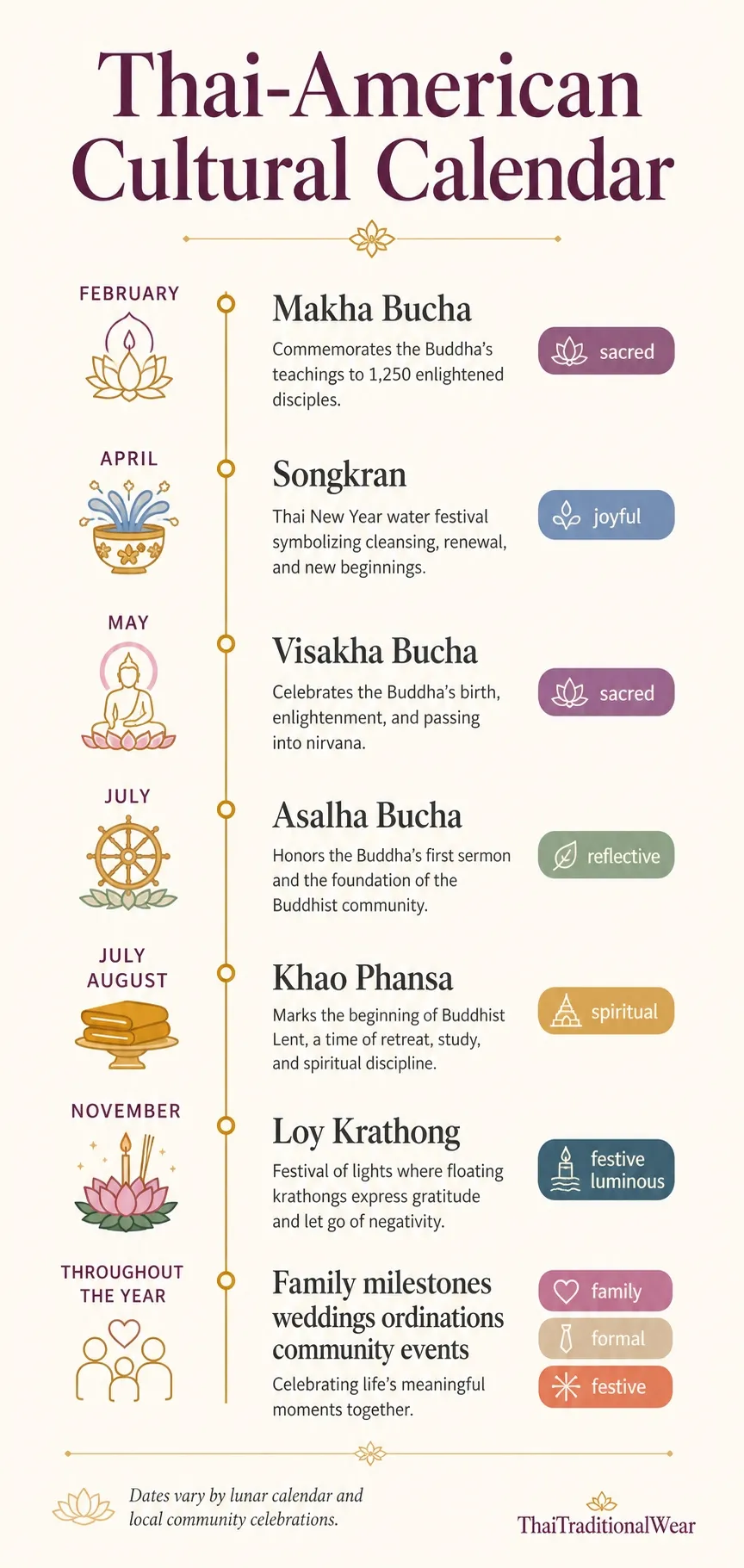
| Event | Roughly when | The mood |
|---|---|---|
| Makha Bucha | February / March (full moon) | Sacred, reflective |
| Songkran (Thai New Year) | Mid-April | Joyful — sacred morning, playful afternoon |
| Visakha Bucha | May / June (full moon) | Sacred — the holiest Buddhist day |
| Asalha Bucha & Khao Phansa | July (full moon) | Sacred — start of Buddhist Lent |
| Loy Krathong | November (full moon) | Gentle, romantic, evening |
| Community & family events | Year-round | Varies — read the occasion |
Songkran — Thai New Year
What it is: Songkran, around 13–15 April, marks the traditional Thai New Year. Beneath the famous water fights is a tender meaning: water is a symbol of cleansing and renewal — washing away the old year’s misfortune. The day traditionally begins at the temple with merit-making, and includes Rod Nam Dum Hua, where the young pour fragrant water over the hands of elders to ask their blessing for the year ahead. The street water-throwing grew out of that gentle gesture.
What to wear: Songkran often spans more than one mood in a single day. For a morning temple visit or elder-blessing ceremony, wear neat, modest festive clothing — a Chut Thai set is lovely, and bright, cheerful colours are common, though local communities may vary, so follow any theme the host suggests. A fun, authentically Thai alternative for casual gatherings and the afternoon is the Suea Lai Dok — the bright floral shirt that’s practically synonymous with Songkran. If there’s afternoon water play, bring a practical change of clothes you don’t mind soaking, and keep your dressier pieces well away from the splash zone. Our full Songkran guide covers the timing and fabrics.
Loy Krathong — the Festival of Lights
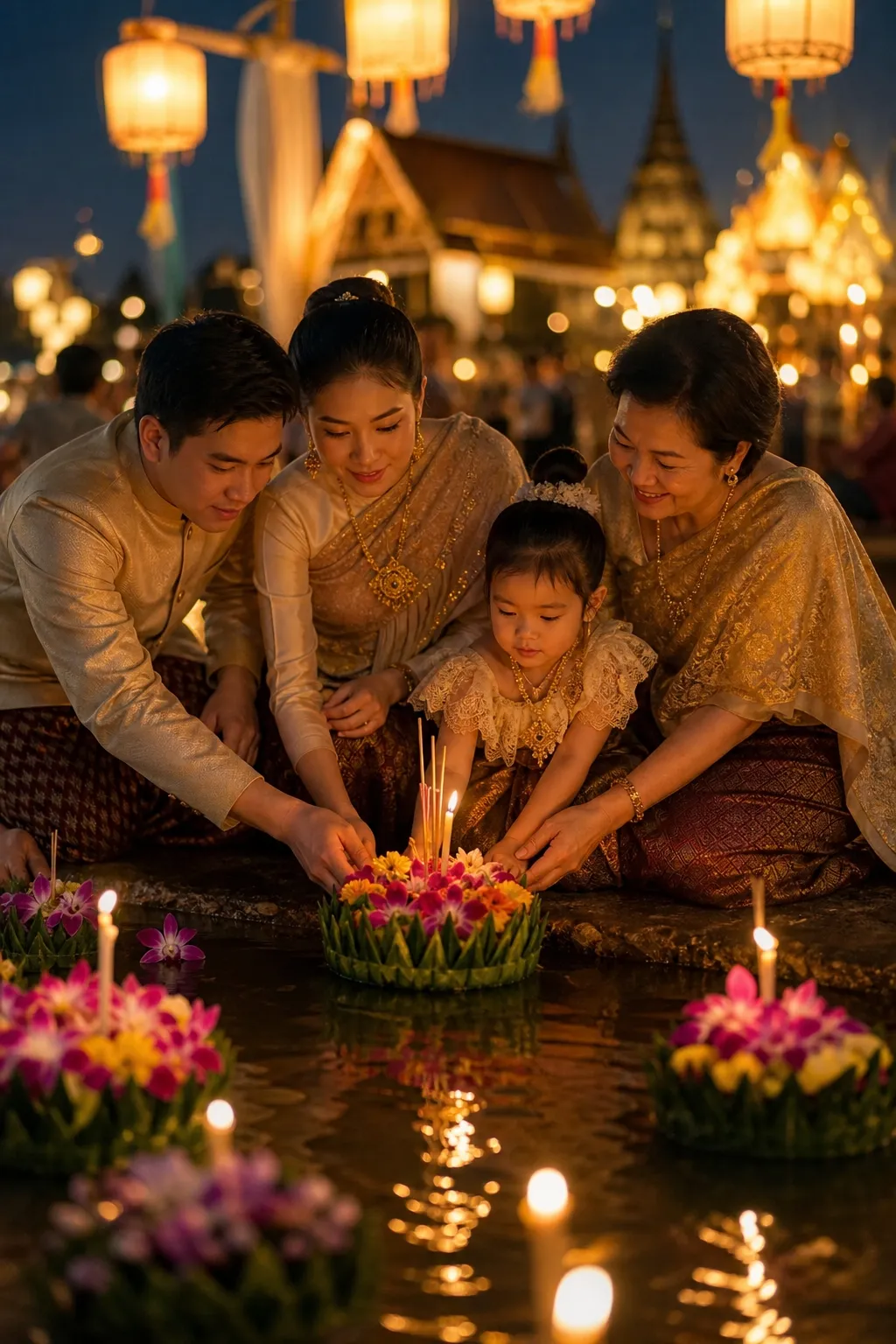
What it is: Held on the November full moon, Loy Krathong is Thailand’s most quietly beautiful festival. Loy means “to float”; a krathong is a small lotus-shaped raft, traditionally made from a banana-trunk section and folded banana leaves, decorated with flowers, a candle, and incense. After dark, people float their krathong on water, watching the little lights drift away — a gesture of letting go of the past year’s anger and misfortune, of giving thanks to the water, and of carrying a wish or a hope downstream. In the US, where rivers aren’t always to hand, communities use decorative pools, fountains, or symbolic water features, and often pair the floating with krathong-making workshops, Thai dance, and a shared meal.
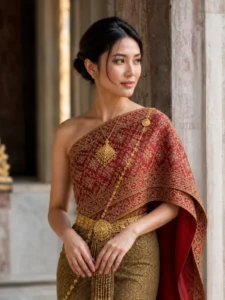
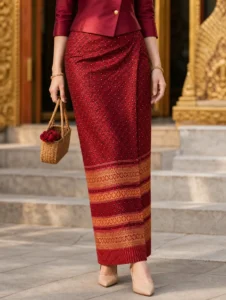
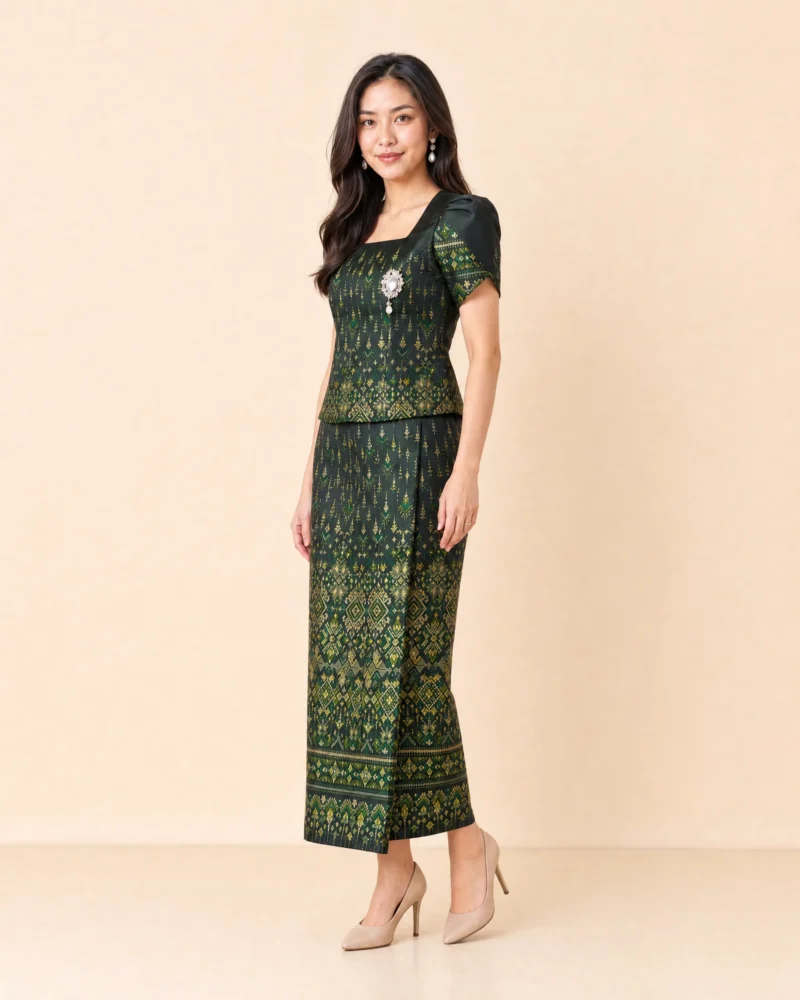
What to wear: Because the festival happens after sunset and is built around candlelight, this is an evening-elegance occasion — the most romantic of the year to dress for. Deeper autumn tones come into their own here: gold, burgundy, deep blue, emerald, set off beautifully by the warm low light. Since many US events are outdoors in cool November air, plan a light layer and choose footwear you can walk on grass or paving in. A subtly metallic brocade catches candlelight wonderfully.
What to wear: Because the festival happens after sunset and is built around candlelight, this is an evening-elegance occasion — the most romantic of the year to dress for. Deeper autumn tones come into their own here: gold, burgundy, deep blue, emerald, set off beautifully by the warm low light. Since many US events are outdoors in cool November air, plan a light layer and choose footwear you can walk on grass or paving in. A subtly metallic brocade catches candlelight wonderfully.
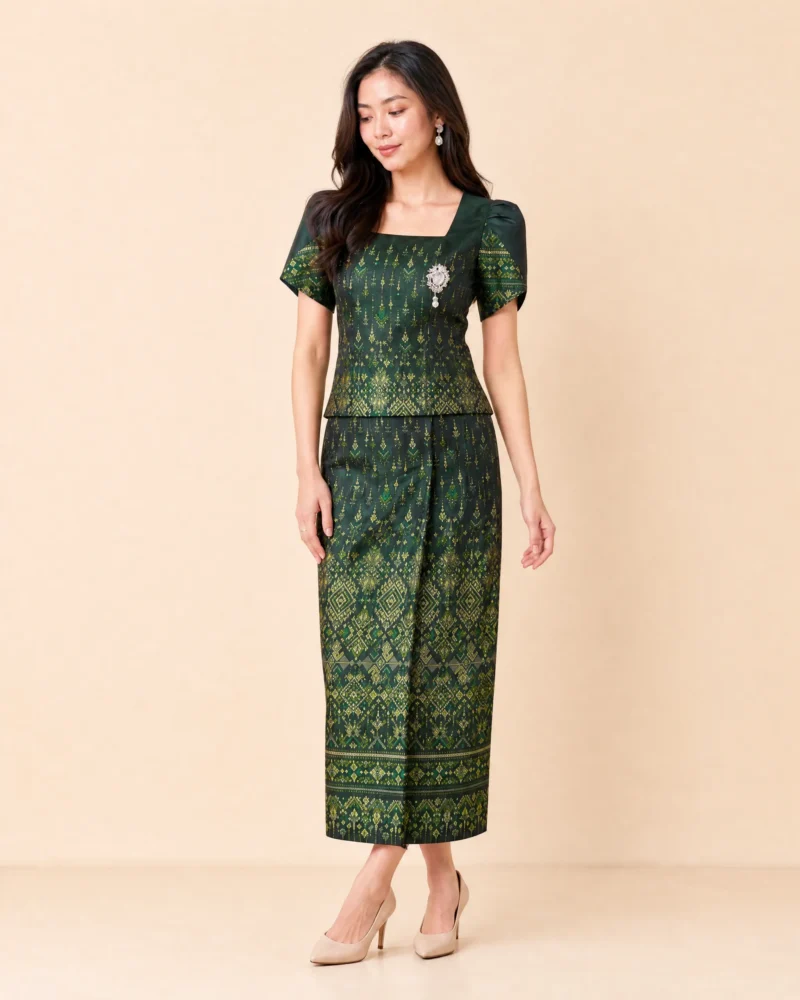
The Mali Prae Wa Set (Emerald)
A deep emerald silk-blend set woven in the Prae Wa tradition of Kalasin — a true jewel tone that glows in candlelight and suits a Loy Krathong evening beautifully. Rich enough for the occasion, modest enough for a temple-based celebration, with covered shoulders throughout. Sizes M–4XL.
The Mali Prae Wa Silk Set (Emerald)
From £147.16
Buddhist holy days — the sacred dates
What they are: Three full-moon days anchor the Thai Buddhist year, and you may be invited to observe any of them at a local temple (wat). Makha Bucha (Feb/Mar) commemorates a spontaneous gathering of 1,250 of the Buddha’s disciples. Visakha Bucha (May/Jun) is the holiest day of all, marking the Buddha’s birth, enlightenment, and passing — believed to have fallen on the same full-moon date. Asalha Bucha (Jul) marks his first sermon and leads into Khao Phansa, the start of Buddhist Lent. On these days, observers visit the temple to make merit, offer food to monks, listen to teachings, and often join an evening candlelit procession (wian tian) circling the ordination hall three times.
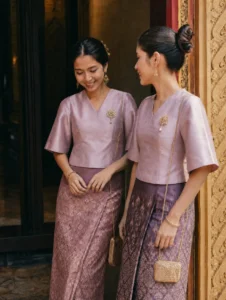
What to wear: These are the most conservative occasions on the calendar — quiet, modest, and reverent. Cover your shoulders and knees, avoid revealing or attention-grabbing clothing, and wear shoes you can slip off easily before entering temple buildings. If you want to wear Thai dress, choose a modest, covered-shoulder style rather than assuming every Chut Thai style suits a temple. On colour, quiet tones simply feel more in keeping than party-bright ones.
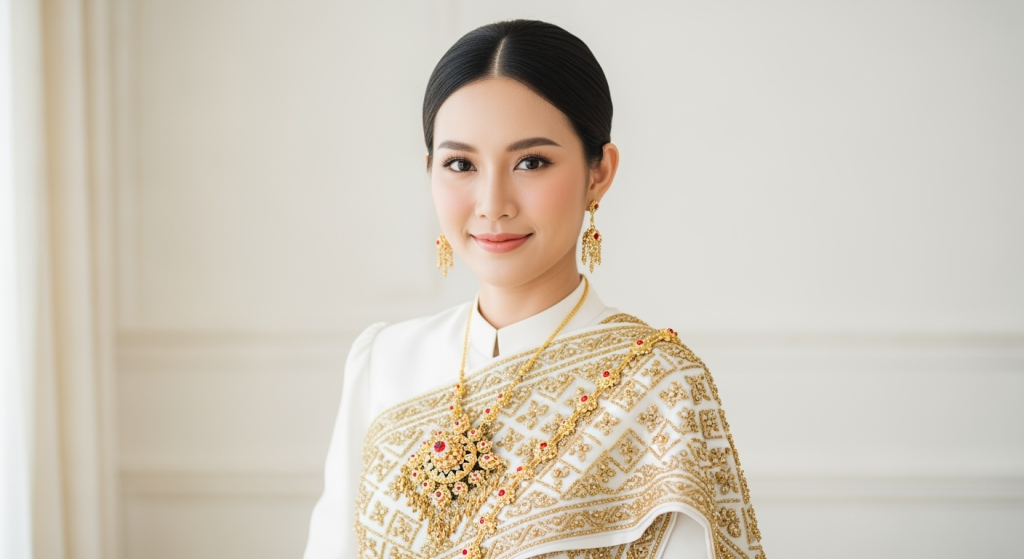
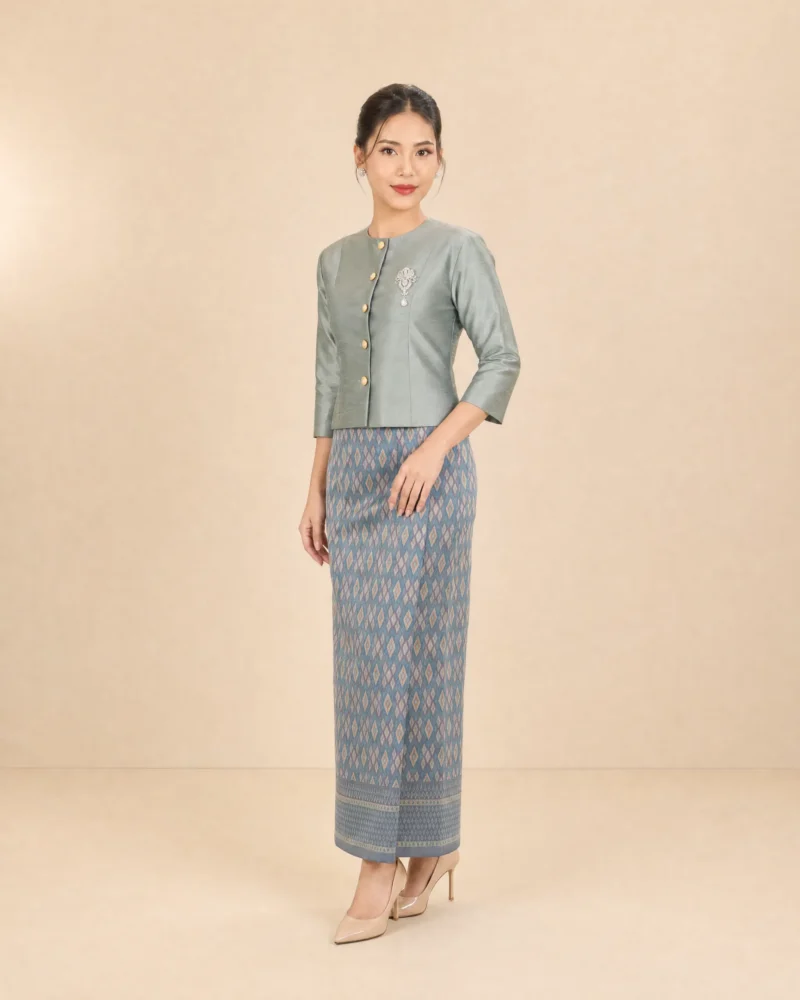
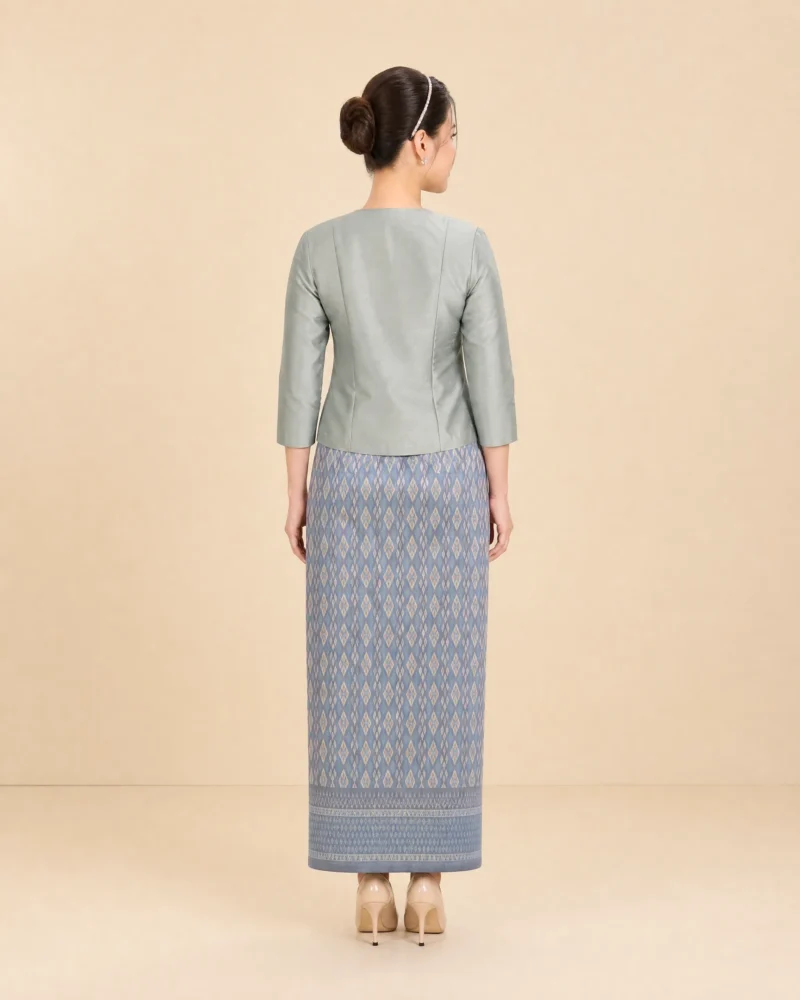
The traditional gold standard for a Buddhist merit-making day is pure white or cream — devout laypeople often wear all-white (sometimes called chut khao, literally “white clothes”) to signal purity of mind and respect for the teachings. You don’t need an all-white outfit to be welcome — soft, quiet pastels like sage, light blue, or lavender are perfectly respectful for visitors — but if you have white or cream, a temple holy day is exactly when it shines.
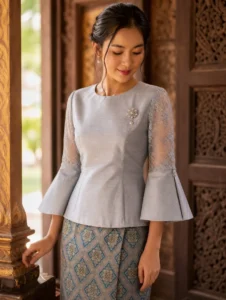
The Achara Diamond Brocade Set (Sage & Blue Grey)
Quiet, dignified colours — a sage silk-blend blouse with a blue-grey brocade Pha Sin, fully lined, with covered shoulders. Modest, elegant, and exactly the register a temple day asks for. Sizes XS–5XL.
Community, cultural & professional events
Beyond the festivals, Thai associations, temples, and universities run a steady stream of events year-round: arts and language classes, cultural showcases, networking dinners, association galas. The register here is “traditional but understated” — present enough to honour your heritage, comfortable enough to take part. A refined Chut Thai set suits a formal gala; something simpler and easy to move in suits a workshop or class. This is also where mixing separates shines — a single elegant blouse paired with different Pha Sin skirts can carry you through several events without repeating an outfit, which is both practical and budget-friendly.
Family milestones
Traditional dress also threads through personal occasions — weddings, baby blessings, ordinations, graduations, and memorials. Each carries its own register. Weddings call for celebratory colours, often soft pastels or jewel tones (see our wedding guide and guest outfit guide); memorials and more solemn moments call for restrained, respectful dress. Across all of them, coordinating the family’s outfits makes for beautiful photographs, and comfort matters because these events run long.
One habit that solves almost everything
The single most useful thing you can do is ask the host or organiser about the dress code. It’s a normal, welcomed question that signals you care. Beyond that: dress modestly, follow any theme they’ve suggested, and aim slightly more polished than casual. For celebratory festivals, brighter colours are common; for temple observances, choose quieter, more understated dress. Then watch how the people around you are dressed when you arrive — Thai communities are warm and forgiving with anyone clearly making a genuine effort.
Frequently asked questions
What’s the difference between dressing for Songkran and Loy Krathong?
Songkran is a daytime celebration split between a respectful morning and a wet afternoon, so it calls for neat festive clothing plus a practical change for the water. Loy Krathong is an evening festival built around candlelight, so it calls for evening elegance in deeper autumn tones — gold, burgundy, deep blue.
What should I wear to a Buddhist holy day at the temple?
Modest, quiet, and reverent. Cover your shoulders and knees, avoid revealing or flashy clothing, and wear shoes you can slip off at the entrance. The traditional choice is pure white or cream; soft pastels like sage or light blue are also perfectly respectful for visitors.
Can I wear black to a Thai festival?
It’s best avoided. Solid black is traditionally tied to mourning and funerals in Thai culture, so it isn’t suited to joyful occasions or temple and family events. At a non-temple evening celebration, a dark brocade broken up with gold or a colourful sash can work — but a lighter, festive colour is always the safer choice.
What is a krathong, and what does floating it mean?
A krathong is a small lotus-shaped raft, traditionally of banana leaves and trunk, decorated with flowers, a candle, and incense. Floating it on the November full moon symbolises letting go of the past year’s misfortune and anger, giving thanks to the water, and sending a wish or hope downstream.
Can a non-Thai guest attend and wear traditional dress?
Yes, and it’s warmly welcomed as a mark of respect. Our guide for non-Thai guests covers what to wear and the customs worth knowing.
How do I find out a specific event’s dress code?
Ask the host or organiser directly — it’s a welcomed question. As a safe default, dress modestly and a notch more polished than casual, then adjust to the mood: festive colours for festivals, quiet colours (or white) for temple and memorial days.
Dressed for every occasion in the calendar
Versatile, premium silk-blend Thai outfit sets in colours for every event — made in Thailand and shipped worldwide, free, tracked, and duty-covered on US orders.
Shop Thai outfit sets