

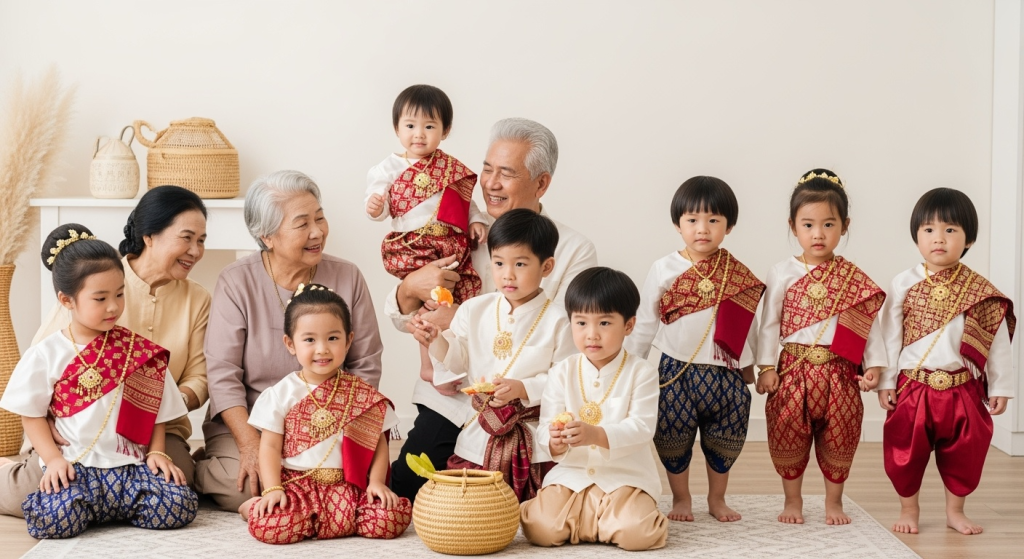
Thai Traditional Wear for Children: A Practical Family Guide
How to choose, size, and style traditional Thai clothing for children of every age — comfortably, respectfully, and joyfully.
Dressing a child in traditional Thai clothing is one of the loveliest ways to connect them to their heritage — and to fill the family photos you’ll treasure for years. But children come with their own practical realities: they grow fast, they need to move and play, and comfort makes all the difference between a happy child and a long afternoon. This guide covers how to choose, size, and style Thai traditional wear for children of every age, the simple way.
For children, prioritise comfort, easy movement, and the type of event. Soft cotton or cotton-blend fabrics are practical for everyday cultural wear, while silk-blend or dressier fabrics suit special occasions. Use measurements rather than age alone, leave a little room for growth when buying ahead, and keep toddler outfits simple and safe. Letting older children help choose their colour or style often makes them much happier to wear it.
Why it’s worth doing
Traditional dress gives children a tangible, joyful link to their Thai heritage. Wearing it to a family celebration, a temple visit, or a school cultural day helps them feel proud of who they are, sparks conversations about family and culture, and delights grandparents who see their traditions carried forward. It doesn’t need to be a big production — even one simple outfit, worn a few times a year, does a lot. Children often wear simplified or adapted versions of Thai traditional dress, especially for school events and family celebrations, and that’s perfectly normal and well within Thai practice today.
A practical guide by age
These age bands are a comfort-and-practicality guide, not a fixed cultural system — every child grows differently, so treat them as a helpful starting point.
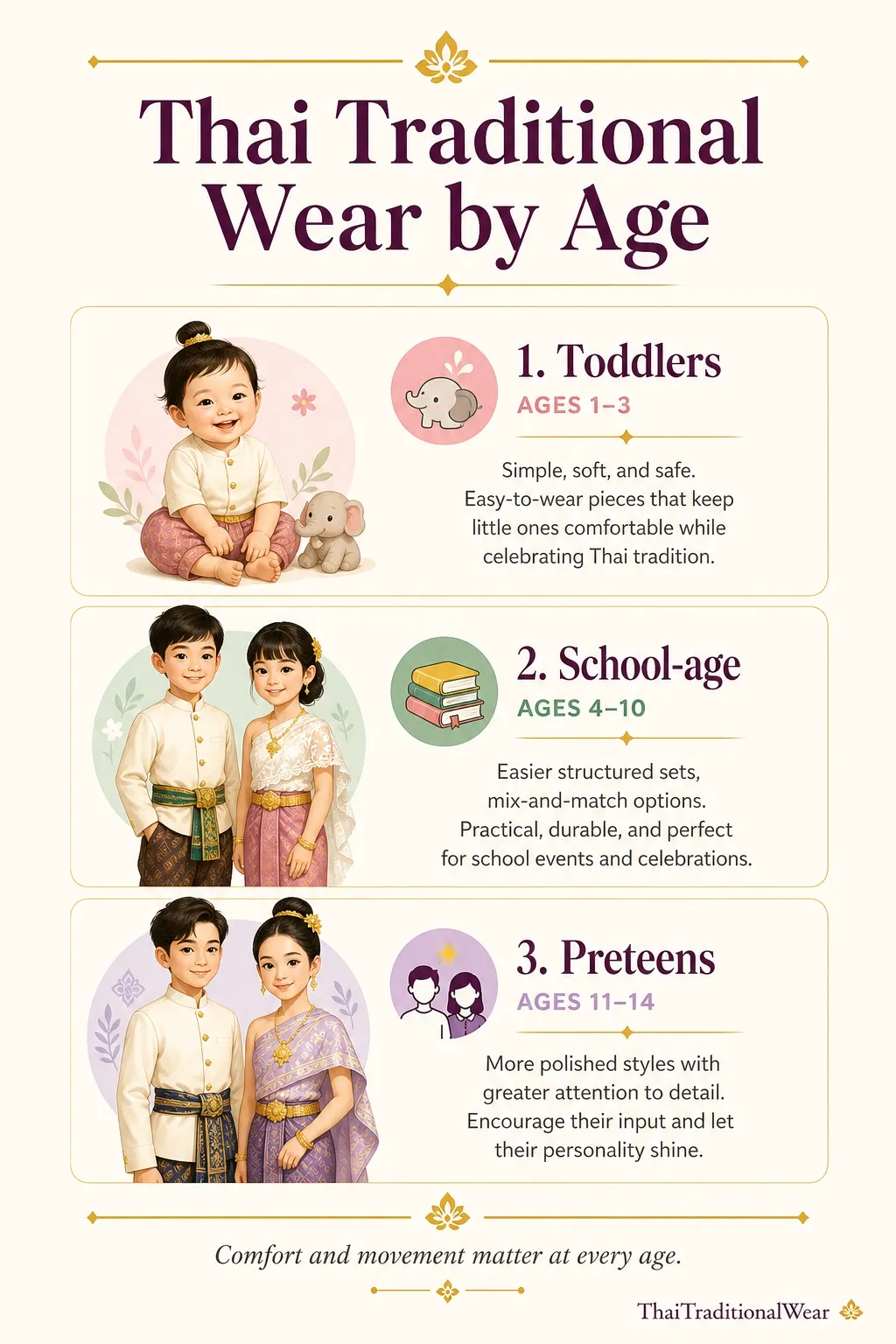
| Age | What to look for | Classic child-friendly styles |
|---|---|---|
| Toddlers (2–4) | Simple, easy-on styles with elastic waistbands and secure closures. Soft cotton blends, bright engaging colours, and a relaxed fit they can move in. | A suea kho krachao (a light, sleeveless lace-trimmed cotton blouse) paired with an elasticated chong kraben (soft, puffed wrap-style trousers tucked between the legs) lets toddlers crawl, walk, and sit on the floor with ease. |
| School age (5–10) | More structured traditional pieces and coordinated sets, ideal for cultural presentations, dance, and festivals. Mix-and-match pieces build a small wardrobe. | A kid-friendly Chut Thai with a soft wrap skirt or chong kraben, or a high-collared suea phraratchathan (mandarin-collar Raj-pattern shirt) for boys, usually in soft cotton or lightweight silk-blend rather than stiff material. |
| Preteens (11–14) | Cuts closer to adult proportions and dressier silk-blend fabrics for special occasions. Let them express personal style within the traditional look — it keeps them engaged. | A tailored set that coordinates with the rest of the family for formal portraits and milestones. |
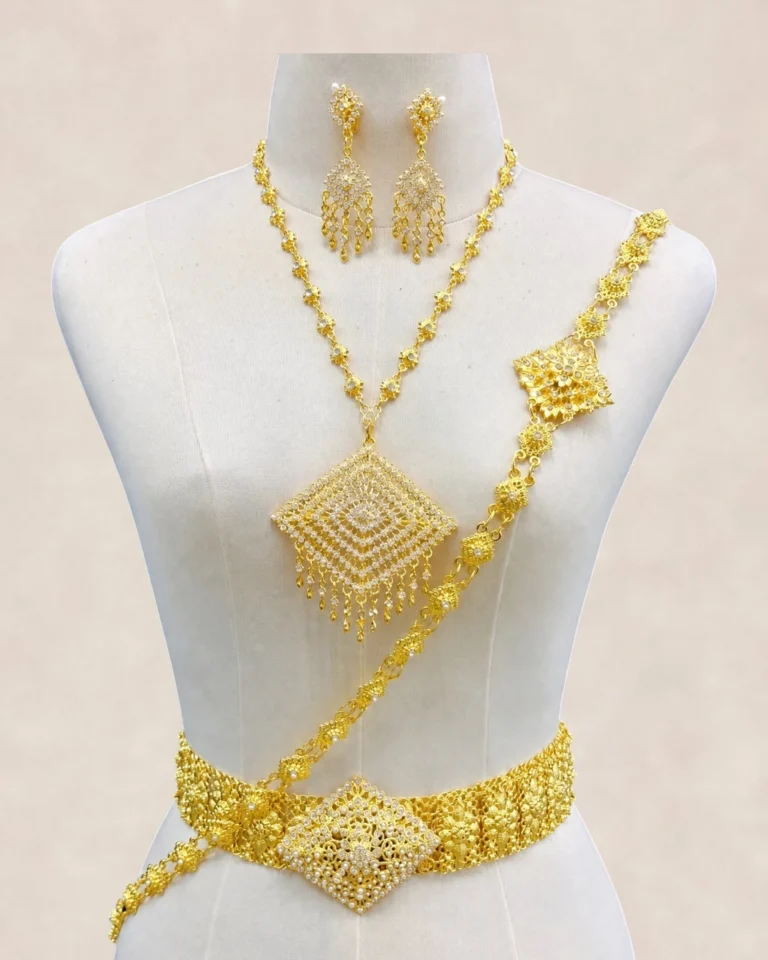
Traditional adult wear often relies on metal belts (khem khat), shoulder pins, and brooches to hold a sabai in place. For toddlers, skip the metal entirely: choose pre-sewn or velcro-fastened sabais and soft fabric-tie sashes, avoid small detachable parts, and pick breathable fabrics that are gentle on sensitive skin and easy to wash. A relaxed, easy-to-move-in fit beats a fussy one every time.
Sizing for children who keep growing
The most useful sizing habit is to buy from measurements rather than age alone, and — if you’re buying ahead for occasional wear — leave a little room for growth. A slightly roomy everyday outfit that lasts through a growth spurt is good value, but for formal events and photos, a closer fit usually looks and feels better, so measure close to the date.
| Age | Growth pace | Sizing approach |
|---|---|---|
| 2–5 | Fast — sizes can change within months | For casual wear, a little growing room and adjustable ties or elastic help. Measure for anything formal. |
| 6–10 | Steadier, with occasional spurts | Longer hems give room to grow for everyday pieces; measure close to the event for formal sets. |
| 11–14 | Rapid spurts and body changes | Measure close to the event and choose near the current size with just a little room. |
A few simple strategies stretch your budget: choose adjustable pieces, plan hand-me-downs between siblings, and pick versatile basics that work for more than one occasion. If you’re unsure of a size, our How to Measure guide shows you how to take a child’s measurements quickly, or email us at hello@thaitraditionalwear.com.
Choosing the right fabric
Cotton and cotton blends are the everyday workhorse — breathable, easy to wash, comfortable for active play, and affordable enough to replace as children grow. Silk-blend is lovely for special occasions and photographs beautifully, though it needs a little more care, so it’s best saved for short, structured events rather than playground wear. For young children, reserve heavier brocades and delicate fabrics for brief formal occasions rather than all-day wear. And for outdoor or water-heavy events, some families simply prefer modern, practical quick-dry fabrics in Thai-inspired colours — a sensible modern choice rather than a traditional one.
Dressing for the occasion
School cultural days
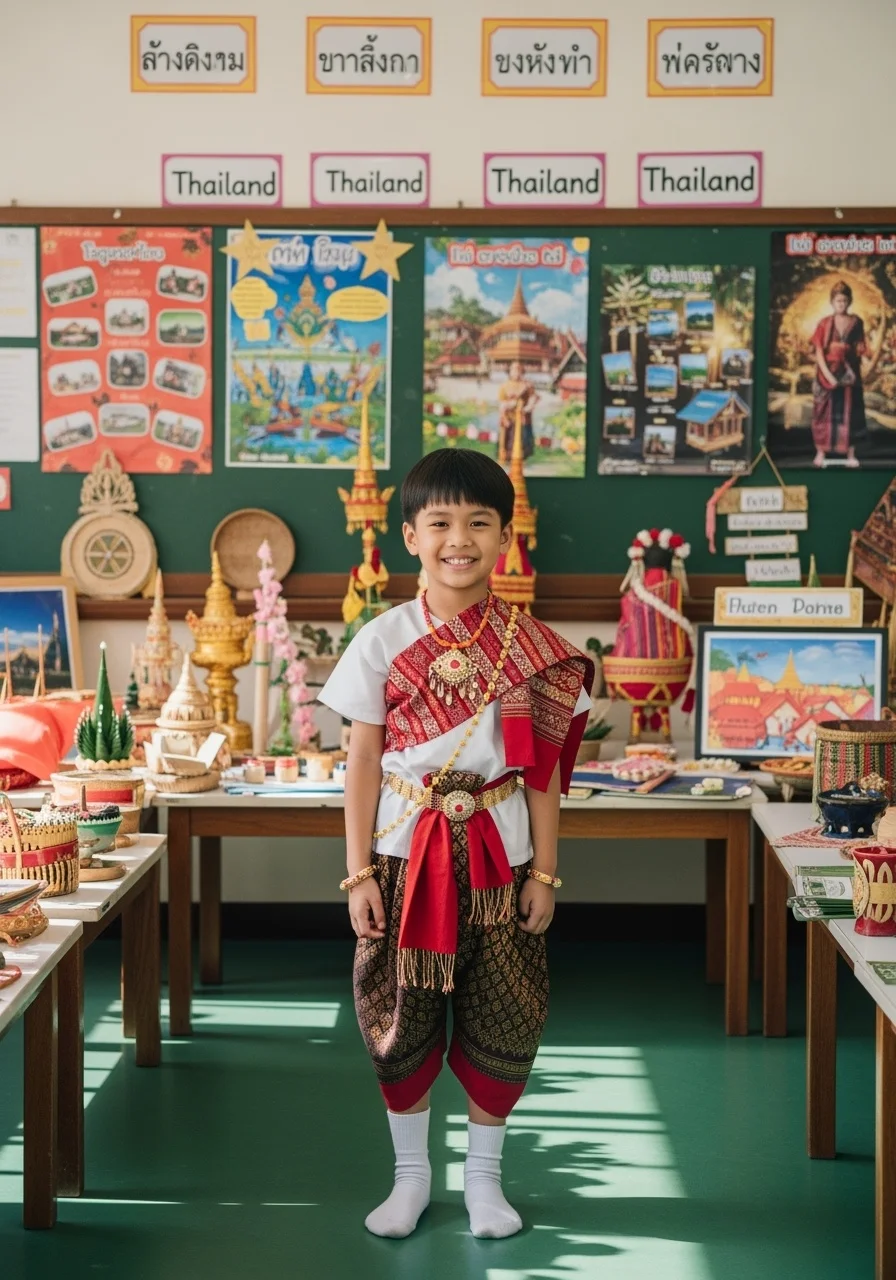
For cultural days and international nights, choose a traditional or Thai-inspired outfit that is child-appropriate, comfortable to stand and present in, and easy to move around in. Coordinating with the rest of the family can be a lovely touch, but comfort should still come first.
Temple visits
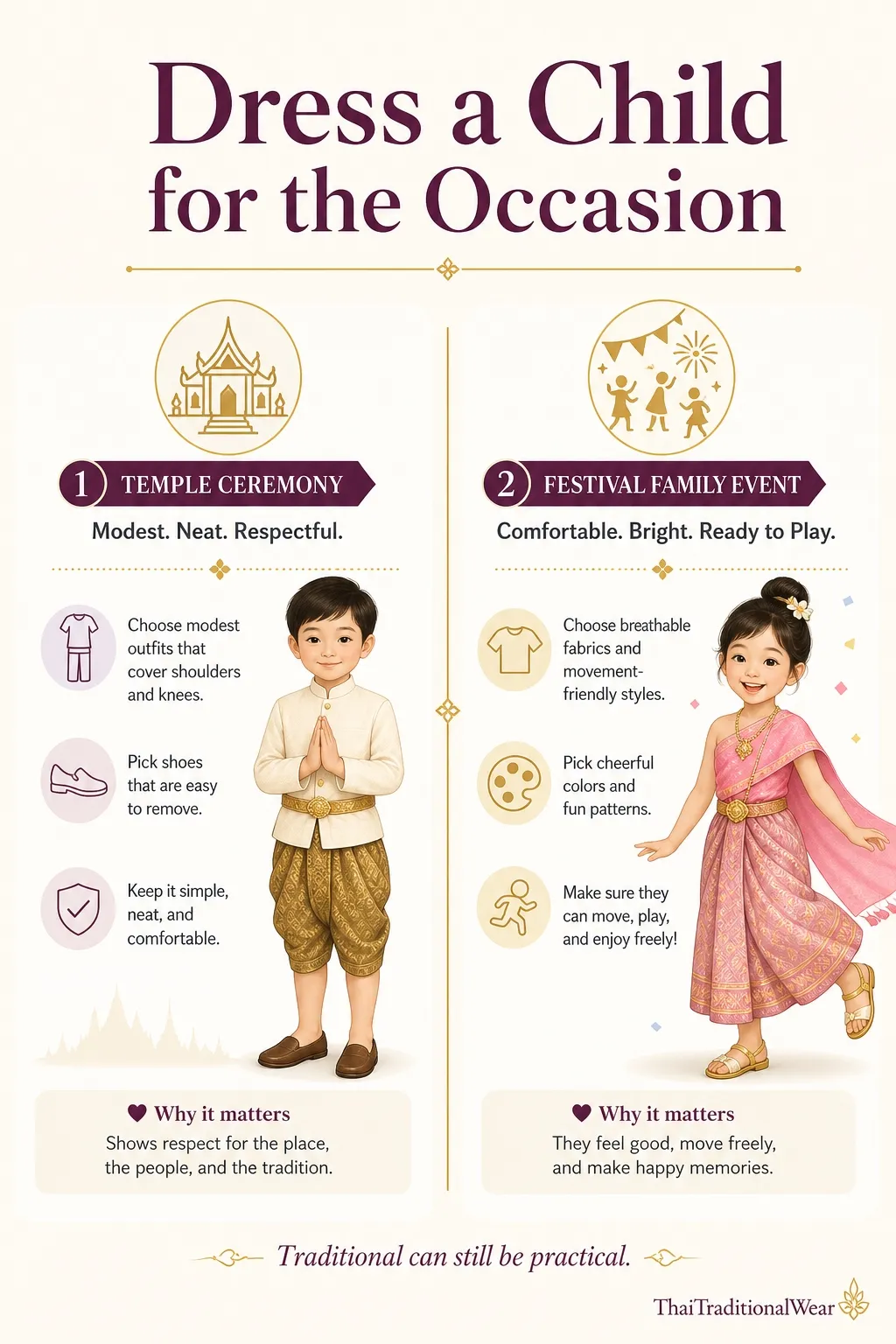
For temple visits, keep the outfit neat and modest, with shoulders and knees covered, and choose something the child can sit comfortably in. Pick shoes they can take off easily, since shoes are removed before entering many temple buildings. Coverage and respectful presentation matter far more than following any strict colour rule, and keeping jewellery and detachable accessories minimal is both practical and appropriate.
Festivals
For festivals such as Songkran and Loy Krathong, dress for the actual setting — a family temple visit, a school celebration, and an outdoor public festival each call for slightly different choices. If your child is wearing traditional dress, comfort, weather, and ease of movement come first; for water-heavy Songkran activities, many families prefer simpler or more modern practical fabrics. Our Songkran guide covers this in more detail.
Weddings and formal family events
For weddings and formal family events, a slightly more sophisticated outfit that complements the family’s dress works beautifully — just make sure it’s comfortable enough for a long day.
Building a small wardrobe over time
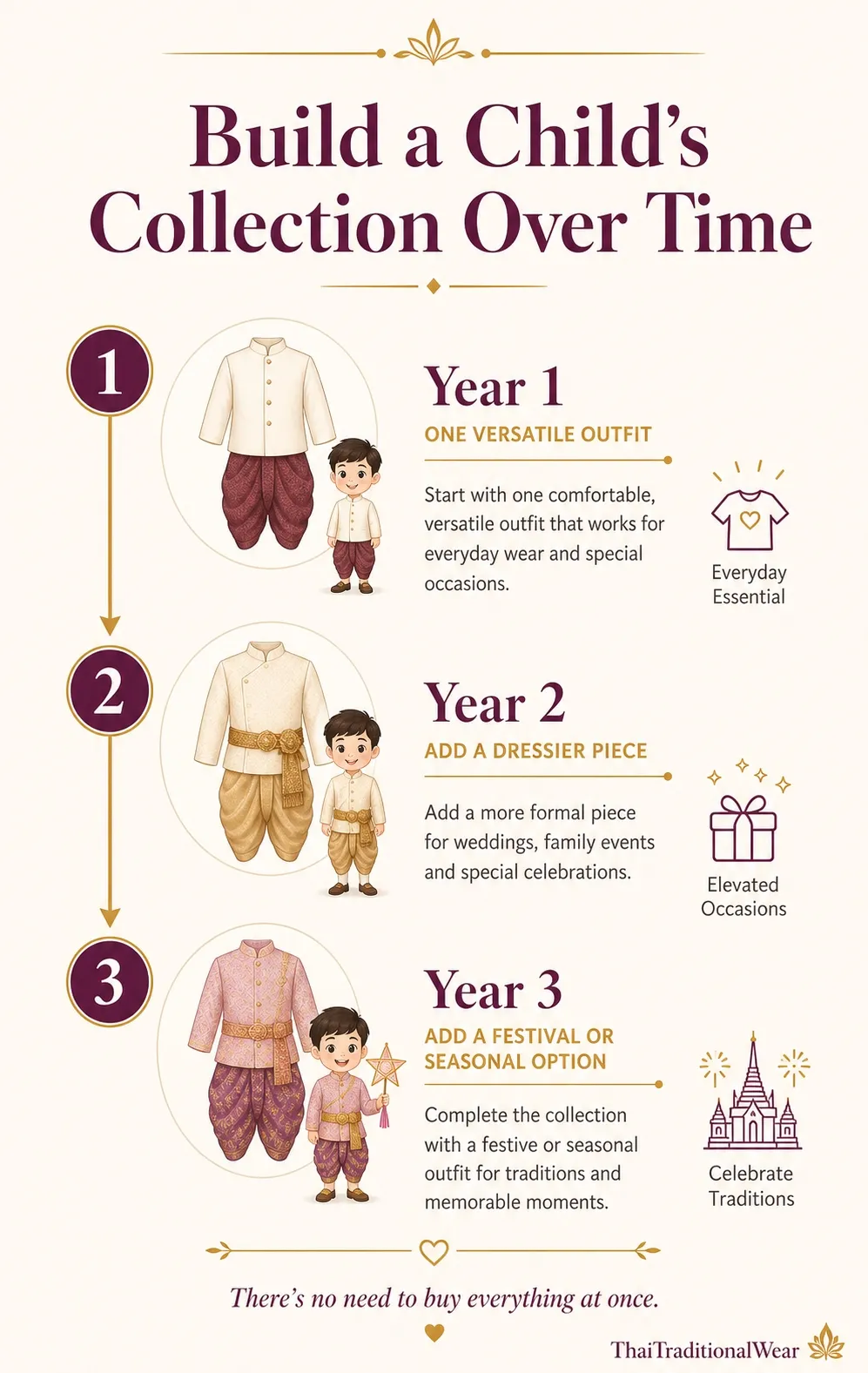
There’s no need to buy everything at once. A sensible path is to start with one versatile, comfortable outfit in a bright, happy colour, then add a more formal piece for special occasions, and later a festival or seasonal option as your child’s interests grow. Sharing pieces between siblings and borrowing for one-off events keeps costs down while still giving every child the experience of dressing for their culture.
Making it a happy experience
The difference between a child who loves traditional dress and one who resists it usually comes down to comfort and positive associations. Let them try the outfit on at home before the event so it feels familiar, check for scratchy tags or tight waistbands, and connect the clothes to something fun — a special photo session, a family meal, or a story about what the colours and patterns mean.
If a child is shy about looking different, remind them that traditional clothing is a special kind of formalwear, a bit like dressing up for a very important occasion. Seeing parents or older siblings dressing up in coordinating colours alongside them works wonders too. When a child sees the whole family celebrating together in beautiful traditional wear, putting on Chut Thai stops being a chore and becomes a proud, joyful part of their childhood.
Our children’s range is coming very soon.
We’re putting the same care into our children’s collection as our adult pieces — comfortable fabrics, secure child-friendly fastenings, and proper sizing. Join our mailing list or email hello@thaitraditionalwear.com to be the first to know when it launches.
Common questions
What’s the most practical traditional outfit for an active toddler?
A light suea kho krachao blouse with an elasticated chong kraben is hard to beat — it looks traditional but lets a toddler run, sit, and play freely, with no metal pins or stiff fastenings.
Should I size up so the outfit lasts longer?
For occasional everyday wear, a little growing room is sensible. For formal events and photos, measure close to the date instead — a closer fit looks and feels much better than something too big.
What should my child wear to a temple?
Keep it neat and modest with shoulders and knees covered, choose shoes that slip off easily, and keep accessories minimal. Coverage and respectful presentation matter more than any specific colour.
Cotton or silk-blend for children?
Cotton and cotton blends for everyday and active wear; silk-blend for special, shorter occasions where it can be cared for properly.
Do you sell children’s clothing?
Not yet — our children’s range is coming very soon. Email hello@thaitraditionalwear.com and we’ll let you know the moment it’s available.