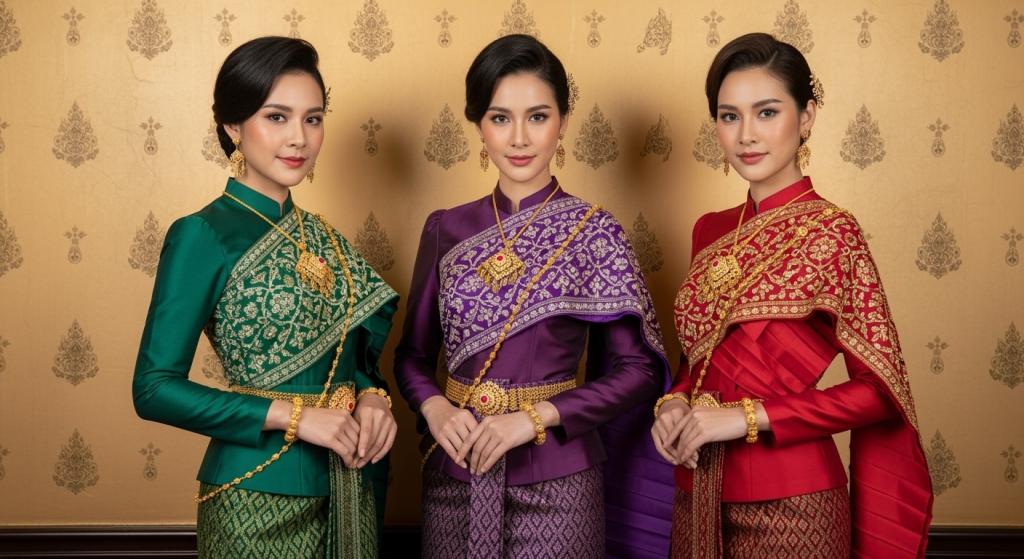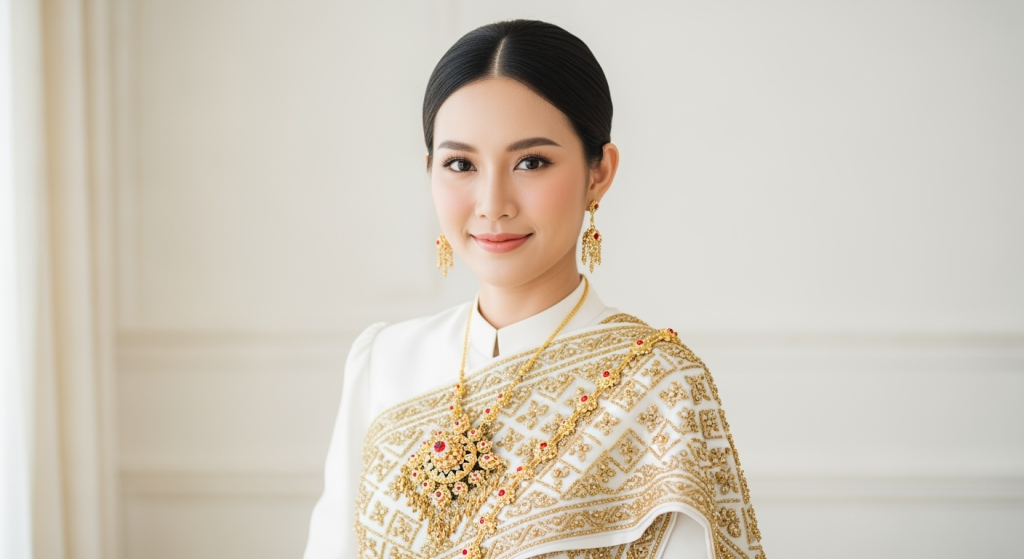
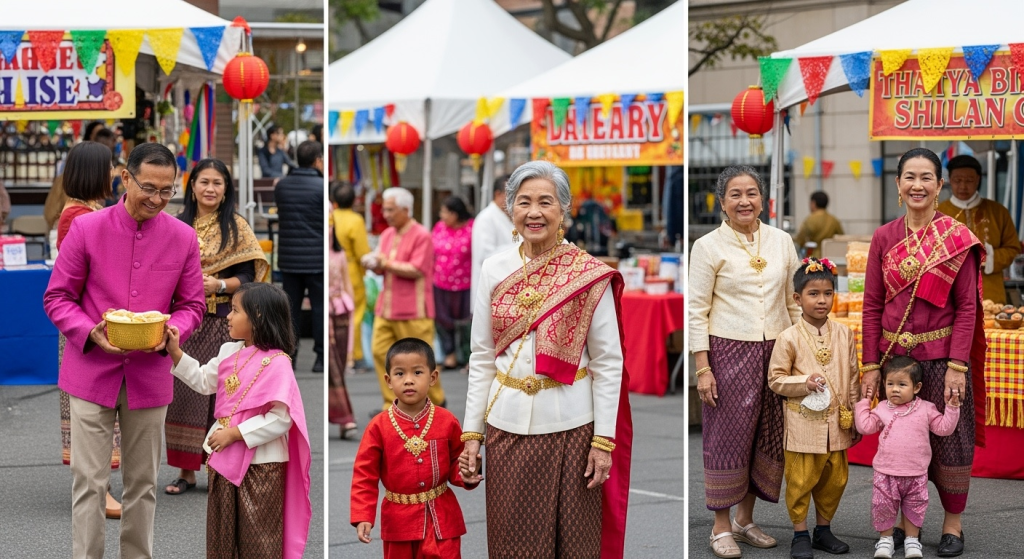
Navigate the rich calendar of Thai-American cultural events with confidence and appropriate traditional attire
The Thai community in America has created a vibrant calendar of cultural celebrations that honor heritage while building community connections. From coast to coast, Thai-Americans gather to celebrate traditional holidays, support cultural education, and strengthen intergenerational bonds. Understanding these events and their dress requirements helps you participate fully in your cultural community while representing Thai traditions with dignity and authenticity.
Understanding the Thai-American Cultural Calendar
Thai cultural events in America serve multiple important purposes beyond mere celebration. They provide opportunities for cultural preservation, helping to maintain traditions that might otherwise fade in Overseas Thai communities. These gatherings offer essential community-building experiences that strengthen bonds between Thai families and create support networks across generations.
For children and young adults, cultural events provide crucial identity formation opportunities through exposure to Thai traditions, language, and community values. Educational outreach occurs naturally as these celebrations introduce non-Thai Americans to Thai culture, fostering cross-cultural understanding and appreciation in broader American communities.
Major Thai cultural events typically follow the traditional Thai calendar while adapting to American contexts and schedules. Songkran (Thai New Year) remains the most significant celebration, usually held on weekends near April 13-15 to accommodate work and school schedules. Loy Krathong (Festival of Lights) creates beautiful November celebrations adapted for American venues and climates.
Buddhist holy days like Makha Bucha and Vesak Day provide opportunities for spiritual reflection and community merit-making, while royal commemorations honor Thai monarchy and historical traditions. Throughout the year, various cultural centers, temples, and Thai associations organize additional events that celebrate Thai arts, cuisine, and community achievements.
Songkran: The Crown Jewel of Thai-American Celebrations
Songkran celebrations across America demonstrate remarkable creativity in adapting traditional water festival elements to diverse American settings and climates. West Coast celebrations, particularly in Los Angeles and San Francisco, often feature large outdoor festivals with traditional stages, water activities adapted for public parks, and extensive food vendors representing regional Thai cuisine.
East Coast events, concentrated in New York and Washington DC areas, typically focus on indoor community center celebrations that emphasize cultural performances, traditional blessing ceremonies, and educational activities for children and newcomers to Thai culture.
Regional adaptations reflect local Thai community characteristics and available resources. Northern states modify water activities for cooler spring climates, while Southern communities can maintain more traditional outdoor water celebrations. Urban areas often partner with city cultural departments to create public festivals, whereas suburban communities tend to focus on intimate, family-centered gatherings.
Traditional dress expectations for Songkran vary by activity and community standards. Morning temple ceremonies call for formal traditional wear in bright, auspicious colors that reflect New Year optimism and cultural respect. Afternoon community celebrations allow for more practical, traditional-inspired clothing that accommodates festival activities while maintaining cultural authenticity.
Recommended Songkran attire includes:
- Chut Thai Siwalai in festive colors for ceremony portions
- Water-resistant traditional fabrics for festival activities
- Traditional accessories that can be secured during active participation
- Comfortable footwear suitable for both indoor and outdoor venues
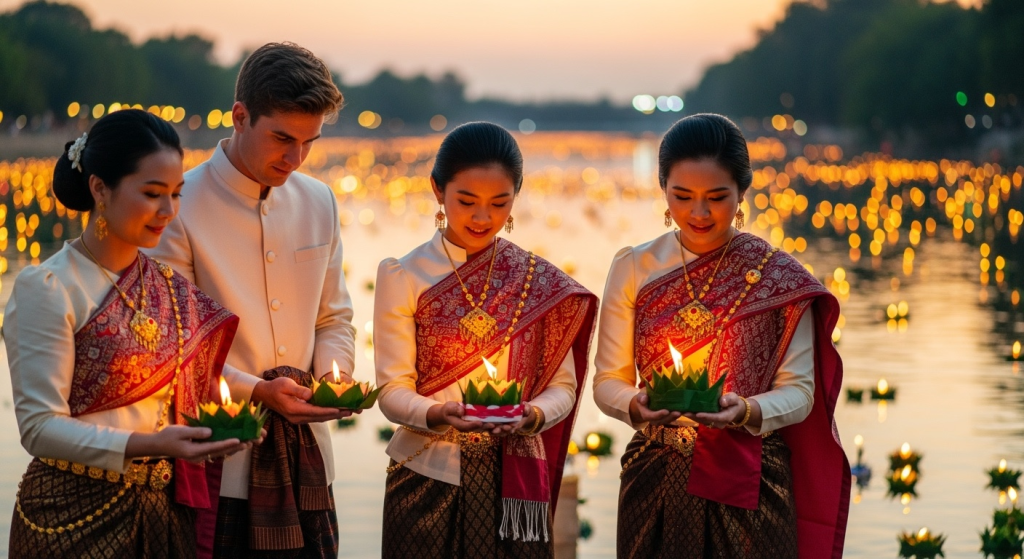
Loy Krathong: Celebrating Light and Renewal
American Loy Krathong celebrations demonstrate beautiful adaptations of traditional water ceremonies using available resources and creative venue solutions. Since natural waterways aren’t always accessible, communities use decorative pools, fountains, or symbolic water features to maintain the ceremony’s spiritual significance while accommodating American urban settings.
Events typically include krathong-making workshops that teach traditional crafts while providing opportunities for family bonding. Cultural performances featuring traditional Thai dance and music create educational entertainment, while community dinners showcase traditional Thai foods, connecting participants to their culinary heritage.
Many communities incorporate lantern ceremonies using sky lanterns where local regulations permit, creating stunning visual celebrations that photograph beautifully while honoring traditional festival elements.
Appropriate traditional dress for Loy Krathong emphasizes evening elegance, as most celebrations occur after sunset to enhance the festival’s atmospheric lighting effects. Chut Thai Chakri works beautifully for evening ceremonies, while traditional autumn colors like gold, burgundy, and deep blue complement the season and festival atmosphere.
Consider practical elements for outdoor evening events:
- Layer planning for temperature changes as evening progresses
- Comfortable footwear for walking between activity stations
- Traditional accessories that enhance photography opportunities
- Fabrics that maintain their appearance throughout extended evening celebrations
Buddhist Holy Days and Temple Events
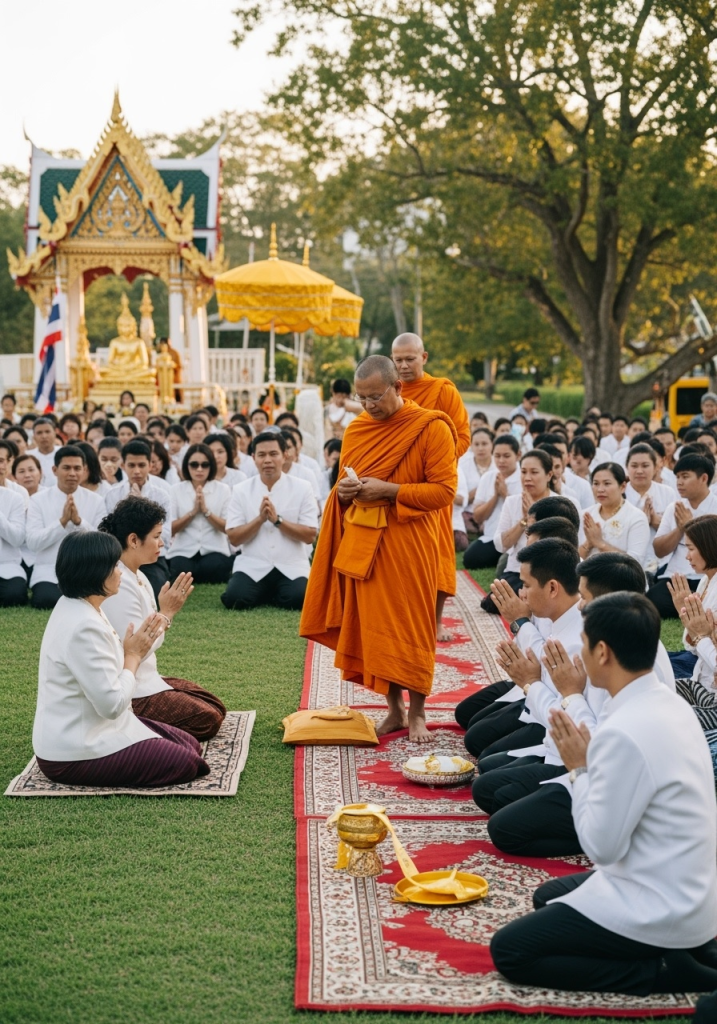
Buddhist holidays provide opportunities for spiritual reflection and community merit-making within Thai-American communities. These events often center around local Thai temples (wat) that serve as cultural and spiritual hubs for regional Thai populations.
Makha Bucha Day celebrations typically feature:
- Traditional Buddhist ceremonies with meditation and dharma teachings
- Community merit-making activities, including food offerings to monks
- Cultural education programs explaining Buddhist principles and Thai traditions
- Group activities that strengthen community bonds through shared spiritual practice
Vesak Day commemorating Buddha’s birth, enlightenment, and death creates important opportunities for Thai-Americans to connect with their Buddhist heritage while sharing these traditions with non-Thai family members and friends.
Appropriate temple attire requires respectful traditional dress that honors sacred spaces and Buddhist protocols. Choose modest traditional wear with appropriate coverage, respectful colors that avoid black or overly bright hues, and comfortable fits suitable for sitting during extended ceremonies.
Temple dress codes typically require:
- Long sleeves and floor-length skirts for women
- Long pants and covered shoulders for men
- Easy shoe removal for temple entrance
- Quiet fabrics that don’t distract during meditation and prayer
Regional Community Celebrations
West Coast Thai communities benefit from large, established populations that support major public festivals and cultural events. California’s Thai communities, centered in Los Angeles’ Thai Town, host some of America’s most elaborate traditional celebrations, featuring professional cultural performances, authentic food festivals, and educational outreach programs.
Pacific Northwest communities emphasize environmental consciousness in their celebrations, often incorporating eco-friendly practices into traditional festivals while maintaining cultural authenticity. These events frequently feature sustainable practices, educational environmental components, and integration with broader community sustainability initiatives.
East Coast Thai communities often focus on educational and professional networking elements, particularly in Washington, D.C., where diplomatic and international connections create unique cultural opportunities. New York area events blend traditional celebrations with contemporary urban cultural elements, creating dynamic festivals that appeal to both Thai heritage families and broader multicultural communities.
Midwest and Southern Thai communities typically center around family-oriented celebrations that emphasize intergenerational connection and cultural transmission. These intimate gatherings often take place in cultural centers, private venues, or family homes, creating warm, welcoming environments for cultural participation and education.
Texas Thai communities have developed distinctive celebration styles that blend Thai traditions with Southern American hospitality, creating unique cultural fusion events that welcome broad community participation while maintaining authentic Thai cultural elements.
Cultural Association and Professional Events
Thai-American professional organizations sponsor events that combine cultural celebration with networking and community building. These gatherings typically feature business casual to formal traditional wear depending on the event’s professional focus and cultural programming.
Cultural associations organize regular programming, including traditional arts workshops, language classes, and cultural education seminars that require comfortable traditional or traditional-inspired attire suitable for active participation and learning.
Academic and educational institutions with significant Thai student populations often host cultural events that provide opportunities for cultural education and cross-cultural exchange. These university-based celebrations typically welcome broad participation while maintaining cultural authenticity and educational value.
Appropriate attire for professional cultural events balances traditional authenticity with professional appropriateness:
- Chut Thai Chit Lada for formal business cultural events
- Traditional-inspired business attire for networking functions
- Comfortable traditional wear for educational workshops and classes
- Cultural accessories that demonstrate heritage pride while maintaining a professional image
Family and Life Cycle Celebrations
Thai-American families often incorporate traditional dress into personal celebrations that mark important life transitions and family milestones. Wedding ceremonies frequently blend Thai and American traditions, requiring traditional attire that honors both cultural backgrounds while accommodating diverse family members and celebration venues.
Baby blessing ceremonies and coming-of-age celebrations provide opportunities for families to connect children with their Thai heritage through traditional dress and cultural rituals adapted for American contexts.
Memorial services and ancestor honoring ceremonies require respectful traditional attire that demonstrates cultural continuity and family respect for Thai traditions and values.
Graduation celebrations and achievement recognitions often incorporate traditional dress to honor educational accomplishments while celebrating cultural identity and family heritage.
Family celebration dress considerations include:
- Coordinated family attire that creates visual harmony in photographs
- Age-appropriate traditional wear for all family members
- Comfortable traditional dress suitable for extended celebration periods
- Cultural accessories that enhance the significance of life milestone documentation
Building Cultural Community Through Traditional Dress
Wearing traditional dress at cultural events strengthens community identity and creates visual demonstrations of cultural pride that inspire younger generations and educate broader communities about Thai heritage and traditions.
Traditional attire serves as a conversation starters that facilitate cultural education and cross-cultural understanding, helping Thai-Americans share their heritage while building bridges with other cultural communities.
Community documentation through traditional dress creates lasting cultural records that preserve important family and community memories while contributing to broader Thai-American cultural history and heritage documentation.
Cultural mentorship opportunities emerge when experienced community members guide newcomers in appropriate traditional dress selection and cultural protocol, creating natural teaching moments that strengthen community bonds and cultural knowledge transmission.
Planning Your Cultural Event Participation
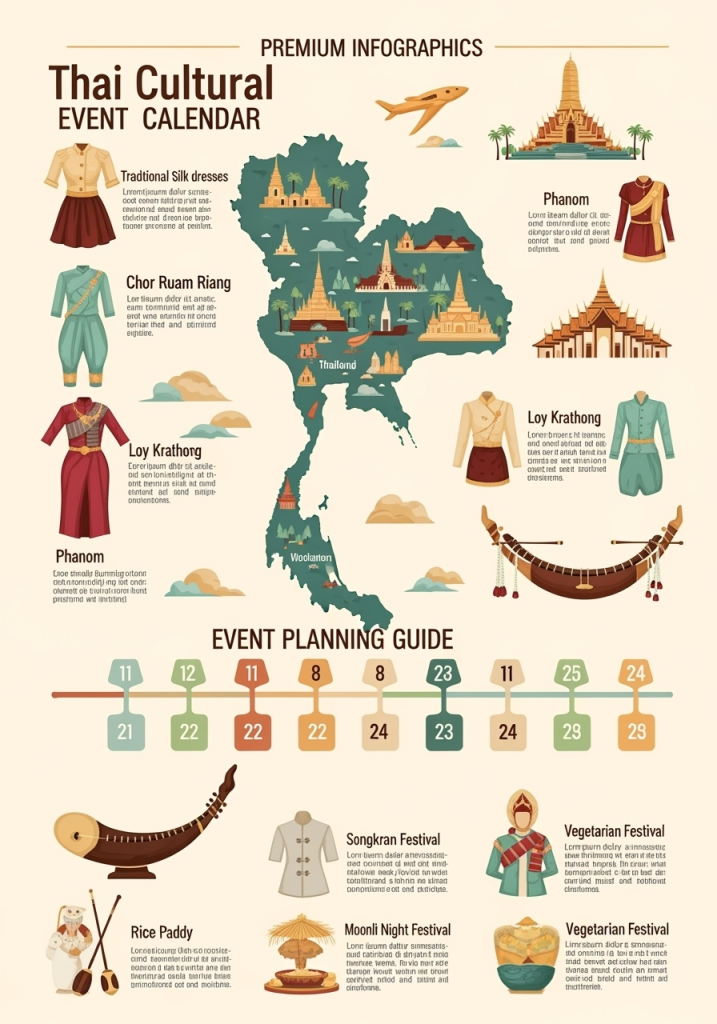
Successful cultural event participation requires planning that considers seasonal scheduling, traditional dress requirements, family coordination, and community protocol expectations.
Essential preparation includes:
- Research event-specific dress requirements and cultural protocols
- Plan traditional attire that suits the weather, venue, and activity requirements
- Coordinate family traditional dress for group participation and photography
- Prepare children for cultural involvement through education and practice in wearing traditional dress
Budget planning for cultural participation should consider traditional dress investment as long-term cultural heritage preservation that serves multiple events and family celebrations throughout the year.
Community contribution opportunities through cultural event participation include volunteering for event organization, sharing traditional knowledge with newer community members, and supporting cultural education through active involvement and authentic traditional dress representation.
Participating in Thai cultural events in America strengthens community bonds while preserving important traditions for future generations. Through appropriate traditional dress and respectful cultural participation, you contribute to the rich tapestry of Thai-American cultural life while building connections that honor your heritage and strengthen your community.
Ready to join your local Thai cultural community? Explore our event-appropriate traditional wear collection, designed for the diverse needs of Thai-American cultural celebrations that honor tradition while meeting the practical requirements of contemporary life.