

How to Measure
Take a few simple body measurements, then compare them with the sizing information on the product page.
Measure, compare and choose
Use a flexible tape measure and record your actual body measurements. Do not add extra room yourself.
Measure your body
Stand naturally and measure over underwear or a thin, fitted layer. Keep the tape close to your body without pulling it tight.
Open the product page
Select the size you are considering and check the measurements provided for that garment.
Compare matching points
Compare chest with chest, waist with waist and hips with hips. Allow enough room for the garment to fasten and for comfortable movement.
Keep the tape level. When measuring around your body, check that the tape remains parallel to the floor across both the front and back.
Bust, waist and hips
These are the principal body measurements used when choosing women’s blouses, Pha Sin, Pha Thung and other fitted garments.
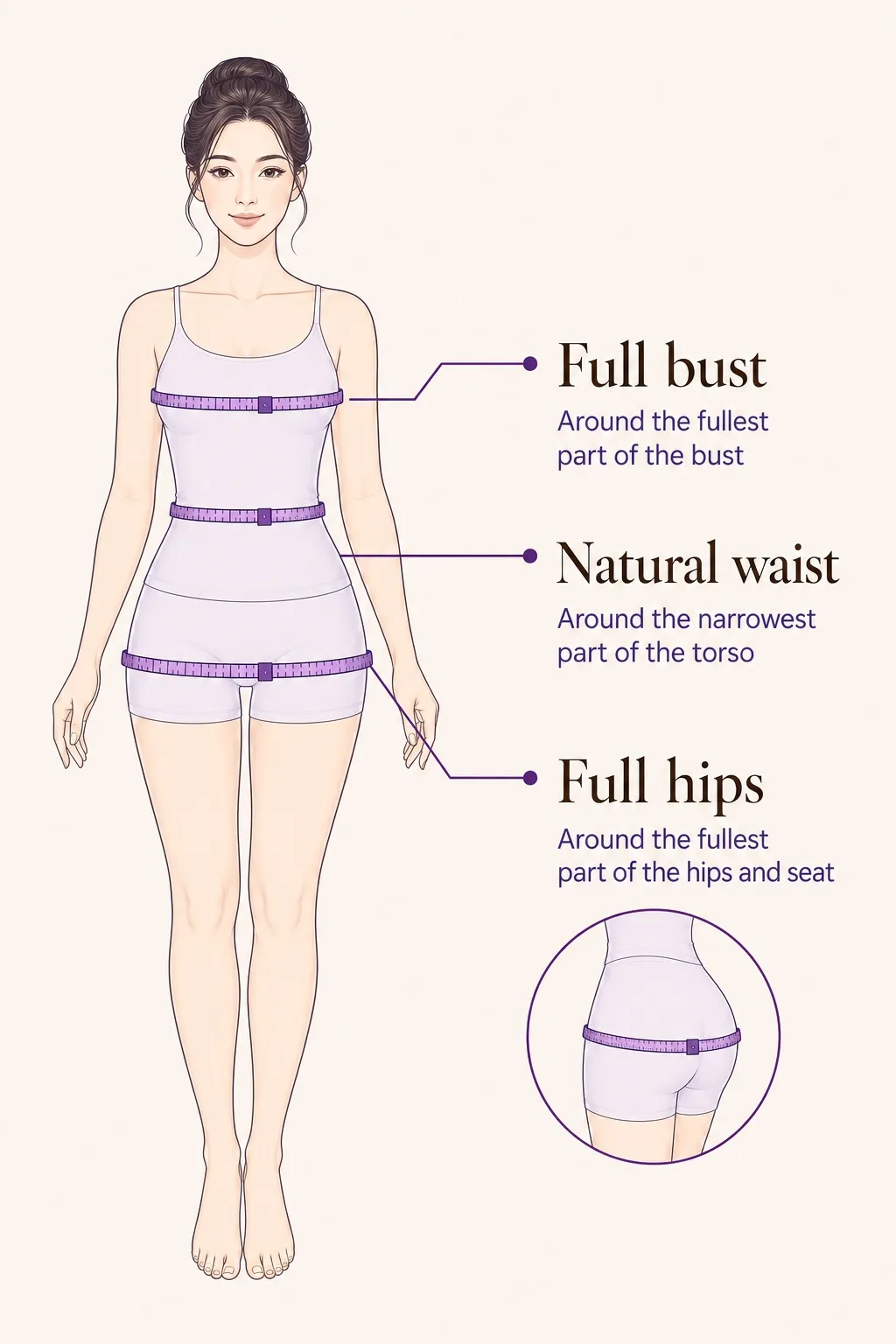
Full bust
Wrap the tape around the fullest part of your bust and across your back. Keep the tape level and breathe normally. Wear the type of undergarment you would normally wear with the garment.
Natural waist
Measure around your natural waist, usually the narrowest part of your torso. Keep your stomach relaxed and do not pull the tape tight.
Full hips and seat
Stand naturally with your feet together. Measure around the fullest part of your hips and seat, keeping the tape parallel to the floor.
Chest, waist and shoulders
For men’s shirts, compare your full chest and natural waist first. Use shoulder width as an additional check when it appears in the product sizing information.
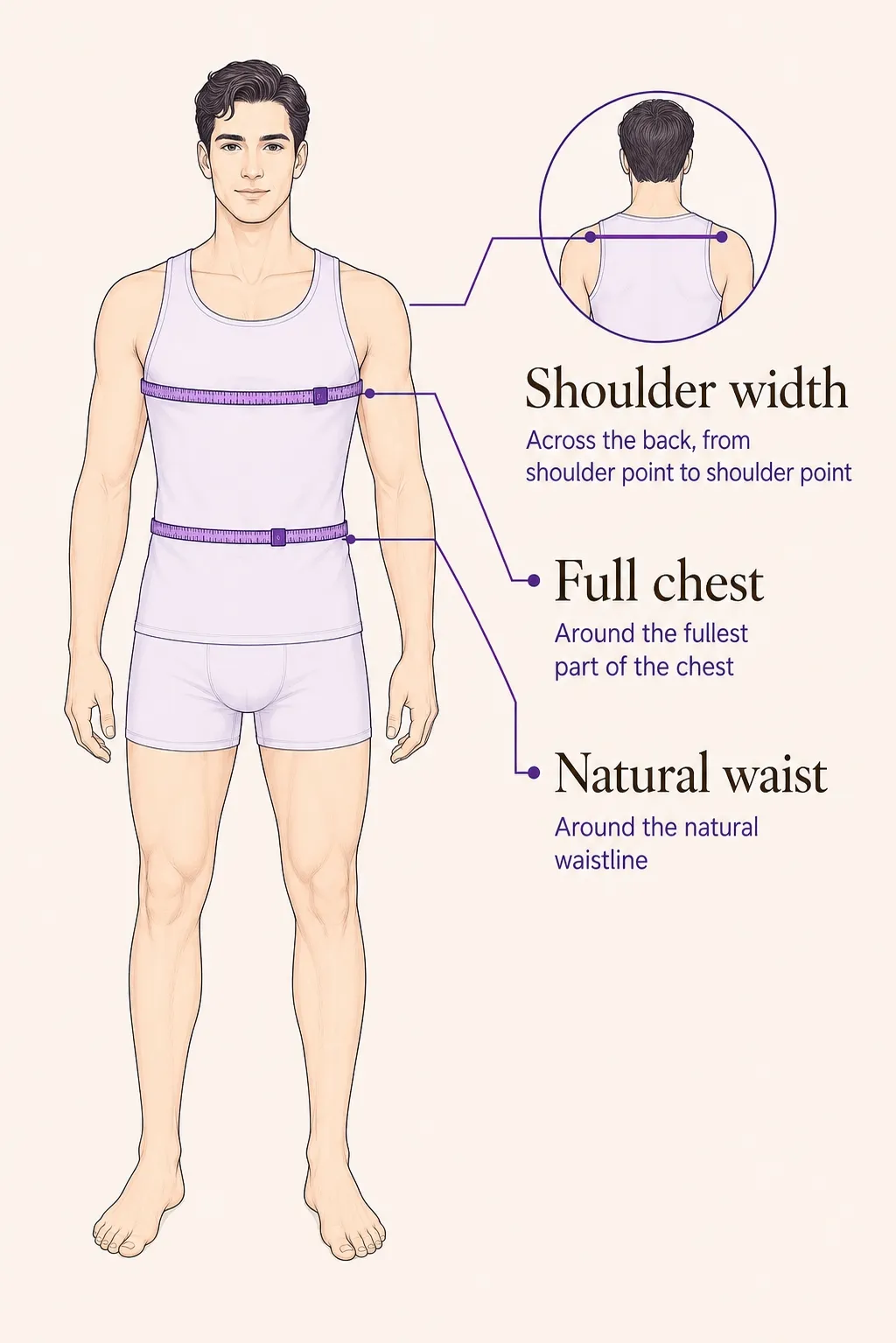
Full chest
Wrap the tape around the fullest part of your chest and across your shoulder blades. Keep it level, relax your arms and breathe normally.
Natural waist
Measure around your natural waist without holding your stomach in. Keep the tape close to your body without pulling it tight.
Shoulder width
Measure across the back from one shoulder point to the other. Follow the natural line across the upper back rather than measuring across the front of the chest.
For men’s shirts: start with the chest and waist. Use shoulder width and shirt length as additional checks when those measurements appear in the product sizing information.
The simplest way to compare length
Length is best checked against a similar garment that already finishes at the position you prefer.
Choose a similar garment
Use a blouse, shirt, skirt or pair of trousers with a length you already find comfortable.
Lay it flat
Fasten the garment where appropriate and smooth it flat without stretching or pulling the fabric.
Use the same points
Measure between the same starting and finishing points described in the product sizing information.
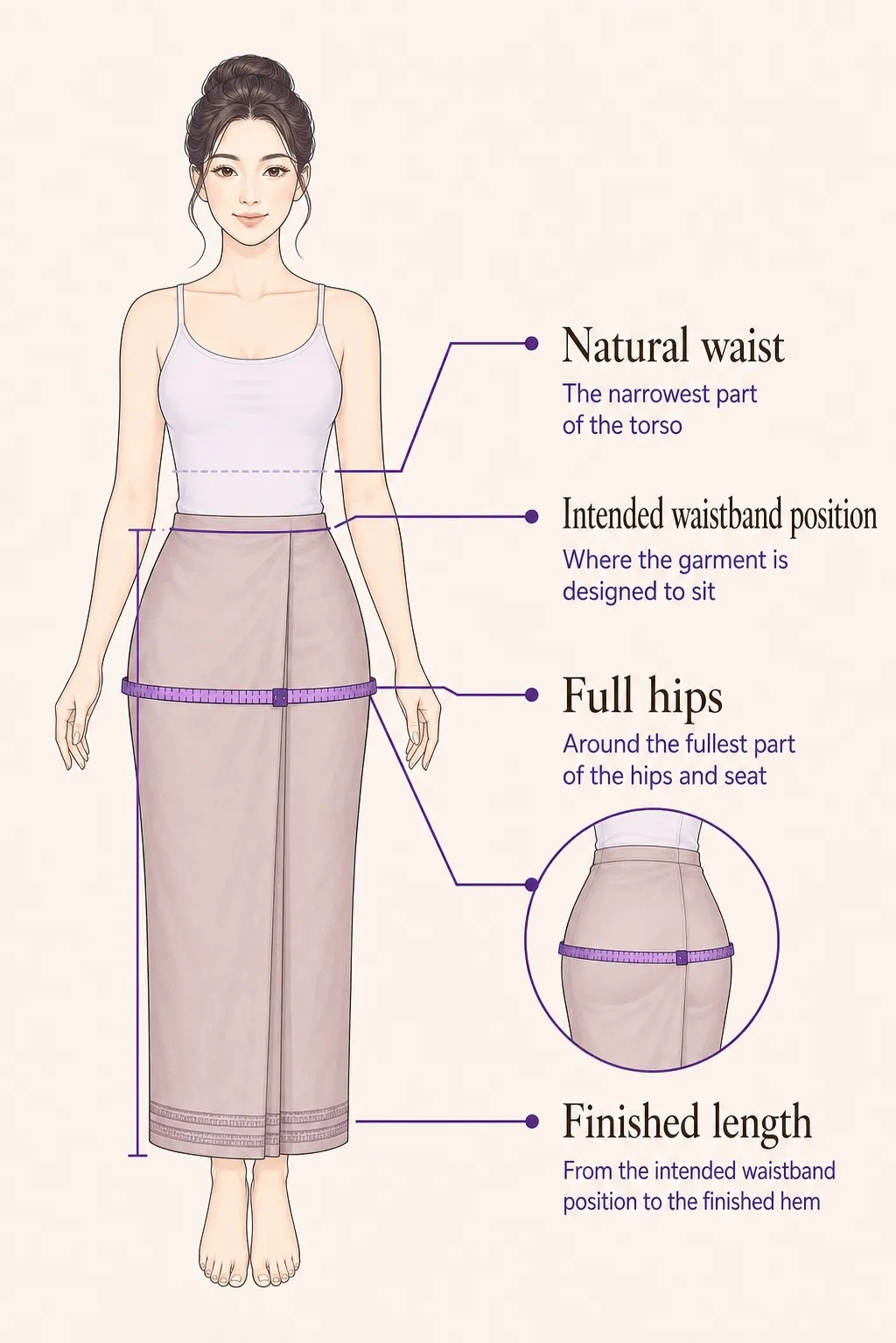
Check where the waistband sits
The intended waistband position can affect both waist fit and finished length. Check the product photographs and description before comparing measurements.
- Start by measuring your natural waist.
- For a fixed waistband, compare both waist and hips when both measurements are provided.
- For an adjustable or elastic waistband, use the fit range stated on the individual product page.
- Do not assume that every garment described as “Free Size” has the same waist range.
- Compare the finished length with a similar lower garment worn at the intended waist position.
Different garments fit differently
Focus first on the measurements that control whether the garment can fasten and sit comfortably.
Fitted blouses and tops
Prioritise bust or chest and waist. Check upper arm or garment length when those dimensions are included.
Men’s shirts
Prioritise chest and waist. Use shoulder width and shirt length as additional checks when provided.
Fixed-waist lower garments
Check both waist and hips when provided. Both areas must allow the garment to fasten and sit correctly.
Adjustable or elastic waists
Use the stated waist range for the particular product rather than relying only on a “Free Size” label.
Two-piece sets
Check the top and lower garment separately. Their measurements, construction and fit may differ.
Additional dimensions
Upper arm, blouse length, shirt length, skirt length, trouser length and Chong Kraben length can provide additional guidance when included.
Need help choosing a size?
Tell us which product and size you are considering. We’ll help you compare the available sizing information.
Contact us