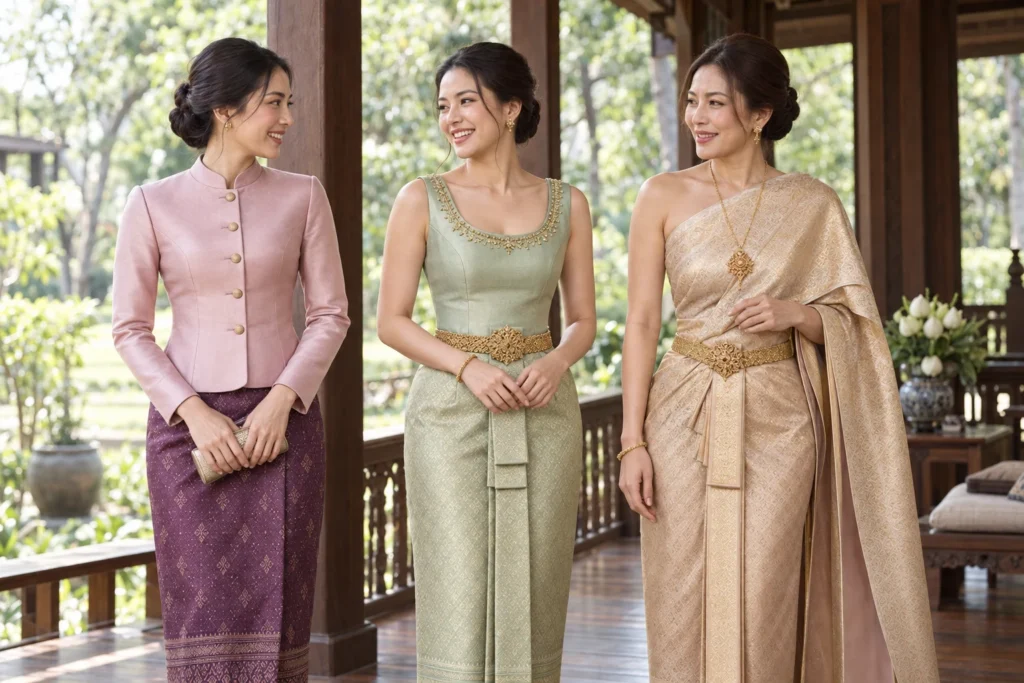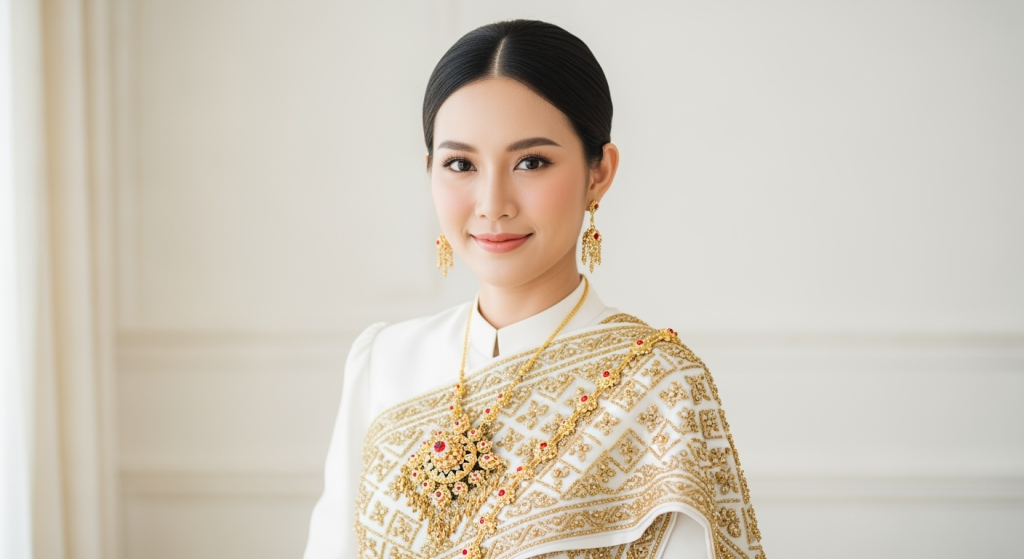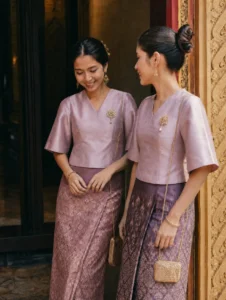
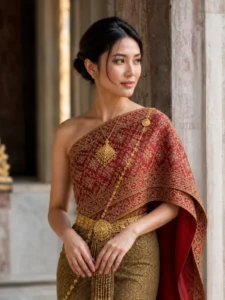
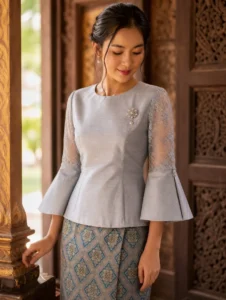

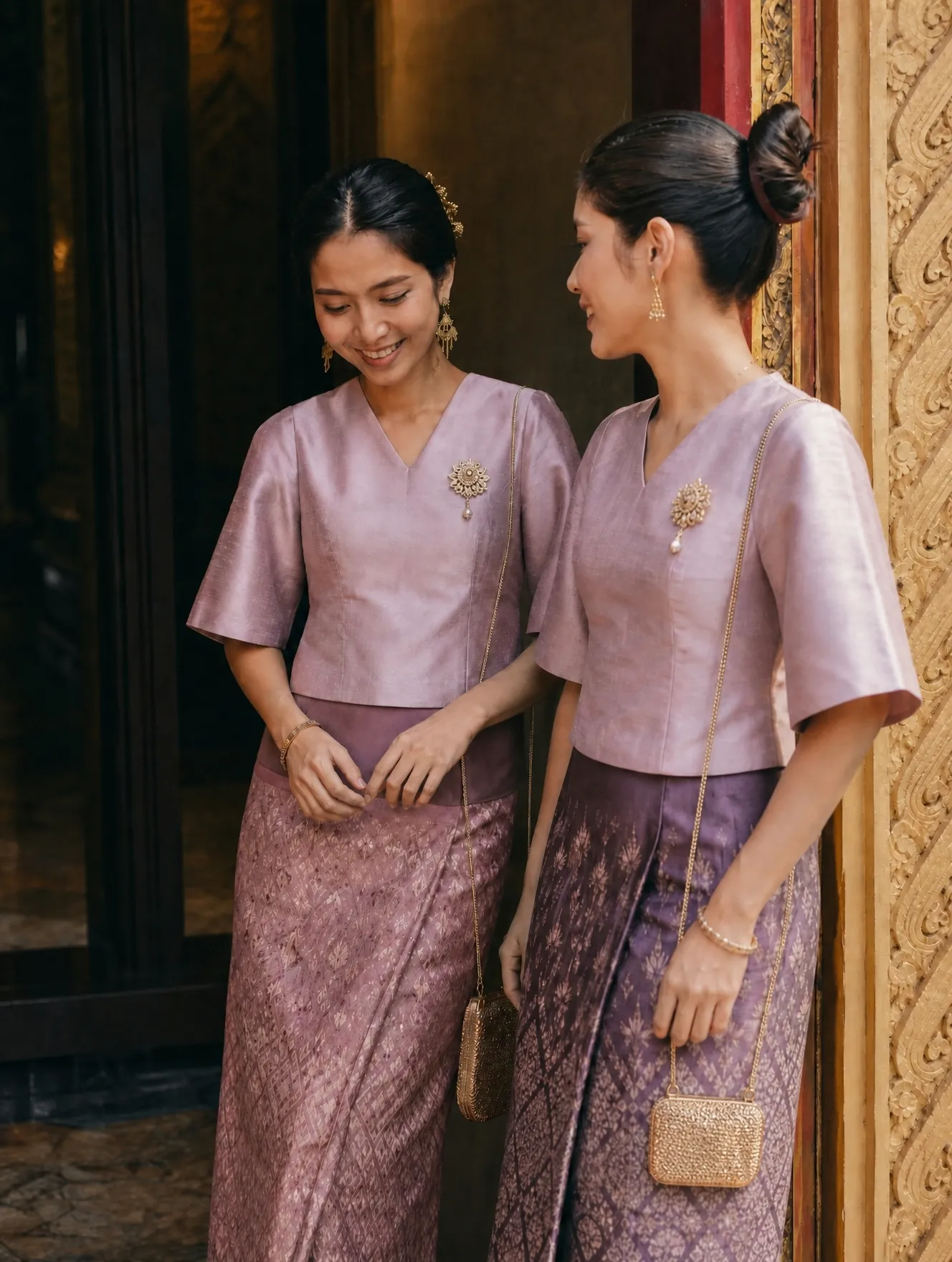
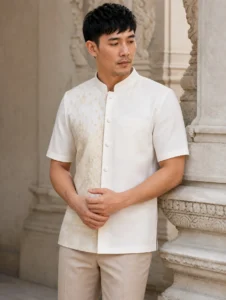

Thai silk has a quiet, glowing beauty that’s hard to mistake for anything else — the way the light shifts across it, the richness of the colour, the soft weight as it drapes. If you’re choosing a piece of Thai traditional wear, it helps to understand what gives silk its character, the looks you’ll come across, and how to look after it so it stays beautiful for years. This guide keeps it simple and honest.
Thai silk is prized for its natural sheen, deep colour, and elegant drape. Shoppers will often notice three broad fabric looks — smooth, more textured silk, and brocade — though Thai silk is also classified more technically by weaving style and regional tradition. Many contemporary traditional-wear pieces, including many of ours, use silk-blend fabric for easier wear and care. To keep any silk piece looking its best, air it after wearing, store it in a clean dry space away from sunlight, and always follow the garment’s care label.
What makes Thai silk special
Thai silk is one of the world’s most admired textiles, and for good reason. Its distinctive sheen comes from the way silk reflects and refracts light across the surface. It takes dye exceptionally well, which helps give Thai silk its rich, saturated colour.
This beautiful fabric also carries immense cultural pride, and its modern revival is a story of royal patronage and international collaboration. Within Thailand, the ultimate champion of Thai silk is Her Majesty Queen Sirikit, the Queen Mother. From the 1950s onward she made it her mission to wear traditional Thai silks on royal visits abroad, showing the world their elegance, and through her SUPPORT Foundation she revitalised rural weaving communities and helped save regional techniques — such as mat mii (ikat) and yok (brocade) — from being lost. Around the same period, the American businessman Jim Thompson helped bring handwoven Thai silk to global attention, building much of the international infrastructure that introduced it to fashion houses around the world. Together, these legacies shaped Thai silk’s reputation as a worldwide symbol of elegance.
A shopper’s guide to Thai silk looks
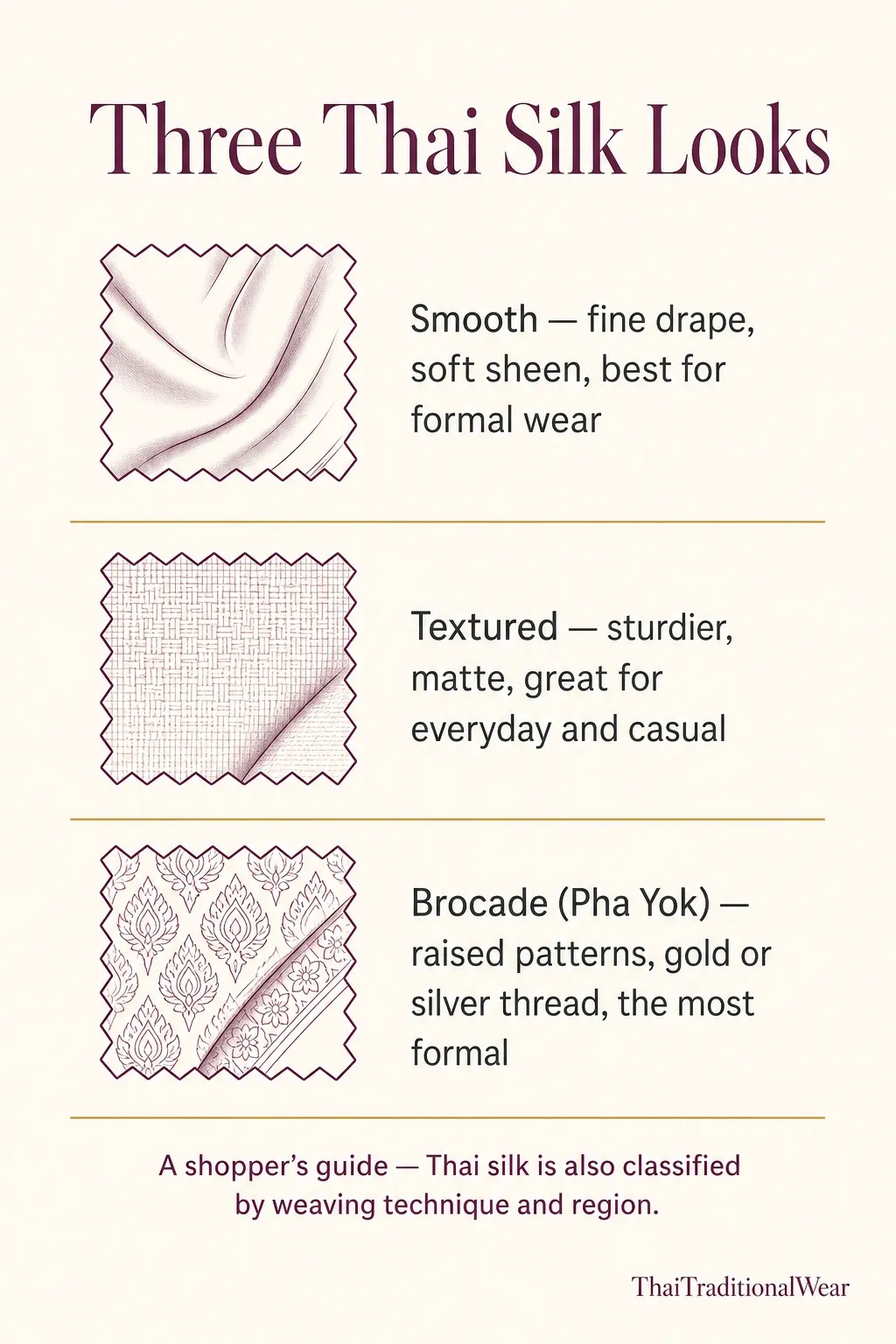
If you’re buying Thai traditional wear, it helps to think in terms of the fabric look you prefer. Below are the three you’ll most often notice. It’s worth knowing that this is a simplified shopper’s guide, not a formal classification — technically, Thai silk is also described by weaving technique and regional style, including mat mii, khit, jok, and yok.
Smooth silk
The classic, lustrous look most people picture when they think of fine silk. Its smooth finish gives an elegant drape, which makes it ideal for formal blouses and flowing traditional silhouettes, and a beautiful base for embroidery. It photographs wonderfully, so it’s a favourite for weddings and family portraits.
Textured silk
A more relaxed, characterful look. Slight natural irregularities in the weave give a textured surface and a softer, more matte appearance than smooth silk. It tends to be hard-wearing, which makes it a practical choice for pieces you’ll wear often and for more casual cultural occasions.
Brocade (Pha Yok)
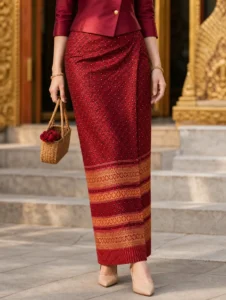
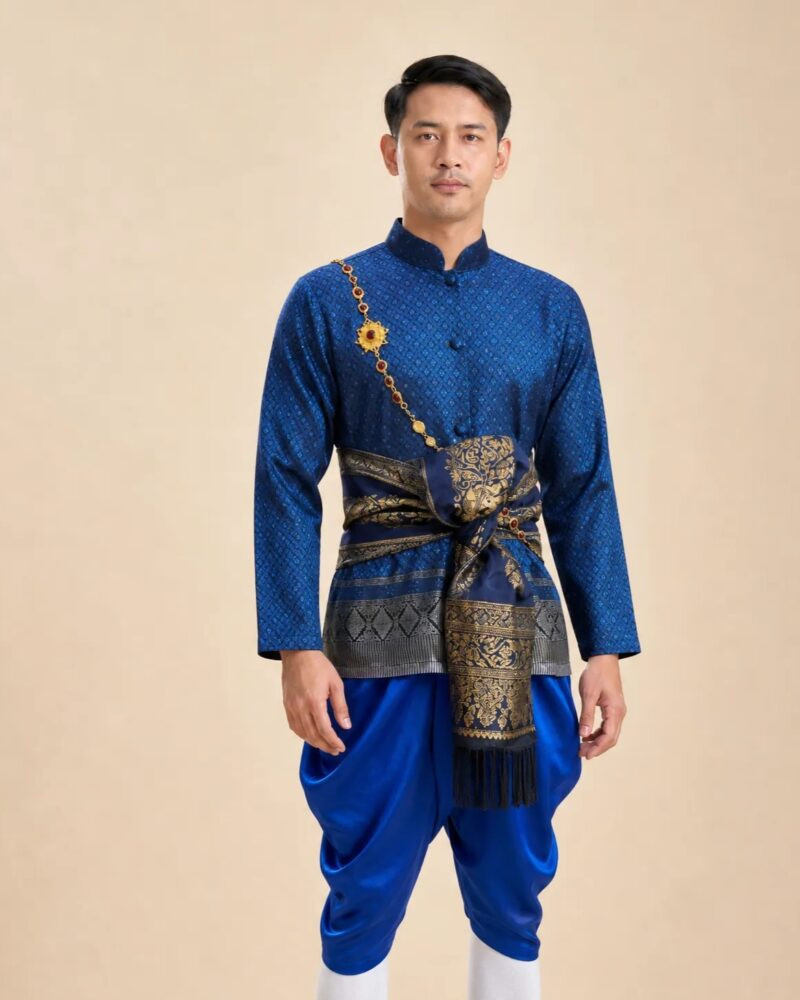
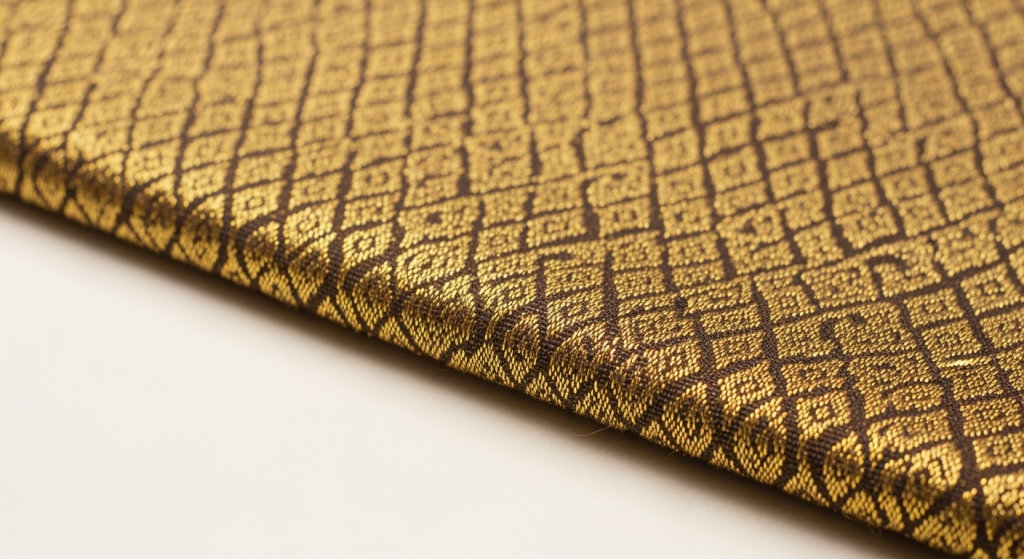
The most decorative of the three. Brocade — traditionally called Pha Yok (ผ้ายก) in Thai — has raised patterns woven directly into the fabric, often using gold or silver-toned threads, frequently featuring classic Thai motifs (Lai Thai). The result is rich and eye-catching — perfect for weddings and the most formal cultural events. Many of our outfit sets pair a brocade Pha Sin (the wrapped Thai skirt) with a complementary blouse.
Many of our pieces use a premium silk-blend fabric. A good blend keeps the sheen, drape, and rich colour you want from silk, while being more forgiving to wear and care for in everyday life — which is exactly what you want from a garment you’ll actually wear, not just admire in a wardrobe.
How to judge a piece you’ll love wearing
You don’t need lab tests to choose well. The things that make a piece feel good to wear are easy to spot:
| Look for | What it tells you |
|---|---|
| Even sheen | A consistent, soft glow across the fabric — not patchy or plasticky — signals a well-made piece. |
| Rich, even colour | Deep, saturated colour that’s consistent across the fabric, with no streaks or patches. |
| Clean drape | The fabric should fall in soft, natural folds rather than standing stiff or hanging lifelessly. |
| Neat finishing | Tidy edges, secure seams, and no loose threads — small details that show care in the making. |
| Crisp pattern | On brocade, the woven motif should be sharp and clearly defined rather than blurry. |
Every piece we sell has detailed photos and measurements on its product page, so you can see the fabric, sheen, and pattern clearly before you buy — and if you’re unsure, just email us at hello@thaitraditionalwear.com and we’ll happily talk you through the options.
How to care for your silk or silk-blend piece
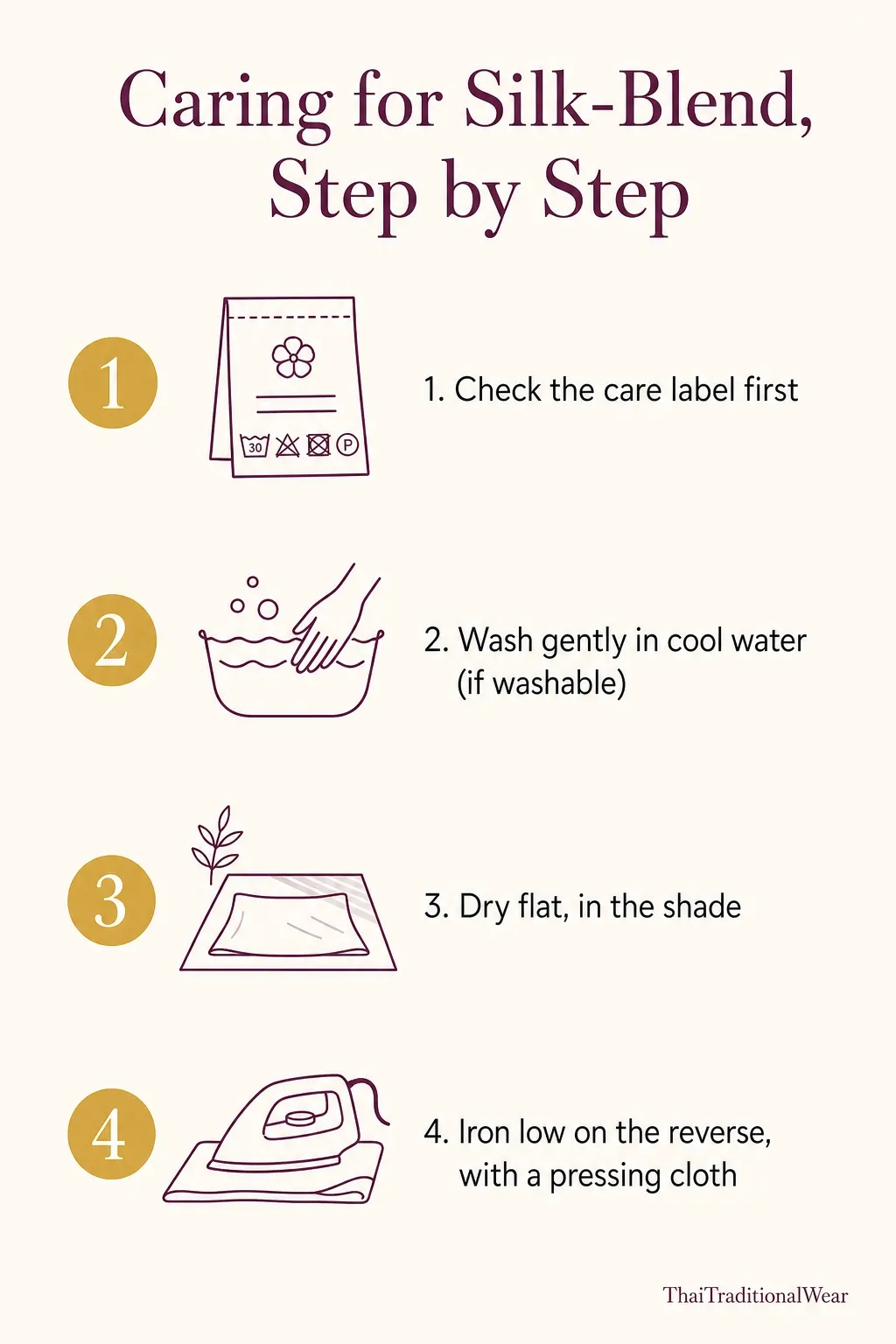
Looking after a silk-blend piece is genuinely manageable — the key is to start with the care label, because silk care varies by fabric, weave, and finish. A delicate brocade or pleated piece may need different handling from a plain woven blouse.
| Step | How |
|---|---|
| Check the label first | Always follow the garment’s care label. Some washable silk-blend pieces can be cleaned gently at home; more delicate ones — especially brocade, pleated, embellished, or metallic-thread fabrics — may be better professionally cleaned. |
| Wash gently (if washable) | Hand-wash in cool water with a mild, pH-neutral detergent. Never use hot water, and gently press the water out rather than wringing or twisting. |
| Dry in shade | Lay flat or hang to dry away from direct sunlight, which can fade colour over time. |
| Iron low, with a cloth | If ironing is permitted, use a low setting on the reverse of the fabric, and always place a pressing cloth between the iron and the garment — direct heat can scorch or leave a shiny mark on a silk blend. |
| Store thoughtfully | Air the piece fully after wearing, then keep it in a clean, dry, breathable space away from sunlight and plastic. Lighter pieces can hang on a padded hanger; heavier or brocade pieces are best folded or stored flat. |
Wearing a light underlayer, avoiding sharp jewellery that can snag, and airing a piece out after each wear does more to extend its life than anything else. You’ll find specific care notes on every product page too.
A note on Thailand’s weaving heritage
Behind every length of Thai silk is a living craft tradition. Weaving communities across Thailand — especially in the Northeast (Isaan), and also in parts of the North, Central region, and South — have kept distinctive regional patterns and techniques alive for generations. When you wear Thai traditional dress, you’re connecting to that heritage, and we’re proud to bring these styles to a wider audience. All of our pieces are made in Thailand.
Featured pieces
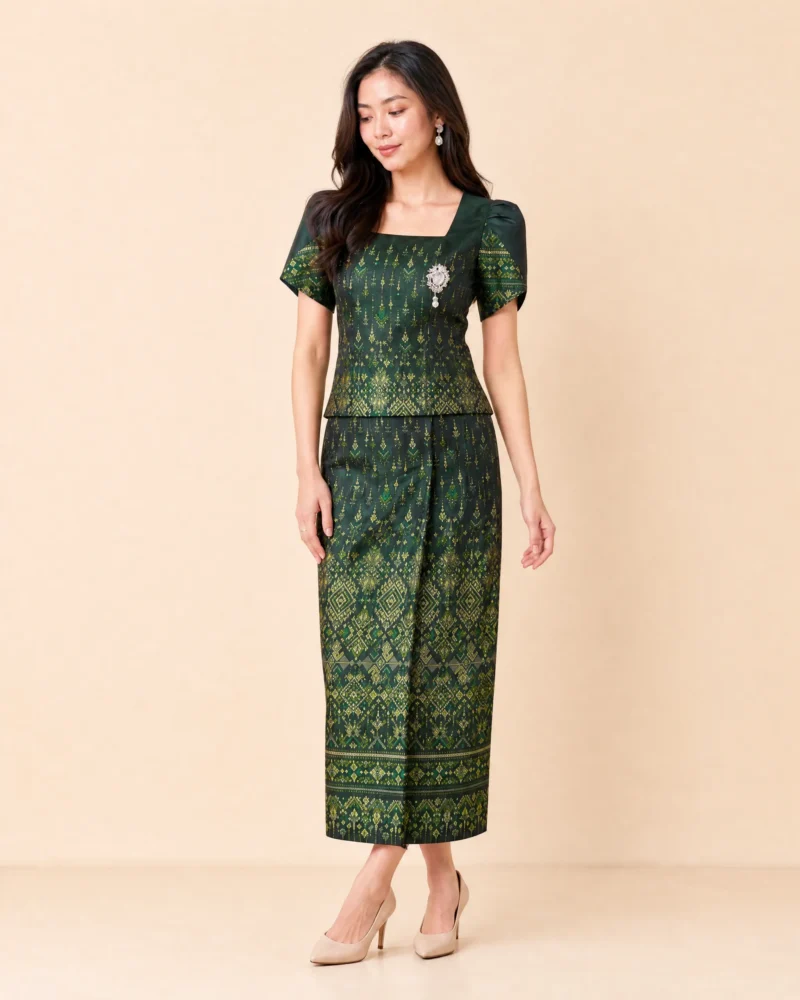
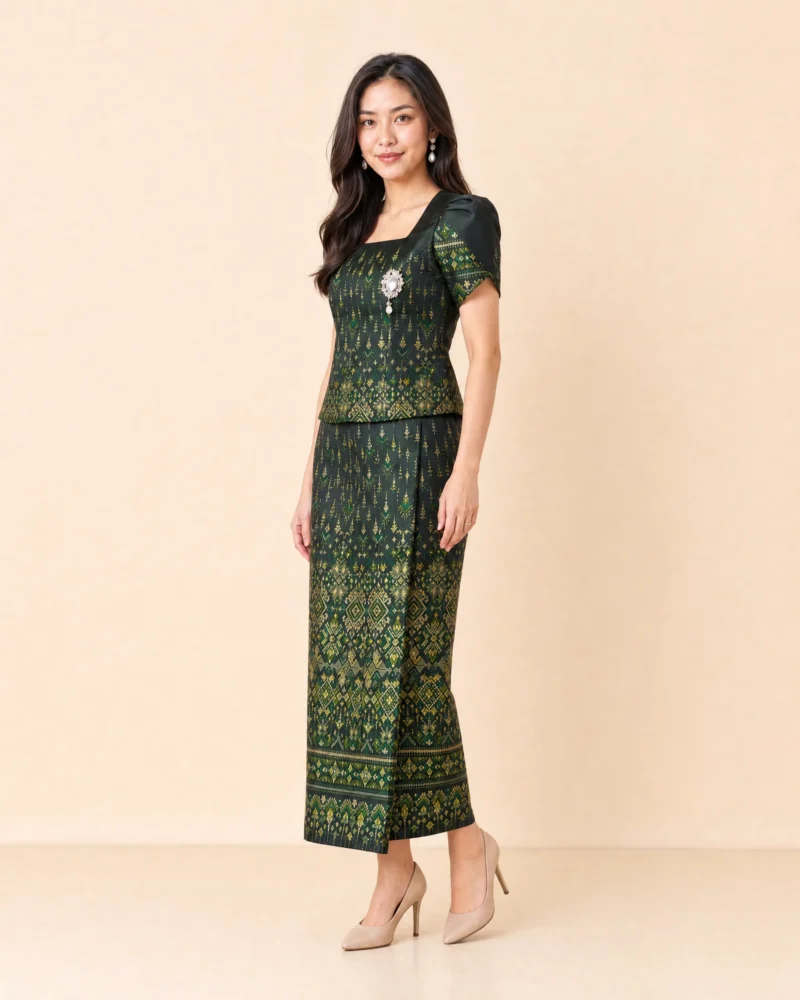
Here are a couple of our silk-blend sets that show the fabric at its best — both pair a brocade Pha Sin with a complementary blouse.
The Mali Prae Wa Set (Emerald)
Woven in the Prae Wa tradition of Kalasin in Thailand’s northeast — the same kind of heritage weaving described above. A deep emerald silk-blend blouse and matching Pha Sin, sizes M–4XL. A piece that carries a genuine regional craft story.
The Mali Prae Wa Silk Set (Emerald)
From £147.16
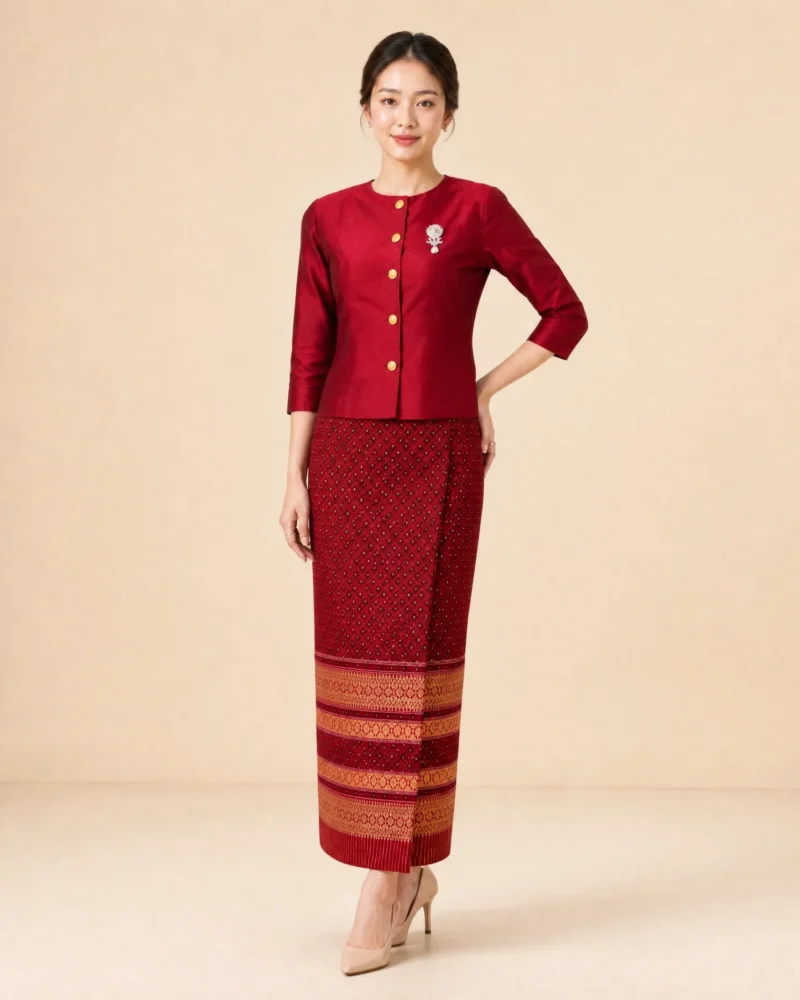
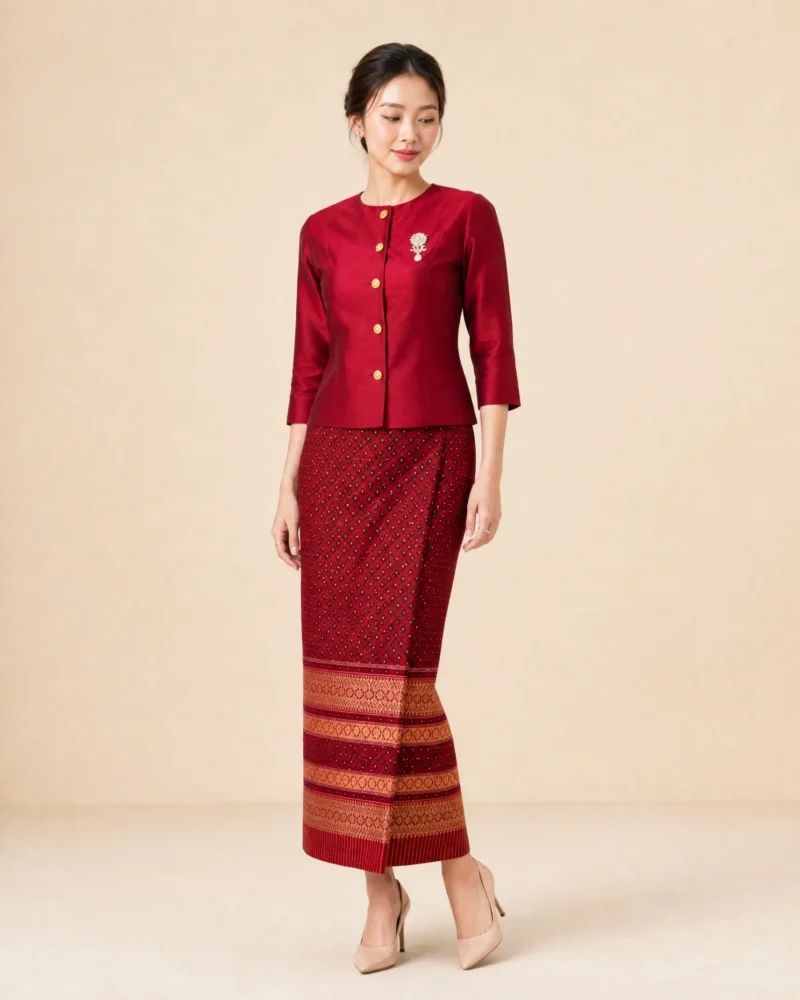
The Saowalak Set (Ruby)
A deep ruby silk-blend blouse with gold ornamental buttons, paired with a ruby Lai Thai brocade Pha Sin — brocade at its richest, with the woven gold medallion motif catching the light. Fully lined, sizes M–4XL.
The Saowalak Phrae Thip Set (Ruby)
From £147.16
Find your silk-blend piece
Premium silk-blend Thai outfit sets in a wide range of sizes — made in Thailand and shipped worldwide, free, tracked, and duty-covered on US orders.
Shop Thai outfit sets