

The 8 Styles of Chut Thai, Explained: When to Wear Each One
What each one is, how formal it is, and exactly when to wear it — no prior knowledge needed.
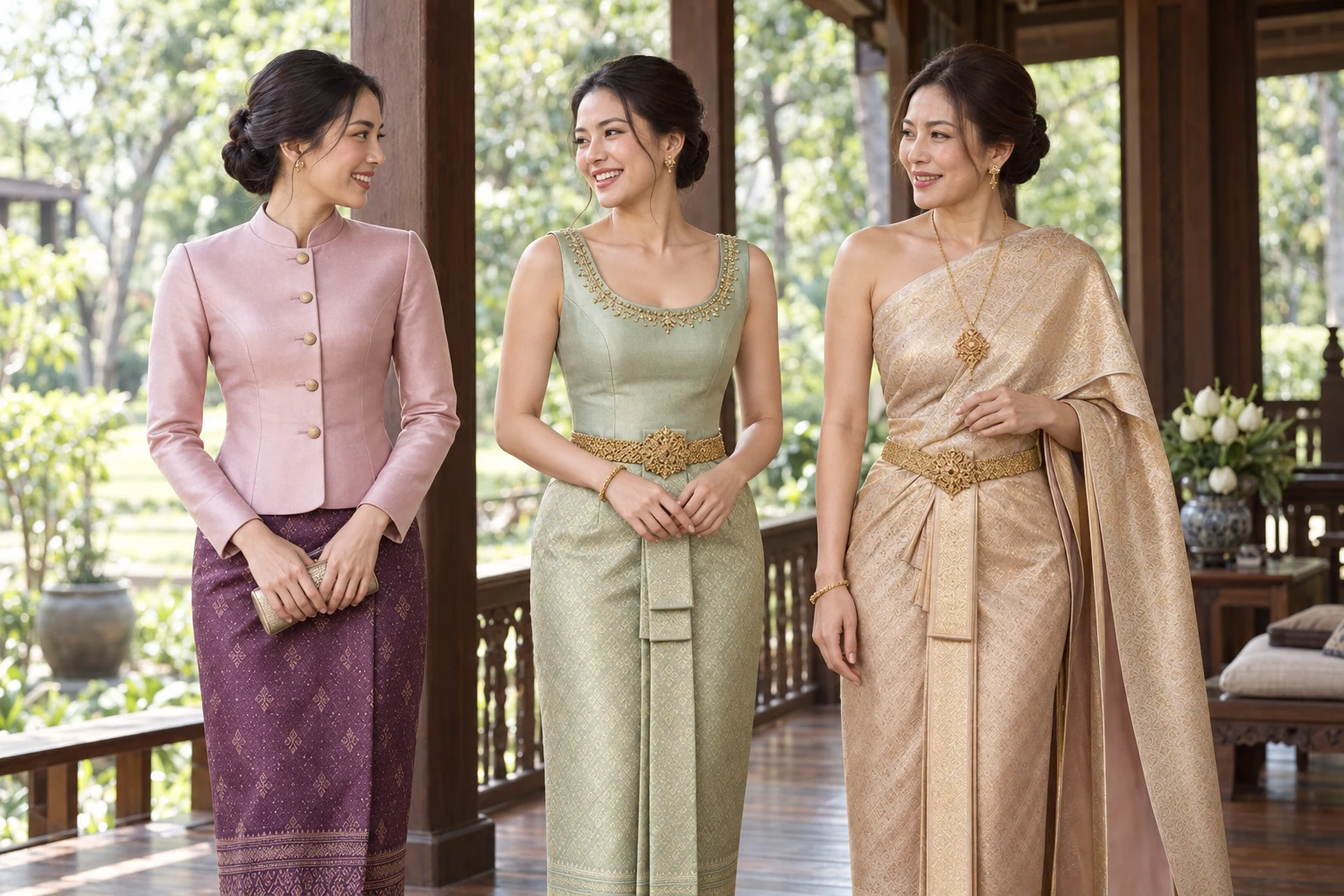
If you’ve been invited to a Thai event and someone said “wear a Chut Thai,” you may have discovered there isn’t just one. Chut Thai simply means traditional Thai dress, and there are eight recognised women’s styles — known as chut thai phra ratchaniyom — each with its own level of formality and its own moment to be worn.
This guide walks you through all eight in plain English: what each looks like, how dressy it is, and when you’d actually wear it. No prior knowledge needed.
- Most versatile & comfortable (daytime): Ruean Ton
- Most popular & elegant (evening): Chakri
- Formal & modest (no exposed shoulders): Chitralada (day) or Amarin (night)
- High royal ceremony / bridal: Boromphiman, Siwalai, Chakkraphat
Where these styles come from
The eight women’s styles known as chut thai phra ratchaniyom were formalised under the guidance of Her Majesty Queen Sirikit in the 1960s, drawing on historical Thai court dress and adapting it for modern official and ceremonial use. Many are named after royal palaces and throne halls — which is part of why each carries a clear sense of the right occasion.
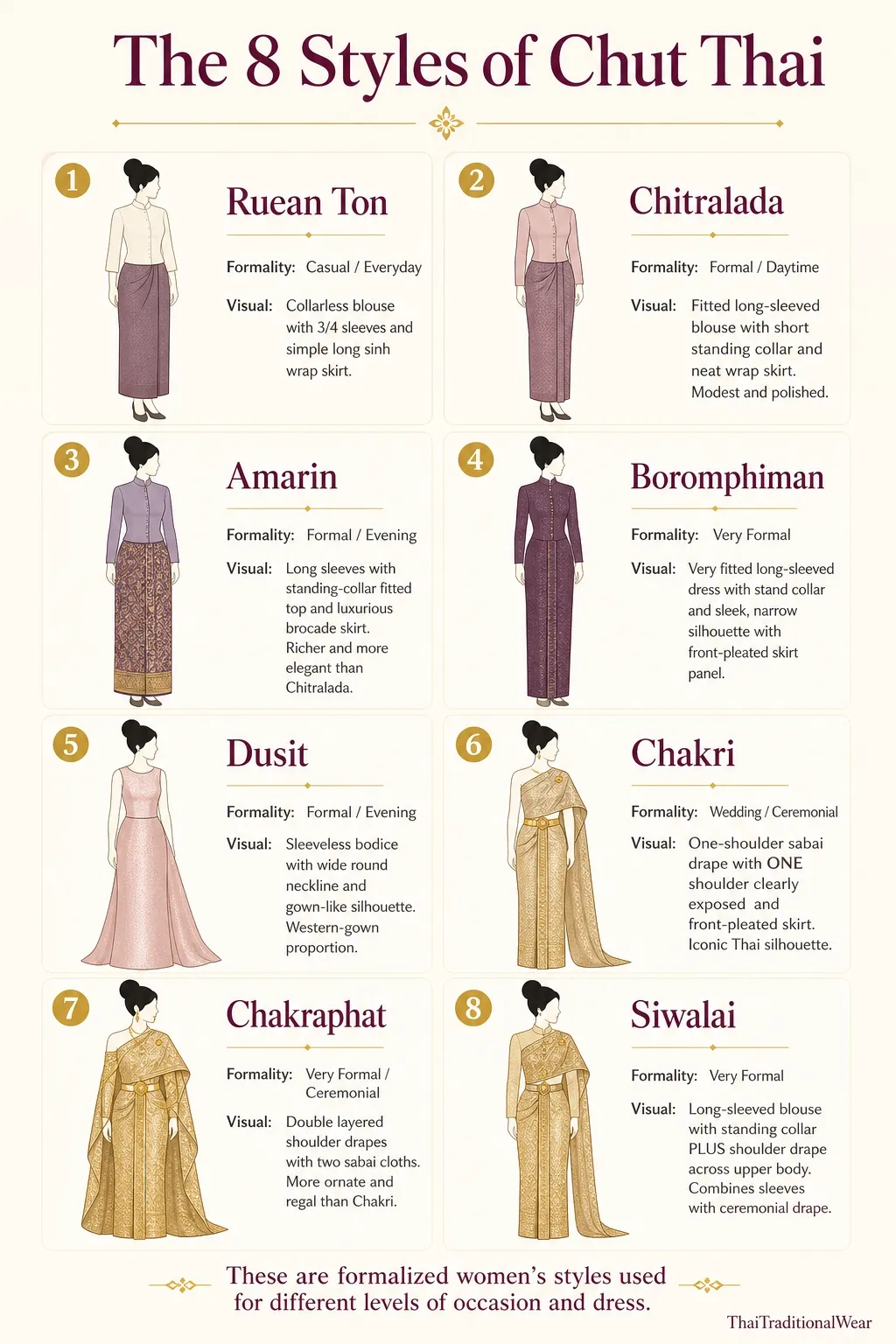
The 8 styles, grouped by when you’d wear them
Rather than a single casual-to-formal line, it helps to group these by daytime versus evening and by how ceremonial they are.
Daytime & easier to wear
1. Ruean Ton — the everyday classic
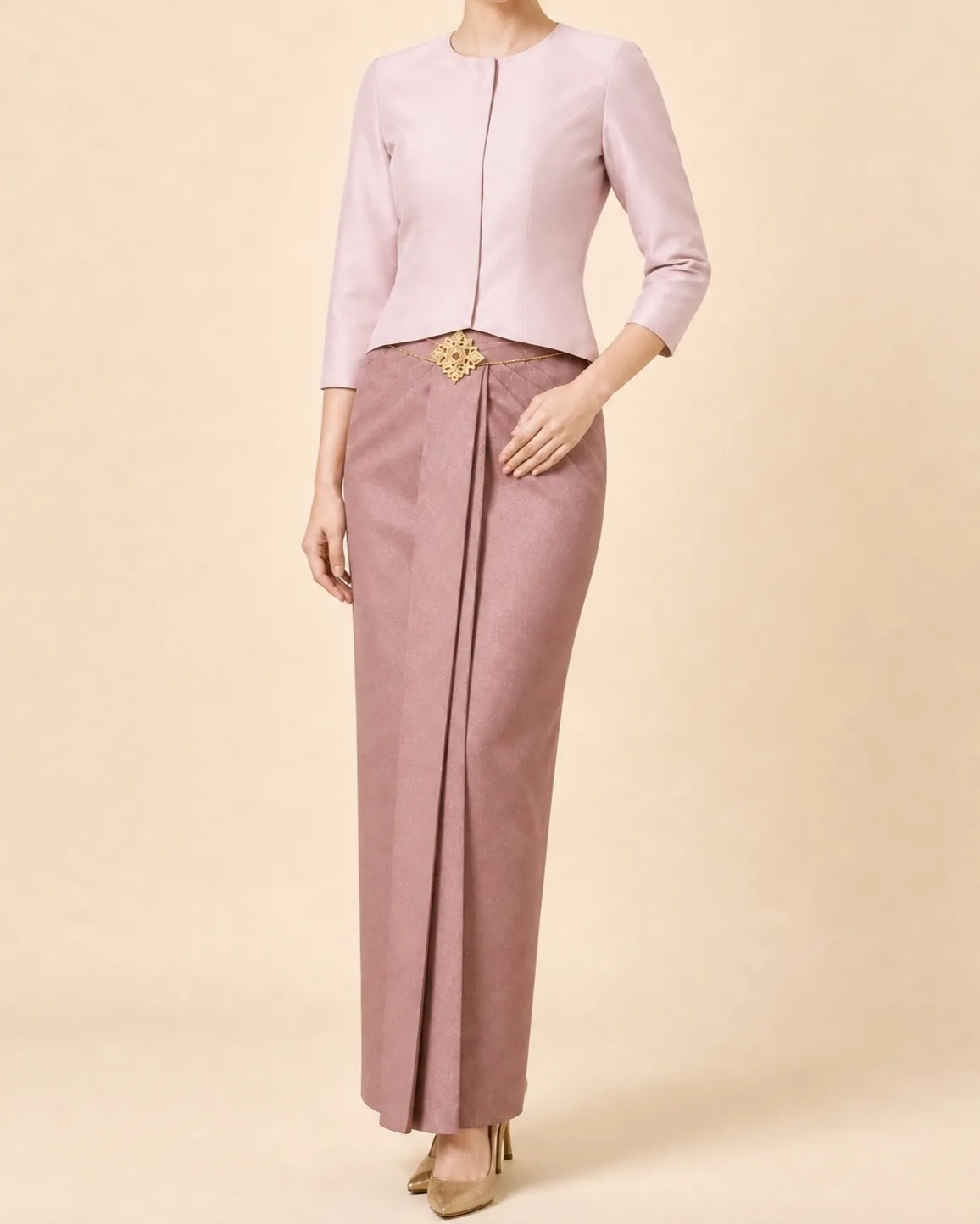
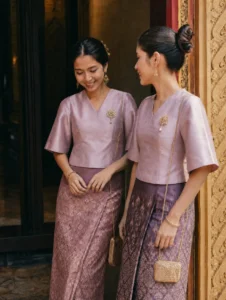
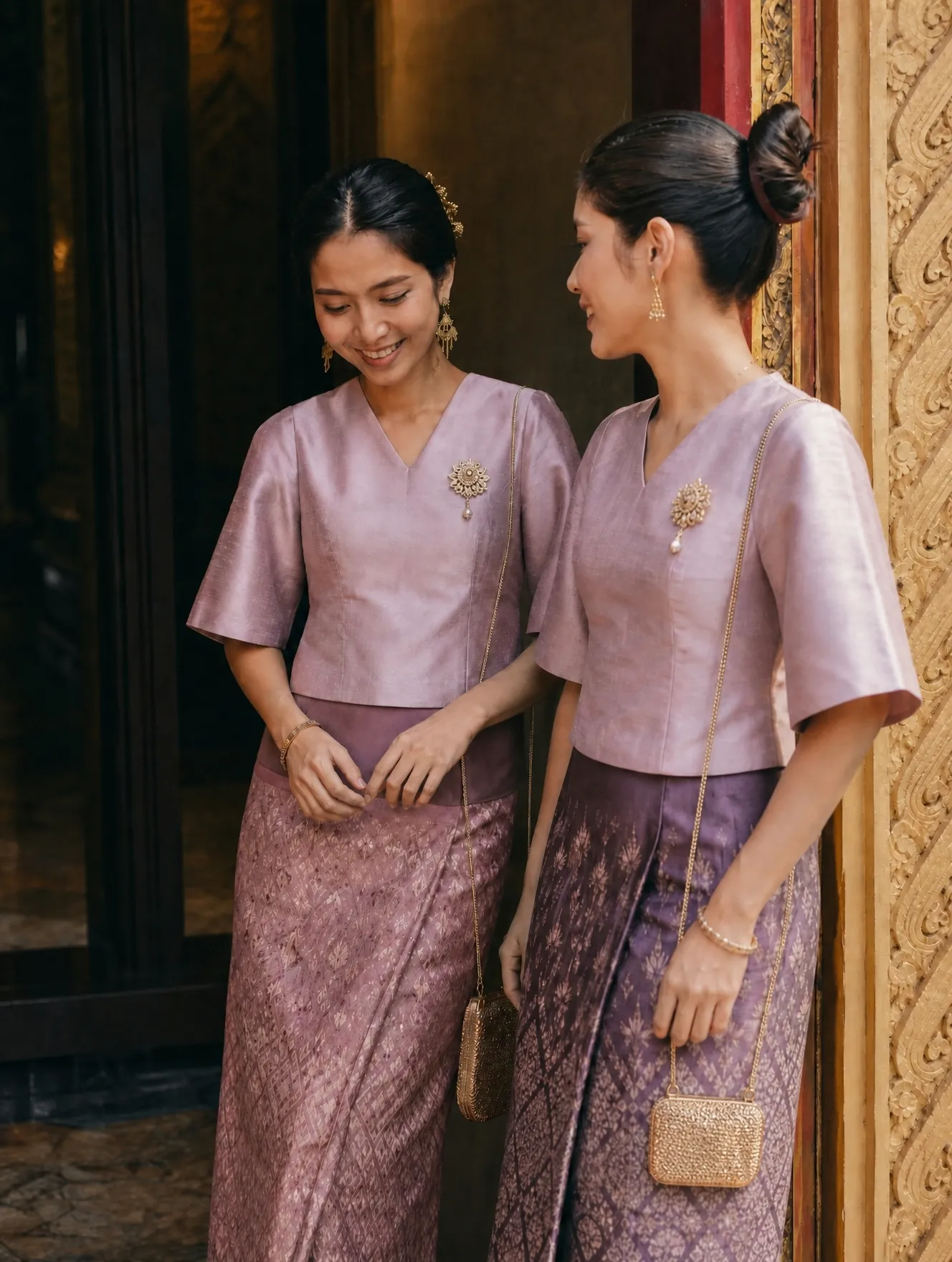
The most relaxed and comfortable of the eight: a collarless blouse with three-quarter sleeves and a simple pha sin. Modest and easy to wear.
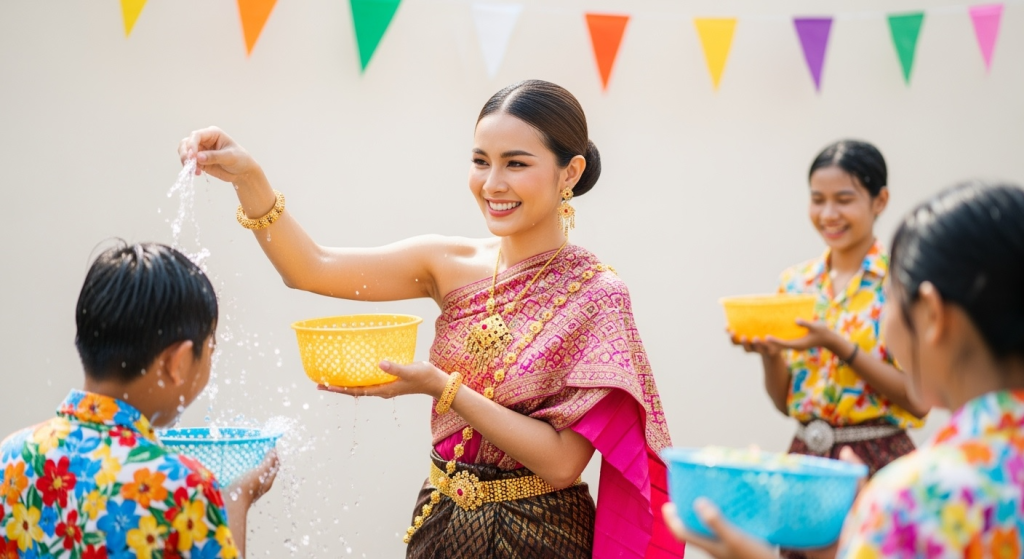
Wear it for: informal temple visits, daytime cultural festivals, Thai language school events, relaxed family gatherings. The easiest starter piece.
2. Chitralada — daytime formal
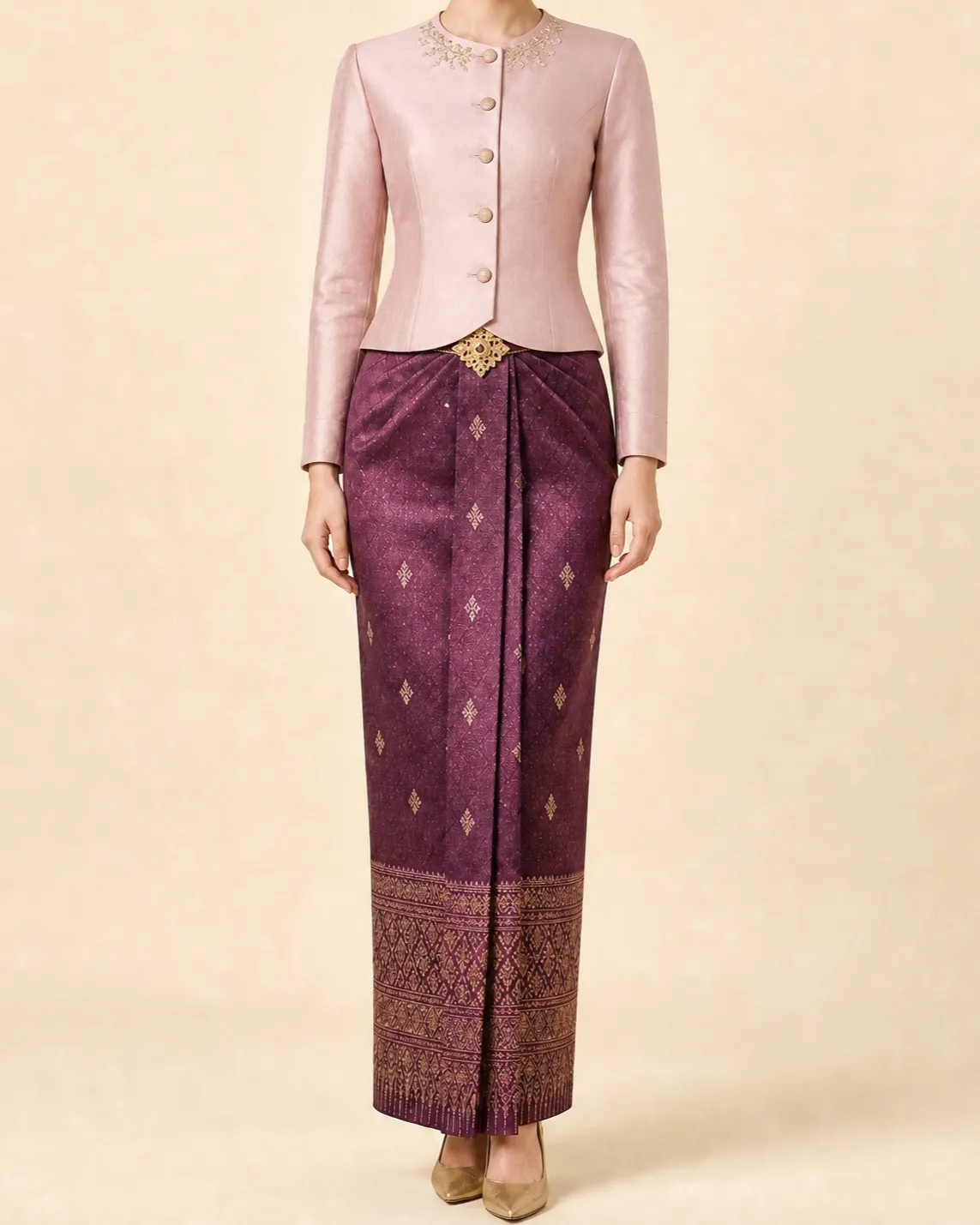
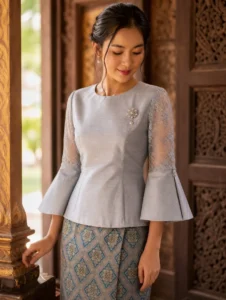
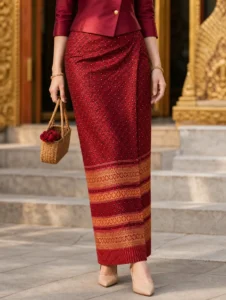
A more formal daytime style than Ruean Ton, typically with a short standing collar and long sleeves, worn with a long wrap skirt. Polished but not flashy.
Wear it for: daytime ceremonies, graduations, official daytime functions, professional cultural events.
Formal, day or evening
3. Siwalai — formal and modest
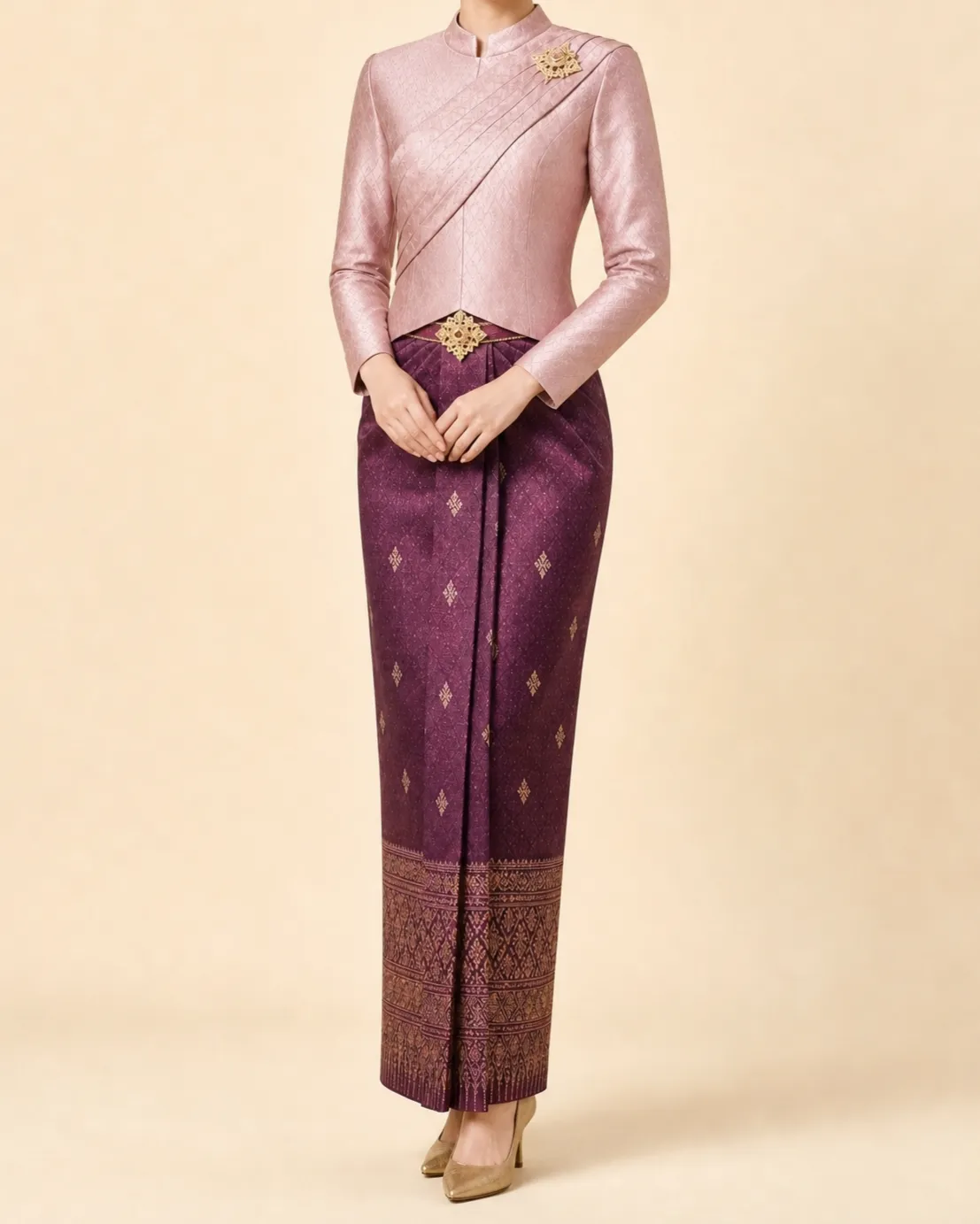
A formal long-sleeved style with a sabai-style shoulder drape worn over the blouse, paired with a front-pleated skirt. Elegant and dignified — and, because of its layers, on the warm and formal side.
Wear it for: formal ceremonies, weddings, and refined daytime or evening cultural events.
4. Boromphiman — high formal
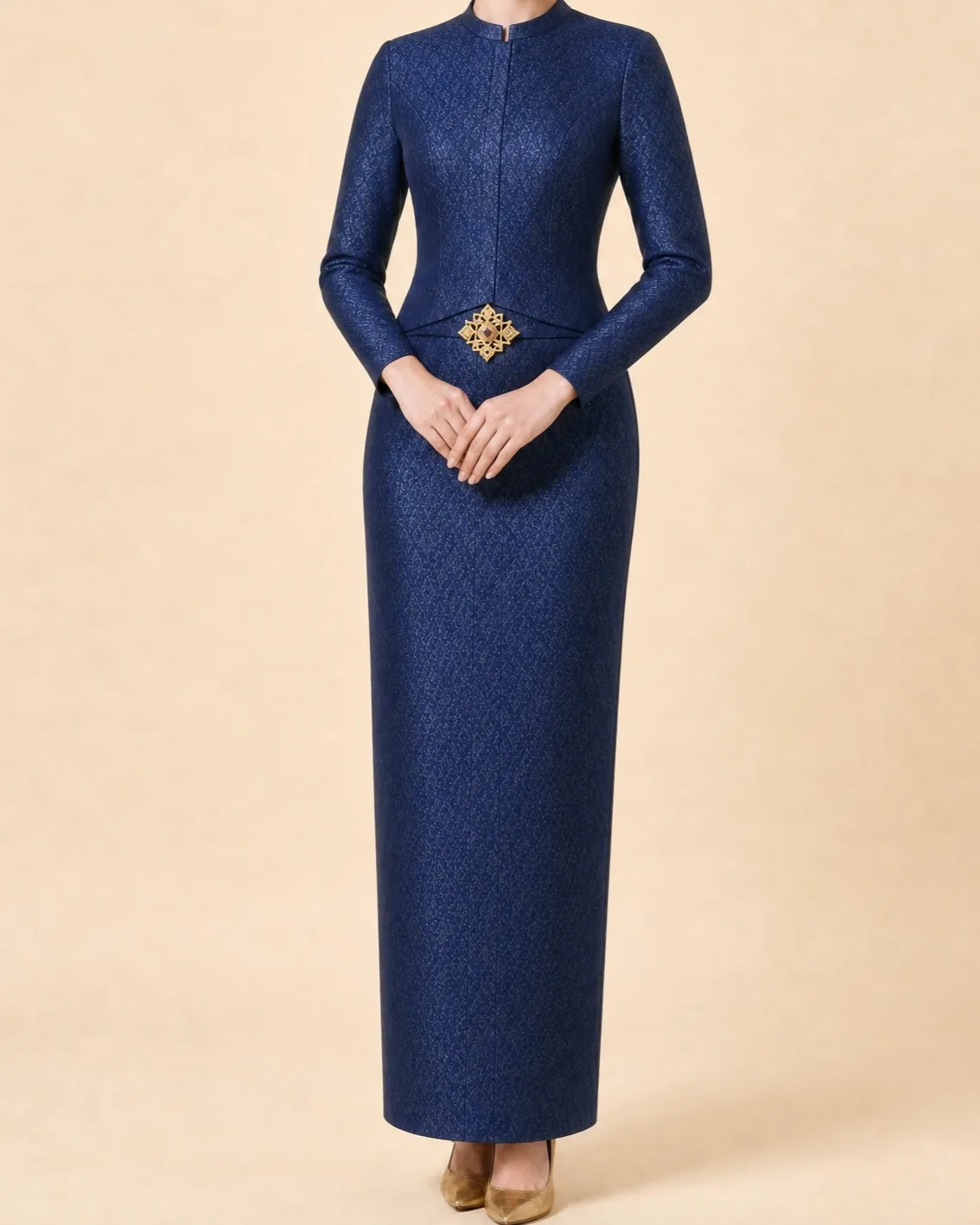
A highly formal, structured style: a high-necked, long-sleeved blouse worn with a front-pleated brocade skirt and often a jewelled belt, for a clean, regal line. It doesn’t use a sabai.
Wear it for: the most formal ceremonies, and weddings where you’re an honoured family member or the bride.
Evening & ornate
5. Amarin — formal evening
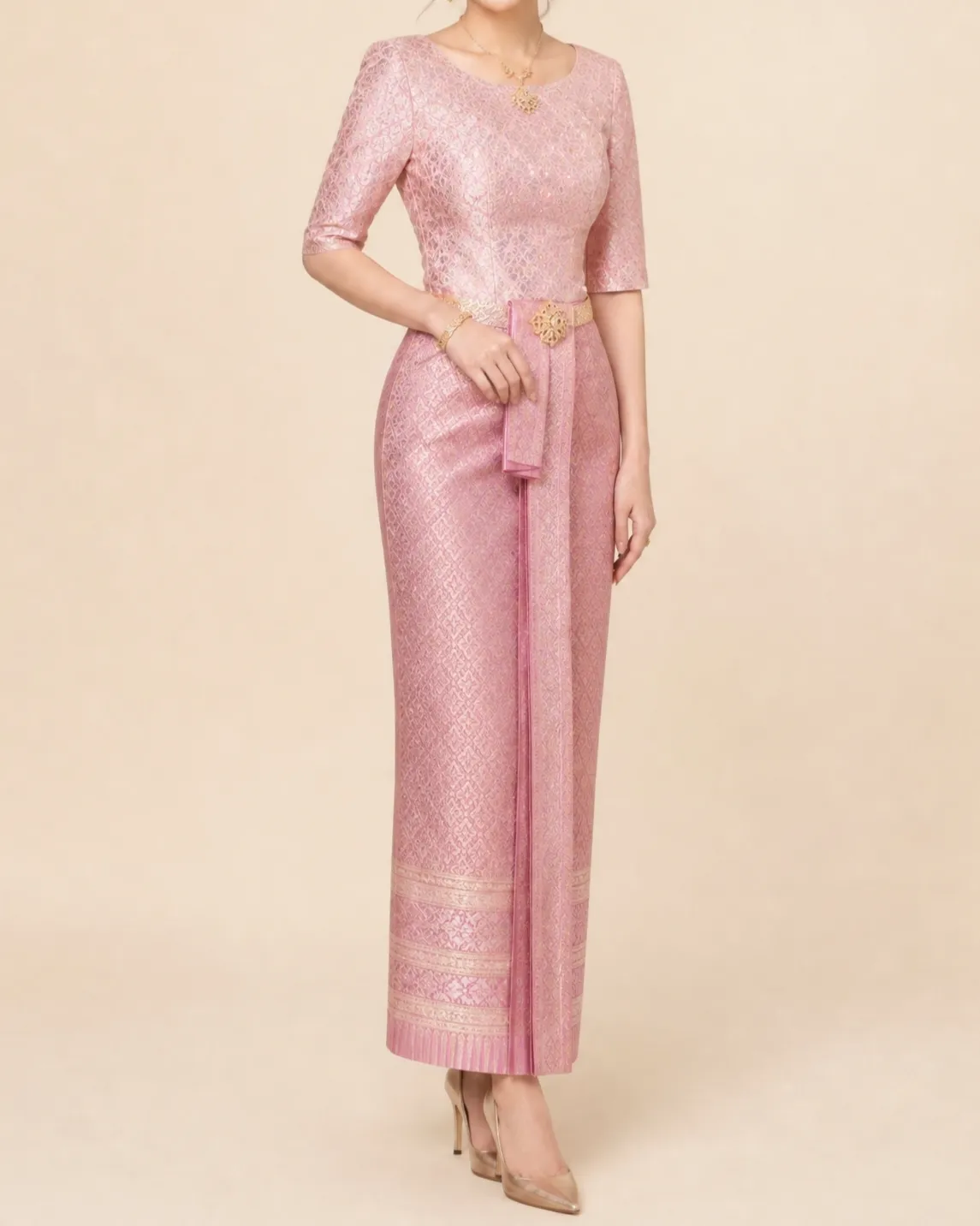
Similar in cut to Chitralada — round neck, long sleeves — but made from luxurious brocade (Pha Yok) and often worn with jewellery, typically without a belt. Full coverage with evening richness.
Wear it for: evening receptions, theatre, banquets, and formal evening cultural events.
6. Dusit — formal evening, Western-influenced
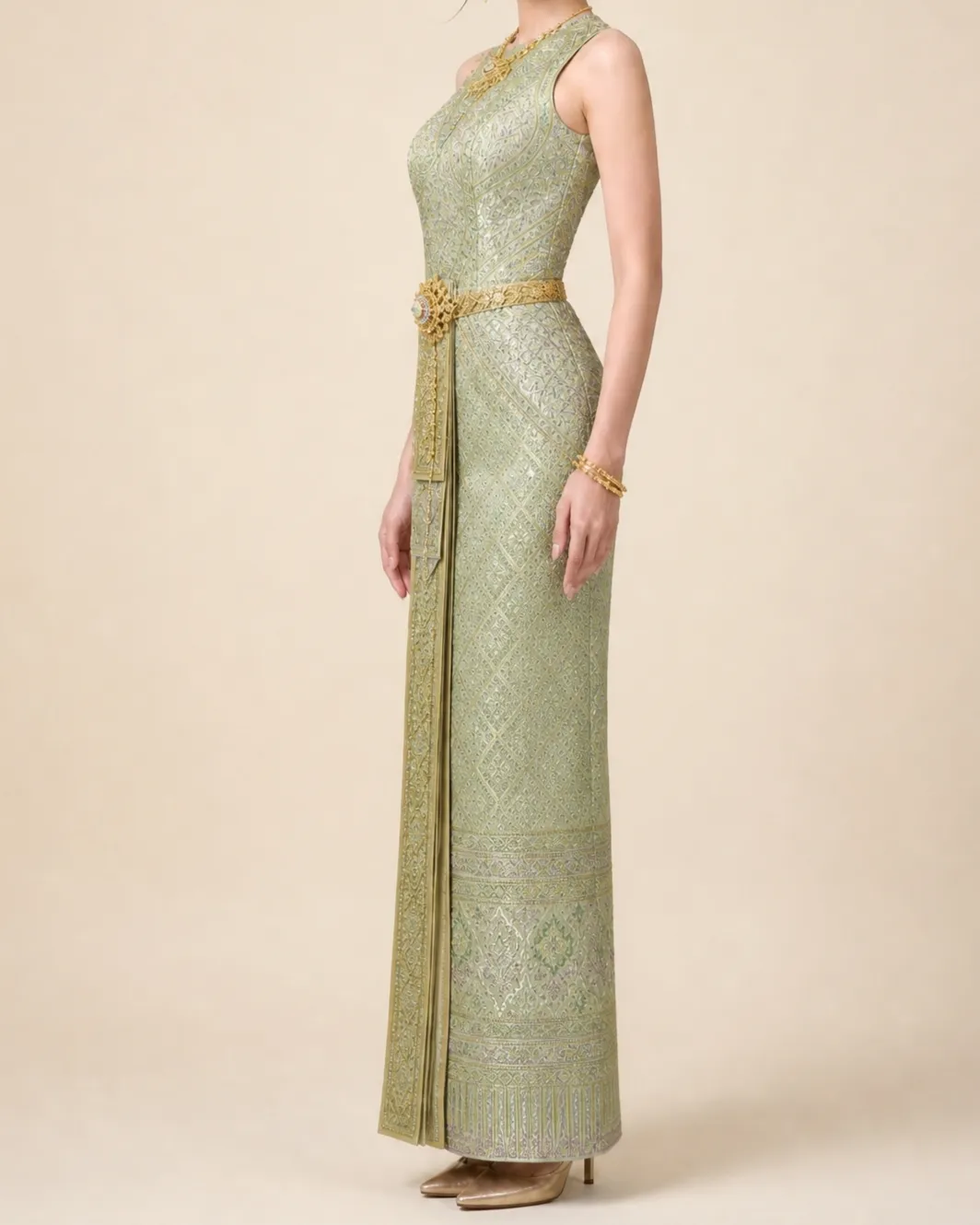
A more Western-influenced style with a sleeveless, often heavily embellished bodice sewn into a matching brocade skirt.
Wear it for: glamorous evening galas, high-society celebrations, prestigious milestone events.
7. Chakri — the iconic one-shoulder style
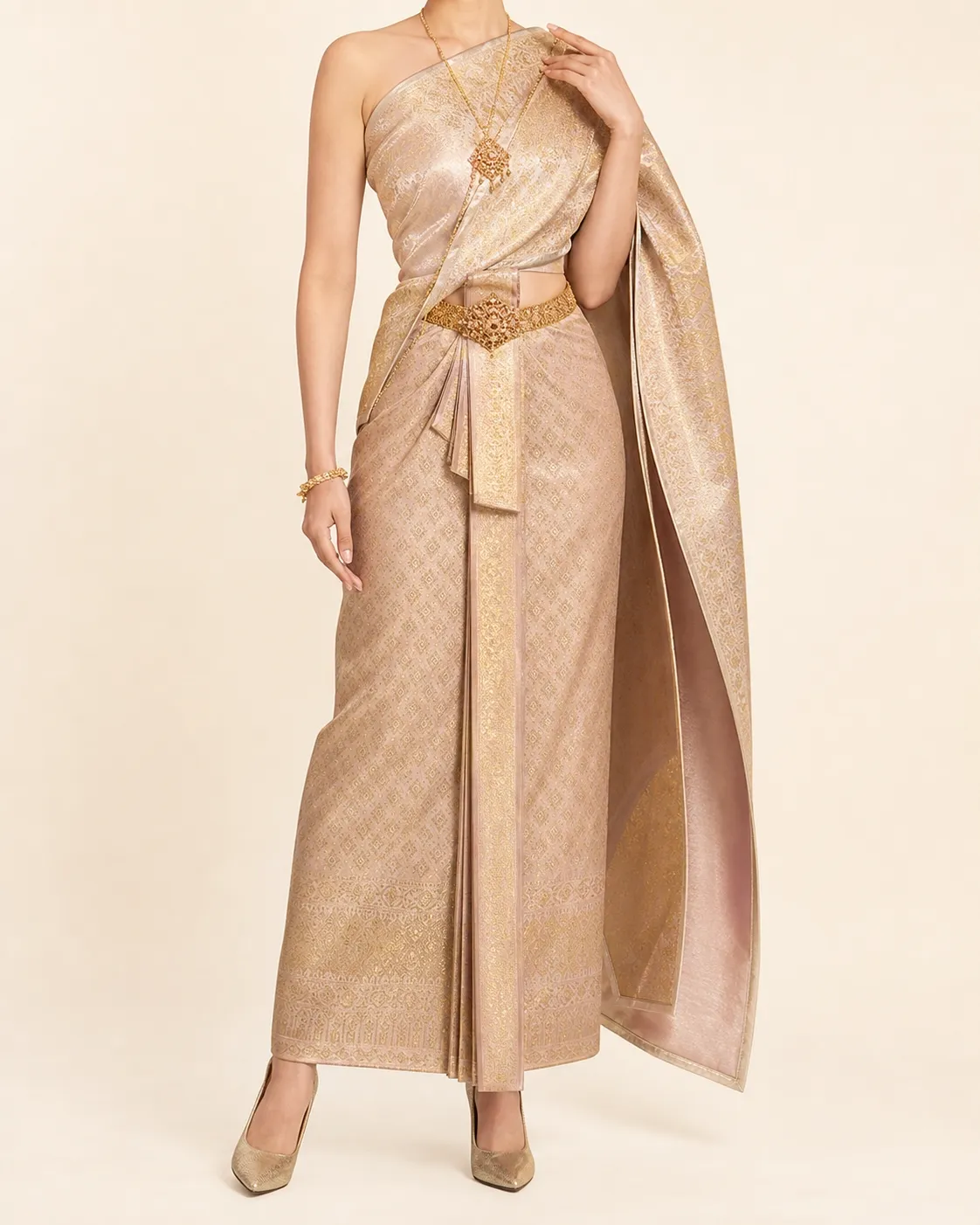
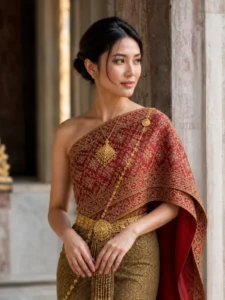
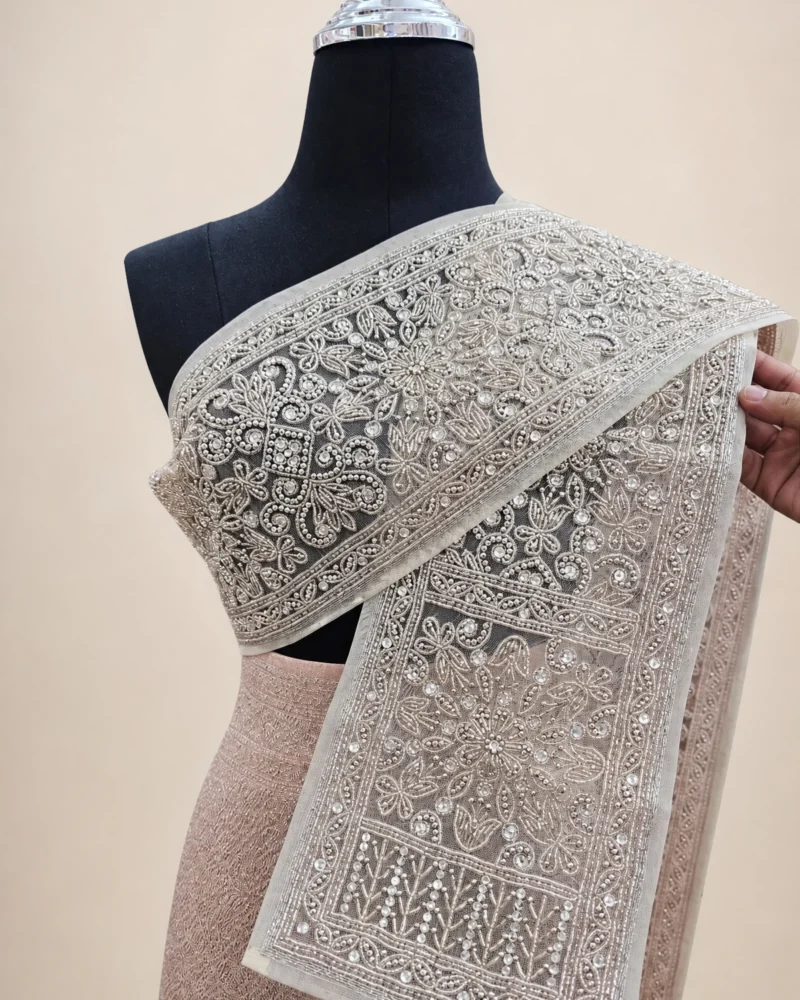
Perhaps the most famous Chut Thai style: an elegant one-shoulder look, with a sabai draped across the chest leaving one shoulder bare, paired with a front-pleated brocade skirt.
Wear it for: evening wedding receptions, gala dinners, formal evening festivals — the classic statement style for celebratory evenings.
8. Chakkraphat — the most elaborate
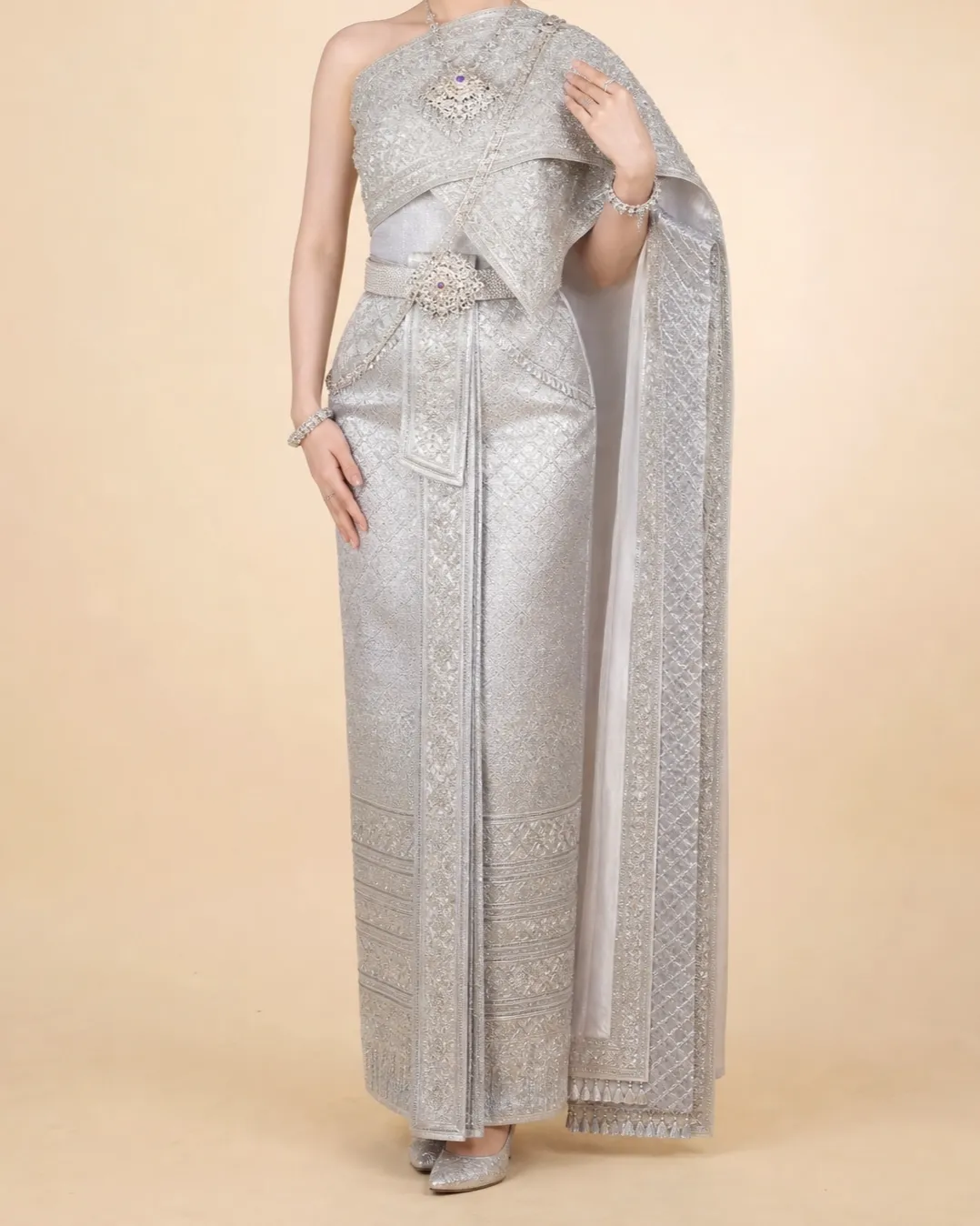
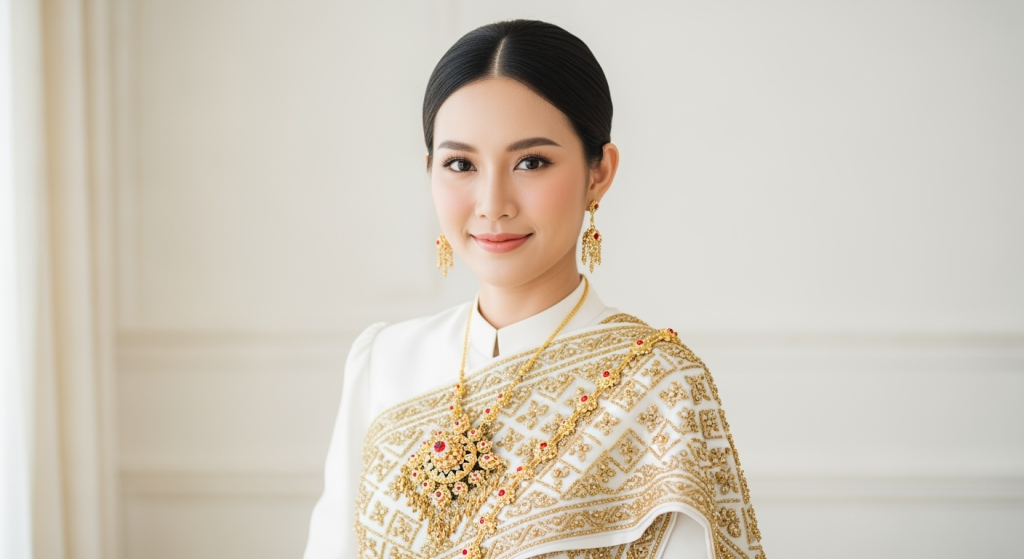
Similar to Chakri but more elaborate still, with layered shoulder cloths (a pleated under-sash and a richly embellished upper sash) and the richest ornamentation of all eight.
Wear it for: the most significant ceremonial occasions, state-style banquets, and traditional brides.
Styles with a draped sabai (like Chakri and Chakkraphat) take a little practice to pin securely before an event — and one-shoulder styles like Chakri leave a shoulder bare, so they suit evening receptions far better than temple visits, where modest coverage matters.
Quick reference
- Easiest & most comfortable (daytime): Ruean Ton
- Polished daytime / professional: Chitralada
- Formal, modest (covered shoulders): Siwalai (day) or Amarin (evening)
- Iconic evening style: Chakri
- Highest formal / ceremonial / bridal: Boromphiman, Dusit, Chakkraphat
How to choose your first piece
There’s no single “right” first Chut Thai — it depends on the events you actually attend. If your gatherings are mostly daytime, temple, or cultural, a Ruean Ton or Chitralada is the most comfortable and versatile place to start. If you mostly need something for evening weddings and receptions, a Chakri is the classic choice. Work out the occasion first, and the right style follows.
If you’re buying your first piece, match it to the events you attend. For comfortable daytime and cultural wear, a Ruean Ton style like our Duangjai Set is an easy, versatile choice; for formal ceremonies and weddings, a structured style like the Narisara Boromphiman Set brings real occasion. Browse the full range in the outfit sets collection.
Frequently asked questions
Which Chut Thai is best for a wedding guest?
I’m new to all this — where do I start?
Which styles suit a temple visit?
Are these costumes?
Once you’ve found your style, our measurement guide helps you get the fit right — and you’re always welcome to ask us before ordering.
Find your style
Premium silk-blend Thai outfit sets for every occasion, in a wide range of sizes — made in Thailand and shipped worldwide, free, tracked, and duty-covered on US orders.
Shop Thai outfit sets