Honor Thai wedding traditions with authentic attire choices for every role in the celebration
Thai weddings blend ancient traditions with modern celebrations, creating magical ceremonies that honor cultural heritage while building community connections. Whether you’re a Thai-American bride planning your dream wedding or a guest attending a traditional ceremony, understanding appropriate attire ensures you contribute to the beauty and respect of this sacred occasion while feeling confident in your cultural expression.
Traditional Thai Bridal Wear
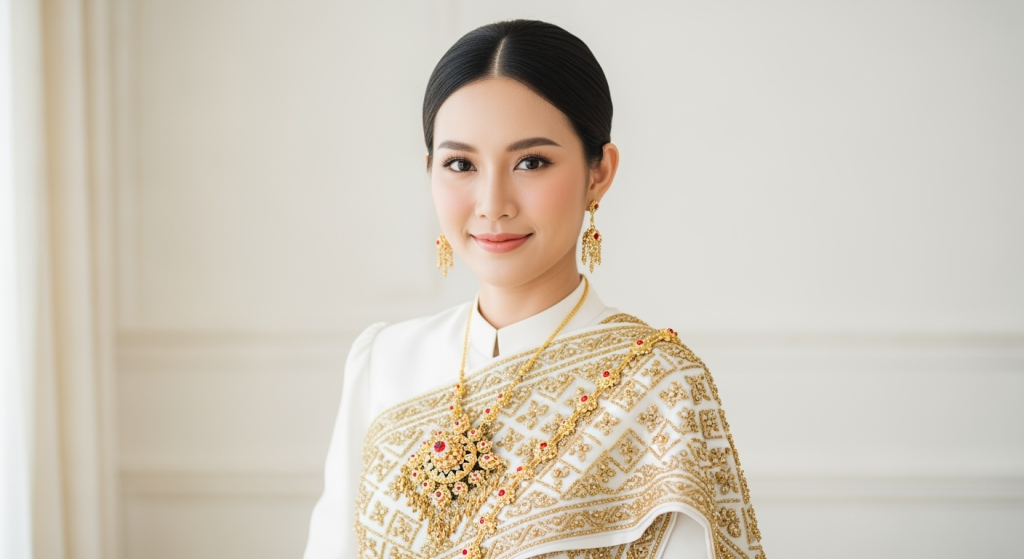
The traditional Thai bridal outfit centers around the Sabai, an elegant draped garment that creates the signature silhouette of Thai wedding attire. This timeless ensemble represents purity, prosperity, and the bride’s transition into married life while honoring generations of Thai wedding traditions.
Traditional bridal colors carry deep cultural significance. White represents purity and new beginnings, making it the most traditional choice for Thai brides. Cream or ivory offers a softer variation while maintaining the symbolic meaning. Gold accents are essential elements representing prosperity and good fortune, typically incorporated through embroidery, jewelry, or decorative elements. Red details symbolize love and happiness, especially appropriate for evening ceremonies.
The classic bridal ensemble features a sabai cloth draped gracefully over one shoulder, paired with a fitted blouse with long sleeves and traditional Thai collar styling. The wrapped skirt extends to floor length, often with an elegant train, while intricate gold embroidery and traditional patterns enhance the garment’s cultural significance and visual impact.
Regional and Family Variations
Different regions of Thailand have developed distinct bridal traditions that many diaspora families maintain. Central Thailand style emphasizes gold thread embroidery with flowing sabai featuring dramatic draping and rich silk fabrics with lustrous finishes. Northern Thailand influence incorporates Lanna design elements, silver thread details alongside gold, and more structured silhouette options that reflect the region’s unique cultural heritage.
Southern Thailand elements include brighter color accents, intricate beadwork details, and lighter fabric choices adapted for the region’s tropical climate. Understanding your family’s regional background can help guide appropriate style choices and honor ancestral traditions.
Modern Adaptations for Diaspora Brides
Many Thai-American couples choose to honor both cultures through thoughtful ceremony planning. A dual ceremony approach might feature a traditional Thai ceremony in a full Sabai ensemble, followed by a Western ceremony in a white wedding dress, with reception attire combining influences from both traditions.
Fusion style options allow brides to incorporate Thai-inspired details on Western silhouettes, add gold embroidery accents to white Western gowns, or combine traditional Thai accessories with modern dresses. This approach honors cultural heritage while accommodating family members from different cultural backgrounds.
Consider venue constraints when planning traditional wear. Indoor venues may require adjustments for air conditioning comfort and lighting that photographs well under artificial illumination. Outdoor ceremonies need consideration for train length, wind-resistant draping techniques, and UV-resistant materials to prevent fading.
Guest Attire Guidelines
Understanding your relationship to the couple and role in the ceremony helps determine appropriate attire choices. Different levels of formality and color choices honor the couple while showing proper respect for the occasion.
For female guests, relationship determines appropriate styling:
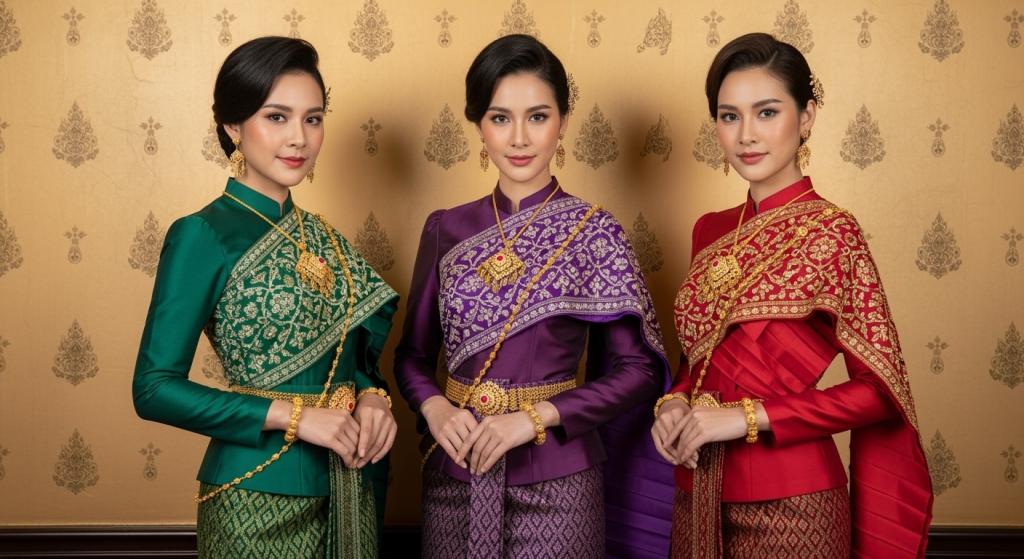
Immediate family members should choose the most formal options available. Mothers and aunts traditionally wear Chut Thai Boromphiman in rich, dignified colors like deep blue, burgundy, or emerald. The elaborate details and formal construction show respect through quality and formality while honoring their important role in the celebration.
Extended family and close friends can select Chut Thai Siwalai as a versatile and respectful choice. Elegant colors in jewel tones or rich pastels work beautifully, with modest embellishments that remain appropriate without competing with the bride’s attire.
General guests should consider Chut Thai Chakri, particularly perfect for evening receptions. Coordinating colors that complement the wedding color scheme show thoughtfulness, while comfortable styling allows for ceremony sitting and reception dancing.
Color Etiquette for Wedding Guests
Colors that honor the occasion:
- Deep blues symbolize stability and trust •
- Rich purples represent dignity and wisdom
- Emerald green signifies growth and harmony
- Burgundy conveys strength and sophistication
- Gold accents remain always appropriate and auspicious
Colors to respectfully avoid:
- Pure white, reserved for the bride
- Black, associated with mourning in Thai culture
- Bright red, which may overshadow bridal colors
- Neon or flashy colors that can appear disrespectful
For male guests, traditional options include Chut Thai Praratchathan for formal traditional men’s wear, or modern suits with Thai elements like silk ties or pocket squares. When traditional wear isn’t available, business formal attire in appropriate colors shows respect for the occasion.
Children’s Wedding Participation
Young participants in Thai wedding ceremonies require special consideration for both comfort and cultural appropriateness. Flower girls and ring bearers should wear simplified traditional styles in child-appropriate fabrics with comfortable fits allowing for movement and coordinated colors with the adult wedding party.
Choose easy-care fabrics for inevitable spills and play, while maintaining cultural accuracy in styling and colors. This provides an excellent cultural education opportunity for Thai-American families, helping children understand their heritage through meaningful participation.
Seasonal and Venue Considerations
Climate adaptations ensure comfort throughout long celebrations:
Summer weddings benefit from breathable silk blends that provide comfort in heat, lighter colors that reflect warmth while remaining formal, and traditional accessories like portable fans that offer both comfort and cultural authenticity.
Winter celebrations allow for rich, warm colors like burgundy, deep blue, and emerald, with layering options using elegant wraps or traditional outer garments. Indoor venue focus makes heavier fabrics appropriate and comfortable.
Venue-specific guidelines help navigate different celebration spaces:
Temple ceremonies require maximum coverage with long sleeves and floor-length skirts, modest necklines showing respect for sacred space, and quiet fabrics that don’t rustle during prayers. Remove shoes easily for temple entrance requirements.
Garden or outdoor venues need practical footwear consideration for grass and uneven surfaces, weather backup plans including portable wraps or umbrellas, and insect considerations requiring appropriate coverage and repellent.
Hotel or banquet halls allow for full formal attire as an opportunity for most elaborate traditional wear, with consideration for photography lighting and how fabrics and colors photograph, plus dancing comfort ensuring outfits allow for celebration movement.
Shopping Timeline and Preparation
For brides, planning ensures perfect traditional attire:
Begin shopping six to eight months before the wedding for traditional ensembles, allowing time for research and selection. Order custom pieces or plan alterations four to six months in advance, as traditional construction often requires significant time. Schedule final fittings and accessory selection two to three months before, with final adjustments and backup plans completed one month prior.
For guests, earlier planning prevents last-minute stress:
Begin searching for appropriate attire three to four months before the wedding. Order pieces and plan for any needed alterations two months ahead. Complete final fitting and accessory coordination two to three weeks before the event, ensuring everything is clean and ready one week prior.
Budget-Conscious Traditional Wear
Consider rental options from specialty costume shops that often carry traditional Thai wear, community resources where Thai cultural centers may offer rentals, family borrowing following the traditional practice of sharing formal wear, and quality investment pieces that work for multiple future occasions.
Mix-and-match strategies help build versatile wardrobes. Invest in quality basic pieces like skirts and blouses separately, vary looks with different jewelry and wraps, and coordinate seasonally using the same base pieces for different events throughout the year.
Cultural Respect and Understanding
Wearing traditional Thai attire to weddings serves multiple important purposes beyond mere fashion. It demonstrates cultural preservation by keeping traditions alive in diaspora communities, provides educational opportunities for sharing Thai culture with non-Thai guests, strengthens community building through shared traditions, and shows artistic appreciation for Thai craftsmanship and design.
Understanding sacred elements enhances respectful participation. Learn about Buddhist symbols and their meanings before wearing them, understand that certain patterns have specific royal or religious significance, ask about specific family customs or preferences, and observe photography etiquette as some traditional elements may be considered sacred.
Thai weddings celebrate the union of two families and the continuation of cultural traditions. By choosing appropriate traditional attire, you honor the couple, respect Thai culture, and contribute to the beauty of this sacred celebration while building connections within your cultural community.
Ready to find your perfect wedding guest attire? Explore our collection designed specifically for Thai wedding celebrations, with sizing and styling guidance for every role in the ceremony.